By Taufeeq Khan Marcos.
In 2024, more than sixty countries worldwide are set to have their presidential and legislative elections [1]. Among them are three out of five UN veto powers – the United States, Russia, and the United Kingdom – as well as Algeria, Brazil, India, Pakistan, South Africa, South Korea, Venezuela, and the European Union [2]. This is also the case for Mexico, where the national elections will occur in June 2024. According to the National Electoral Institute, the public agency responsible for organizing federal elections in Mexico, this year’s electoral process will be the biggest in the country’s history [3]. Mexicans will go to the polls to elect the president, 500 members of the chamber of deputies, and 128 senators, along with more than 19 thousand local representatives at the state and municipal levels.
Last January, the pre-campaign period of the Mexican presidential elections – the period during which all participating political parties have the opportunity to internally select their candidates – came to a conclusion [4]. With this, there are now three official presidential candidates: Xóchitl Gálvez from the “Fuerza y Corazón por México” coalition, Claudia Sheinbaum from the “Sigamos Haciendo Historia” coalition, and Jorge Álvarez from the Movimiento Ciudadano Party.
Xóchitl Gálvez
Bertha Xóchitl Gálvez Ruiz was born in 1963 in Tepatepec, Hidalgo, to a family with Otomi roots, an indigenous people from the Altiplano region in central Mexico. She studied computer engineering at the National Autonomous University of Mexico and founded several companies in the information and communications technology (ICT) sector [5]. She entered the political arena during Vicente Fox’s presidency (2000 – 2006) as Director of the National Commission for the Development of Indigenous Peoples. In 2015, she was elected as the Delegation Chief of the Miguel Hidalgo borough of Mexico City, and in 2018, she became a plurinominal senator (i.e., a senator that is not directly elected by the population but through the proportional representation method) [6]. While she is not officially a member of any party, she caucuses with the National Action Party (PAN), which, together with the Institutional Revolutionary Party (PRI) and the Party of the Democratic Revolution (PRD) form the “Fuerza y Corazón por México” coalition, a political alliance that has been the main opposition force since President López Obrador took office in 2018 [7].
Claudia Sheinbaum
Claudia Sheinbaum Pardo was born in 1962 in Mexico City to a marriage of Jewish ancestry. She studied physics at the National Autonomous University of Mexico, earning a bachelor’s and a master’s degree. In 1995, she obtained her PhD for her work at the Lawrence Berkeley National Laboratory in the United States [8]. Her first political position was as Secretary of the Environment of Mexico City during Lopez Obrador’s tenure as mayor. In 2018, she became the first female to be elected mayor of Mexico City [9]. After a close internal nomination against former Secretary of Foreign Affairs, Marcelo Ebrard, she became the official candidate of the “Sigamos Haciendo Historia” coalition. Formed by the National Regeneration Movement (MORENA), the Labor Party (PT), and the Green Ecologist Party of Mexico (PVEM), it is the successor of the political coalition that led López Obrador to victory in the 2018 presidential elections [10].
Jorge Álvarez
Jorge Álvarez Máynez was born in 1985 in the city of Zacatecas, Zacatecas, to a family heavily involved in local politics. He studied international relations at the Instituto Tecnológico y de Estudios Superiores de Occidente (ITESO) and completed three master’s degrees in public administration and law. In 2010, he was elected as a local representative under the Institutional Revolutionary Party (PRI). After his term concluded, he left the party and joined the Movimiento Ciudadano Party, for which he became a representative at the National Congress, serving as the party’s caucus leader [11]. Despite Samuel García, the current governor of Nuevo León, being the party’s original choice, Jorge Álvarez became the official candidate after the former was forced to return to office after a disagreement with the state’s congress [12].
As of today, most surveys point to Claudia Sheinbaum as the front-runner, with many of them giving her a double-digit advantage over her adversaries [13]. Nevertheless, with the first debate coming up in early April and two more already scheduled for later down in the election cycle, it remains to be seen how the candidates will fare, shifting the current political trends and impacting the voters’ views and opinions [14].
Edited by Justine Peries.
Disclaimer: The views expressed in this presentation are solely the views of the author, and do not reflect the views of any institutional stances.
References
[1] Jégo, Marie. “US, Brazil, Mexico, India: 2024 will be a record election year.” Le Monde, 7 January 2024, https://www.lemonde.fr/en/international/article/2024/01/07/us-brazil-mexico-india-2024-will-be-a-record-election-year_6410437_4.html. Accessed 21 January 2024.
[2] Ewe, Koh. “Elections Around the World in 2024.” Time, 28 December 2023, https://time.com/6550920/world-elections-2024/. Accessed 21 January 2024.
[3] Instituto Nacional Electoral. “Elecciones 2024 – Instituto Nacional Electoral.” INE, https://ine.mx/voto-y-elecciones/elecciones-2024/. Accessed 21 January 2024.
[4] Torres, Mauricio. “Las precampañas de las elecciones generales en México comienzan en un mes: ¿qué significa?” CNN en Español, 20 October 2023, https://cnnespanol.cnn.com/2023/10/20/precampanas-elecciones-generales-mexico-orix/. Accessed 21 January 2024.
[5] Yañez, Brenda. “¿Quién es Xóchitl Gálvez, senadora y ganadora de la encuesta del Frente Amplio?” Expansión Política, 30 August 2023, https://politica.expansion.mx/elecciones/2023/08/30/quien-es-xochitl-galvez-biografia. Accessed 21 January 2024.
[6] Partido Acción Nacional. “Senadora Bertha Xóchitl Gálvez Ruiz.” PAN | Senado, https://www.pan.senado.gob.mx/integrantes/senadora-bertha-xochitl-galvez-ruiz/. Accessed 21 January 2024.
[7] Raziel, Zedryk. “La cuarta transformación de la alianza opositora: las viejas prácticas opacan el cambio de rostro.” El País, 22 November 2023, https://elpais.com/mexico/elecciones-mexicanas/2023-11-22/la-cuarta-transformacion-de-la-alianza-opositora-las-viejas-practicas-opacan-el-cambio-de-rostro.html. Accessed 21 January 2024.
[8] Instituto de Ingeniería. “Claudia Sheinbaum Pardo.” Instituto de Ingeniería UNAM, https://www.iingen.unam.mx/es-mx/Investigacion/Academicos/Paginas/CSheinbaumP.aspx. Accessed 21 January 2024.
[9] González Díaz, Marcos. “México: quiénes son Claudia Sheinbaum y Xóchitl Gálvez, las dos aspirantes a convertirse en la primera presidenta del país.” BBC News Mundo, 7 September 2023, https://www.bbc.com/mundo/articles/cevzjyy02kko. Accessed 21 January 2024.
[10] Graham, Dave. “Mexico ruling party names Sheinbaum candidate for 2024, making first female president likely.” Reuters, 7 September 2023, https://www.reuters.com/world/americas/mexicos-ruling-party-name-presidential-candidate-with-sheinbaum-favorite-2023-09-06/. Accessed 21 January 2024.
[11] CNN Español. “¿Quién es Jorge Álvarez Máynez, el joven precandidato que va por la presidencia de México?” CNN en Español, 11 January 2024, https://cnnespanol.cnn.com/2024/01/11/quien-es-jorge-alvarez-maynez-precandidato-mexico-orix/. Accessed 21 January 2024.
[12] El Financiero. “Samuel García ya no va: ‘He decidido no participar en la contienda electoral.’” El Financiero, 2 December 2023, https://www.elfinanciero.com.mx/estados/2023/12/02/samuel-garcia-ya-no-va-he-decidido-no-participar-en-la-contienda-electoral/. Accessed 21 January 2024.
[13] Forbes México. “Sheinbaum aventaja por 22 puntos a Gálvez rumbo a la presidencia de México: encuesta GEA-ISA.” Forbes México, 13 December 2023, https://www.forbes.com.mx/sheinbaum-aventaja-por-22-puntos-a-galvez-rumbo-a-la-presidencia-de-mexico-encuesta-gea-isa/. Accessed 21 January 2024.
[14] El Economista. “Elecciones 2024: INE publica formatos y sedes de los debates entre candidatos presidenciales.” El Economista, 18 January 2024, https://www.eleconomista.com.mx/politica/Elecciones-2024-INE-publica-formatos-y-sedes-de-los-debates-entre-candidatos-presidenciales-20240118-0071.html. Accessed 21 January 2024.
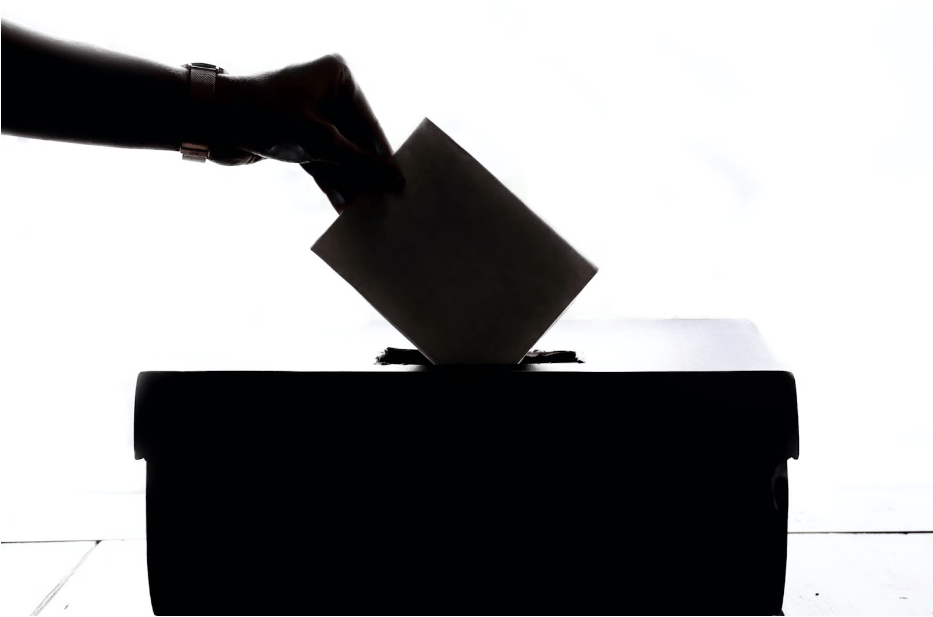
[Cover Image] Photo by Element5 Digital licensed under Unsplash


Leave a comment