By Corey A. Hancock (ESCP PhD student & serving U.S. Diplomat).
Foreign assistance is one of many components of a given country’s foreign policy. Along with defense and diplomacy, it represents one way for a country to interact with another. The form of the projects can vary in terms of technical area, methodology, and ultimate goal, but a common denominator is that there are external funding sources and beneficiaries of the programming in another. While some donors actually implement the projects themselves, the majority hold public tenders and award contracts, grants, and/or cooperative agreements to implementing partners to carry out the work. There are often rigorous monitoring and evaluation procedures in place to ensure progress towards the project goals.
The provision of foreign assistance is meant to be beneficial for both sides – both the donor and the recipient countries. The recipient country benefits from the provision of the projects; that is, they receive the project and depending on the scope of the project, may have more literate children, a more robust economy, or perhaps a cadre of trained farmers on the latest technologies. This benefit is easy to see and is more evident. But how does the donor country benefit? The provision of foreign assistance can be, but is not always, altruistic.
Many countries aggressively use branding and marking to make it known that they are the donor, and that the generosity of their country is the source of the funds. Additionally, donor countries often receive positive notoriety in the recipient country press, contributing to a favorable public image. Additionally, the donor country may receive diplomatic leverage in unrelated areas of negotiation in the bilateral agenda with the recipient country – such as votes in multinational fora such as the United Nations (for more information refer to the James Baker’s anecdote [1]). Some donor countries require implementing partners and all commodities used during a project to be sourced from their own country, leading to increased sales in certain industries benefiting companies and workers in their home country. Finally, a huge benefit for donor countries is that they can open export markets for their companies; that is, by promoting prosperity abroad, they can create new populations that desire the products that their country produces.
Donor governments choose where to engage and set the conditions under which they will finance projects. They ordinarily sign formal treaties – or at the very least – Memorandums of Understanding with foreign ministries, or with development-minded ministries in the recipient country. These documents lay out the requirements for the projects to be implemented, and how the money will flow. Contrary to public opinion, the direct funding of a foreign government, while permissible, is exceedingly rare due – in addition to other reasons – to the probability that the funds may be diverted elsewhere or lost entirely to inefficiency or corruption. The use of implementing partners is the most common modus operandi for aid organizations.
Popular development technical sectors often include: disaster response, health, education, economic growth, democratic governance, environmental protection, amongst many others. For instance, the most popular sector of USAID is “Humanitarian Assistance” with more than 17 billion USD obligations [2]. In the health sphere, many governments and donors fund projects focusing on: HIV/AIDS, malaria, tuberculosis, neglected tropical diseases, in addition to nutrition. Specialized technical assistance might focus on health system strengthening, reducing infant mortality, maternal child health, health workforce training, health information systems (databases, registries, etc.)
This paper will focus on how the US Government’s President’s Emergency Plan for AIDS relief has been instrumental in mitigating the scourge of HIV/AIDS around the world. PEPFAR has set the bar for a successful multiyear, multicountry, multicontinent project that has enjoyed high levels of bipartisan approval in the US Congress – something that is very seldom seen given the notorious partisan gridlock that characterizes the American legislative entity. PEPFAR has received sustained levels of generous funding and has transformed lives in many countries around the world. In many ways, PEPFAR is unlike any other public health project.
PEPFAR came to fruition in 2003 via the U.S. Leadership Against HIV/AIDS, Tuberculosis, and Malaria Act of 2003 [3]. It was promoted heavily by former US President George W. Bush and had the goal of alleviating suffering caused by HIV/AIDS. While the beneficiary countries are located around the world, perhaps centered in Africa, all of humanity benefits when HIV case numbers are reduced. When there are less cases abroad, there are ultimately less chances that Americans and others in western nations can catch the virus via tourism, migration, and other ways in which these populations interact.
Several agencies of the United States Government were tasked to lead the project, including USAID, CDC, HHS, DoD, etc. In each country where PEPFAR operates, the goal is to collaborate with other stakeholders – such as the Global Fund, UN agencies including UNAIDS, the World Health Organization (WHO) – and not to circumvent nor exclude a Ministry of Health, but to strengthen their ability to carry out the work.
Regarding the goals of the project, like many other public health projects, PEPFAR works to identify “key populations” and then focus on the triple goals of: prevention, diagnosis, and treatment. The key populations are those groups of individuals that are more likely than the average member of society to contract and carry the virus, and possibly infect others. In the context of HIV/AIDS, key populations ordinarily refer to: those who have multiple concurrent sexual partners, men who have sex with men (gay males), commercial sex workers (prostitutes), and users of injected drugs. In these key populations, the prevention, diagnosis, treatment may look as follows:
- Prevention – PEPFAR uses a multi-pronged approach to stop transmission, tackle biomedical factors, and address the socio-behavioral and economic determinants of disease transmission. Some approaches include screen blood transfusions, the distribution of prophylactics, the somewhat controversial promotion of abstinence, in addition to the distribution of pre-exposure prophylaxsis (PrEP). To avoid having vulnerable young adolescent girls getting infected from older men, PEPFAR also invests in teaching life-skills to young girls and adolescents to break the cycle of poverty. PEPFAR also has programs to provide for vulnerable children and orphans whose parents died from HIV. Voluntary medical male circumcision is also used as a way to prevent the spread of HIV…
- Diagnosis – how is HIV diagnosed? Foreign assistance can bring diagnostic capability to countries that may not be able to access it due to cost or complicated logistics. PEPFAR approaches diagnostics from a counseling and testing point of view and provides “last-mile delivery” to effectively reach all of those at risk.
- Treatment – import antiretroviral treatments into countries and provide a culturally-appropriate, stigma-free way to pick it up to reduce stigma by using a human-centered model, in lieu of traditional models of treatment. The goal of treatment is the suppression of viral load, so that sexual contact or blood transfusions between an infected and an uninfected person will not lead to a new case.
- Stakeholder engagement – PEPFAR advocates at all levels: governments (domestic resource mobilization), United Nations (set global targets and framework), the private sector, and civil society. They invest in small grant programs for community-led monitoring. Communities are well-aware of the services they require and can demand it. PEPFAR also measures the sustainability of the program every two years.
PEPFAR aims to achieve the 95/95/95 strategy. This threefold target aims to test 95% of the population, start 95% of these people on treatment, and achieve immunosuppression and viral load suppression of 95% of these people [4].
PEPFAR has been spectacularly successful in rigorously monitoring progress and using evidence and strengthened surveillance systems to make programmatic decisions. It is a revolutionary program that is entirely based on data. They found efficiencies where none existed and pivoted accordingly. Robust data quality and analysis has enabled the program to pour resources into the right area at the right moment. This enabled the program to put millions of people on treatment, which saved the lives of babies, many of whom are now grown adults. PEPFAR didn’t wait for people to come forward and get diagnosed or treated; PEPFAR went on the offense to find them. In complex operating environments in rural areas in African countries, PEPFAR found those people and put them on life-saving antiretroviral treatment. PEPFAR has been able to implement the supply chains and work through the logistics to deliver supplies to hard-to-reach places where it is hard to organize shipments. The program used very ambitious targets and holds themselves and other stakeholders to account for results, including host-country governments that at times do not work at the same brisk pace.
PEPFAR’s results are astonishing. In a little over twenty years, PEPFAR supported:
- antiretroviral treatment for nearly 20.5 million people [5]
- treated more than 327,000 health workers on HIV [6]
- the investment of “over $100 billion in the global HIV/AIDS response, saving over 25 million lives, preventing millions of HIV infections, and supporting several countries to achieve HIV epidemic control” [7]
- 5.5 million babies born HIV-free [8]
Edited by Justine Peries.
Disclaimer: The views expressed in this presentation are solely the views of the author, and do not reflect the views of the United States Agency for International Development nor the United States Government.
References
[1] Vreeland, James, et al. “Dirty work: Buying votes at the UN Security Council.” VOXeu, November 2018, https://cepr.org/voxeu/columns/dirty-work-buying-votes-un-security-council.
[2] Foreign Assistance, USAID, January 2024, https://www.foreignassistance.gov/.
[3] U.S. Government, May 2003, https://www.govinfo.gov/content/pkg/PLAW-108publ25/html/PLAW-108publ25.htm
[4] “New report from UNAIDS shows that AIDS can be ended by 2030 and outlines the path to get there.” UNAIDS, 13 July 2023, https://www.unaids.org/en/resources/presscentre/pressreleaseandstatementarchive/2023/july/unaids-global-aids-update. Accessed 11 February 2024.
[5] “Results and Impact – PEPFAR – United States Department of State.” State Department, https://www.state.gov/results-and-impact-pepfar/. Accessed 11 February 2024.
[6] “PEPFAR Latest Global Results & Projections Factsheet (Dec. 2023) – United States Department of State.” State Department, 30 November 2023, https://www.state.gov/pepfar-latest-global-results-factsheet-dec-2023/. Accessed 11 February 2024
[7] What is PEPFAR?” HIV.gov, February 2024, https://www.hiv.gov/federal-response/pepfar-global-aids/pepfar/. Accessed 11 February 2024.
[8] “2022 PEPFAR Latest Global Results.” State Department, December 2022, https://www.state.gov/wp-content/uploads/2022/11/PEPFAR-Latest-Global-Results_December-2022.pdf. Accessed 11 February 2024.
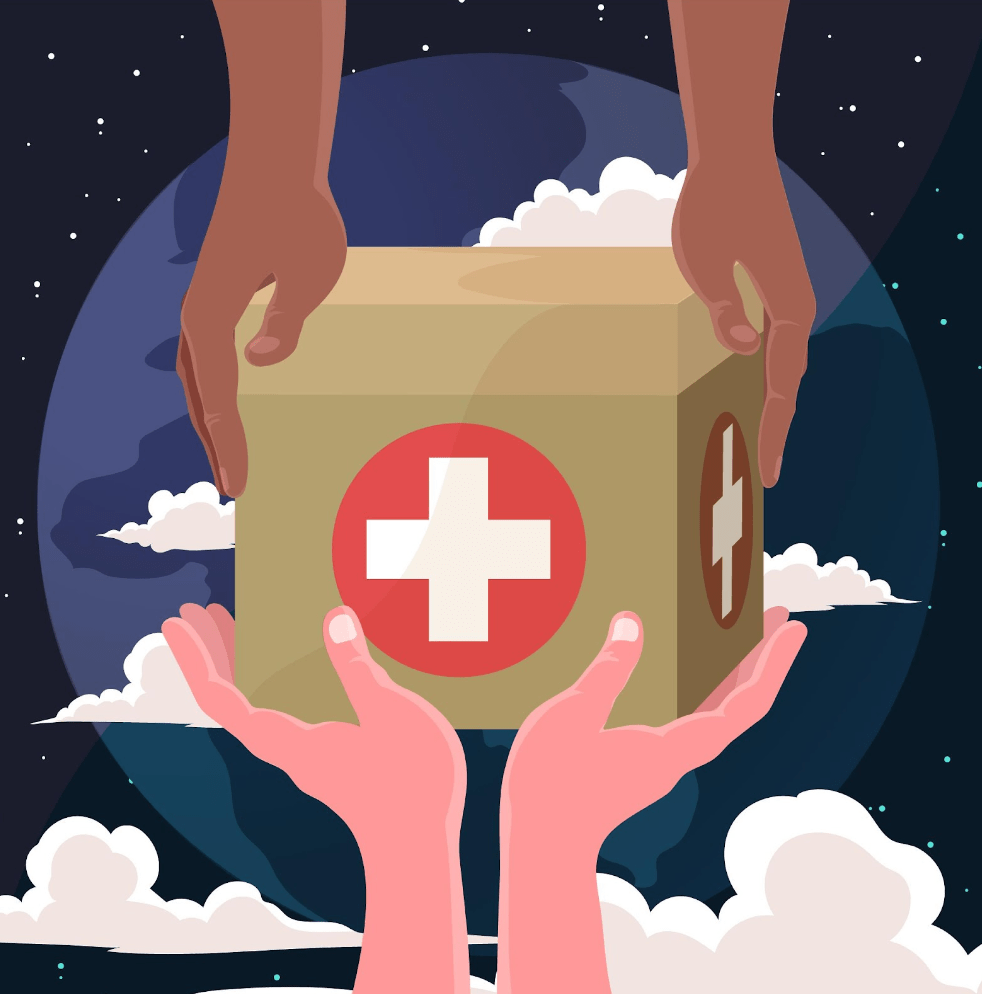
[Cover Image] Photo by Image Freepik


Leave a comment