
By Tomas Chambourdon.
Genesis
Northern Mali is adding to the explosive situation in the Sahel: on the 25th of January 2024, Colonel Maïga, Secretary of Territorial Administration and Decentralisation, appeared on national television to withdraw from the “Accord for Peace and Reconciliation in Mali” [1]. Colonel Maïga, who became “the voice of the policy of breaking with France and its allies” [2] since the May 2021 Malian coup d’état, has put an anticipated end to the laboriously negotiated agreement of 2015, signed between the Malian authorities and Tuareg separatists. The ratification came after a long and humiliating process for the Malian authorities, who had to wait a month of international pressure for the Tuareg-separatists’ CMA (Coordination of Azawad Movements) to finally sign it on the 20th of June 2015 [3].
The treaty was engineered to stop another episode of the Tuareg’s rebellion, with roots dating back to at least 1916. The Tuareg are a semi-nomadic population living in the Sahara, mainly in Niger and Mali. According to the NGO Minority Rights Group: “Tuareg […] feel alienated from the rest of the country, as many Malians considered them Arabs or Libyans, and resentment lingered over historical memory of Tuareg enslavement of blacks.” [4]. Tuareg separatists (notably the MNLA Group, joined later by Islamist militia) have territorial claims in Northern Mali, where they argue they were “marginalised” and “impoverished” by the Malian authorities. The fighting between the Malian military and the Tuareg rebels that exploded in 2012 surprised local authorities and was so intense that within two months, the rebels were in possession of the majority of northern Mali, a vast region they call Azawad [5].
Main Terms of the Treaty
The treaty was signed with the clear objective to promote a “true national reconciliation [… of the] Malian nation” [6]. It was designed to encourage decentralisation (a concept born in 1992 in Mali, with local authorities and administrative competencies [7]), and greater autonomy in Northern Mali. However, governmental negotiating actors –spanning from Malian authorities to European diplomats– were, from the onset, insisting on Mali’s territorial integrity. The 42 pages document is built around three main ideas: the idea of “regionalisation” without “federalisation” (effectively guaranteeing Mali’s national unity but decentralising some administrative competencies), a new army and security forces, and the restoration of Mali’s authority, along with socio-economical and cultural development [6].
The main idea was centered around developing the northern part of Mali. This is reflected in the fourth part of the treaty. However, the socio-economic measures put forward in the agreement are vaguely phrased (“stronger implication of territorial collectivities [6]”, “promote economical projects [6]”). In his appraisal of the situation in 2021, André Bourgeot, an anthropologist at EHESS, declares the clauses are only “declaration of intentions” and even “contradictory,” with a focus on the “northern regions,” endangering national cohesion and reconciliation [8]. These ambiguities led the Tuareg to believe not enough has been done since 2015 to develop Mali’s northern region [9].
The second idea relates to security. The rationale was to neutralise the different Tuareg-led militias by incorporating them into the regional armed forces under the scrutiny of the Malian authorities. The main objectives were thus the “integration and disarming” of armed groups and their “reinsertion” into local security forces. These forces were to be “re-deployed” in all the northern parts of Mali to assist in the “fight against terrorism […] drug trafficking […] and organized crime” [6] that has been taking place in the Sahel region for decades.
The last idea of the agreement was to create a regional assembly, benefiting from a “large transfer of powers” [6] in the Northern part of Mali. This was supposed to answer, in practical terms, the Tuareg’s call for greater autonomy. The reality of the treaty are vague terms, not adding much to the already existing “regionalisation” and “decentralisation” concepts in Mali.
Fallout and Implications
While northern Mali is historically unstable, facing four Tuareg rebellions in 50 years [4] and large-scale organized crime operations [10], the situation is rapidly deteriorating since the coups of 2020 and 2021 when “officers angered at the failures to roll back the jihadist insurgency” [11] forced France and US out of the picture. Meanwhile, Russia and its mercenaries filled in the vacuum.
The resurgence of rebel attacks can be linked to the failure of the Malian authority to put inforce what was agreed on. Indeed, in an article published after CMA’s attacks targeting the “Malian army and its terrorist partners of Wagner” on the 12th of September 2023, the BBC echoed that: “According to the Carter Centre, invested at the end of 2017 with the role of independent observer in Mali, the process of implementing the agreement is hardly progressing: less than 30% of the provisions of the agreement were implemented in 2022.”[8]
Tensions were paramount on the 22nd of December, when the Malian junta (Malian government formed by military leaders) recalled its Alger’s ambassador after the minister of foreign affairs declared that Algeria was organizing “recurring meetings, […] with people known for their hostility to the Malian government” [12].
To conclude, the fallout of this peace agreement is another red indicator for the region’s stability. It is the latest blow to security and peace in the Sahel, presenting both diplomatic opportunities and challenges to an already diminished Western position.
Edited by Justine Peries.
References
[2] https://en.wikipedia.org/wiki/Abdoulaye_Ma%C3%AFga_(officer)
[3] Mohamed El Maouloud Ramadane. RFI, June 20, 2015. L’accord de paix pour le nord du Mali officiellement ratifié. https://www.rfi.fr/fr/afrique/2min/20150620-mali-signature-accord-paix-bamako-cma-azawad
[4] Tuareg in Mali. https://minorityrights.org/communities/tuareg/
[5] Jeremy Keenan. Aljazeera, March 20, 2012. Mali’s Tuareg rebellion: What next? https://www.aljazeera.com/opinions/2012/3/20/malis-tuareg-rebellion-what-next
[6] Original Text : Accord pour la Paix et la Réconciliation au Mali, Issu du processus d’Alger. https://peacemaker.un.org/sites/peacemaker.un.org/files/Accord%20pour%20la%20Paix%20et%20la%20R%C3%A9conciliation%20au%20Mali%20-%20Issu%20du%20Processus%20d%27Alger_0.pdf
[7] Institut Royal des Tropiques Bulletin 358, May 4 2004, La décentralisation au Mali: du discours à la pratique https://www.kit.nl/wp-content/uploads/2018/08/593_Bull-358-merged.pdf
[8] André Bourgeot. Recherches Internationales, nº121, juillet-septembre 2021, pp. 101-116, Accord pour la paix au Mali: Bilan et Perspectives.
[9] Ousmane Badiane. BBC, September 22, 2023. Au Mali, les autorités militaires mettent fin à l’Accord d’Alger, 8 ans après sa signature. https://www.bbc.com/afrique/articles/cjjzeq52zglo
[10] Wolfram Lacher. The Carnegie Papers, September 2012. Organized crime and conflict in the sahel-sahara region. https://carnegieendowment.org/files/sahel_sahara.pdf
[11] Jason Burke. The Guardian, May 20, 2023. Russian mercenaries behind slaughter of 500 in Mali village, UN report finds. https://www.theguardian.com/world/2023/may/20/russian-mercenaries-behind-slaughter-in-mali-village-un-report-finds
[12] Frédéric Bobin. Le Monde, December 27, 2023. Coup de froid dans les relations entre le Mali et l’Algérie. https://www.lemonde.fr/afrique/article/2023/12/27/coup-de-froid-dans-les-relations-entre-l-algerie-et-le-mali_6207961_3212.html
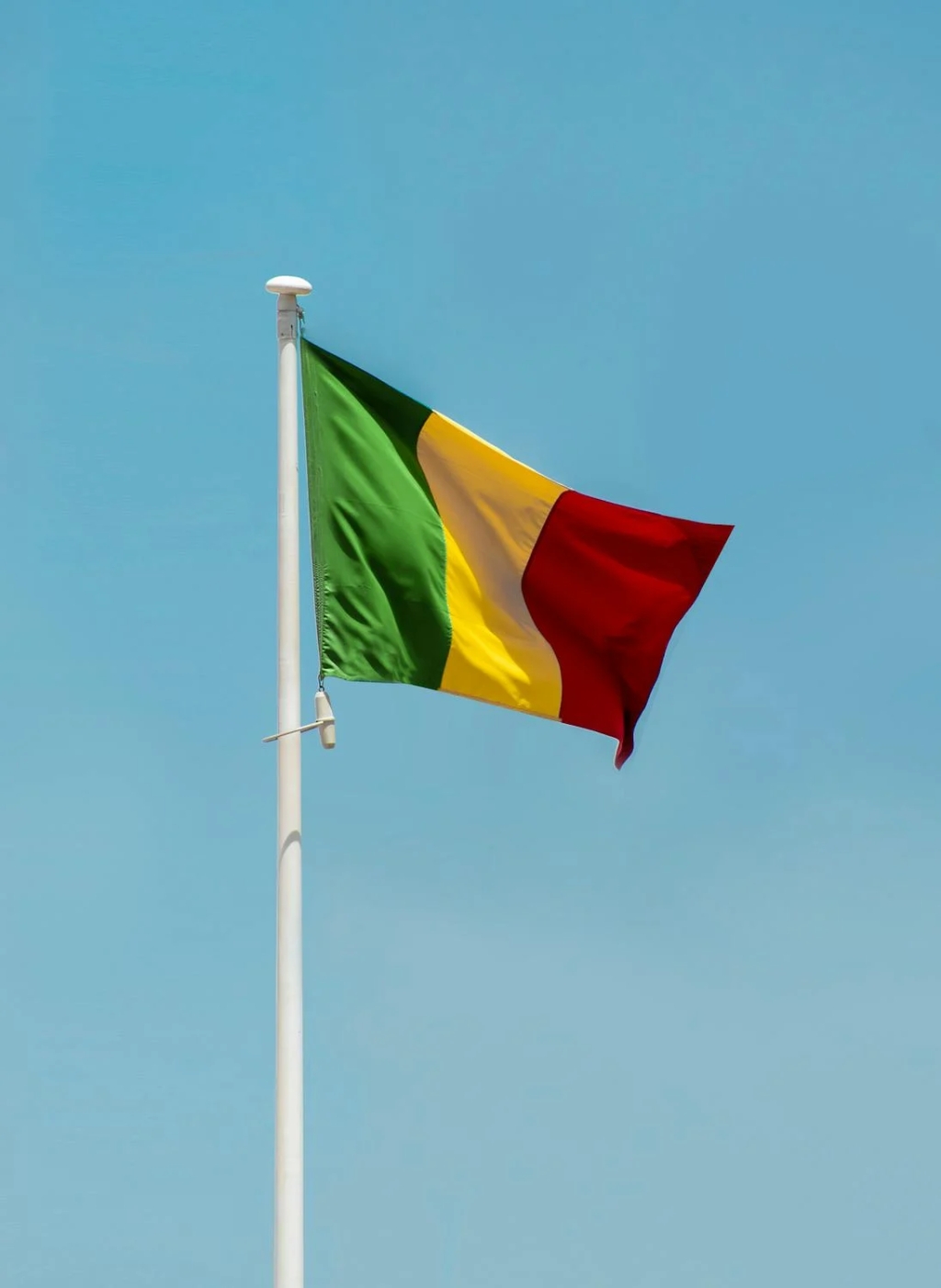
[Image] Photo by Aboodi Vesakaran, licensed under Pexels.


Leave a comment