
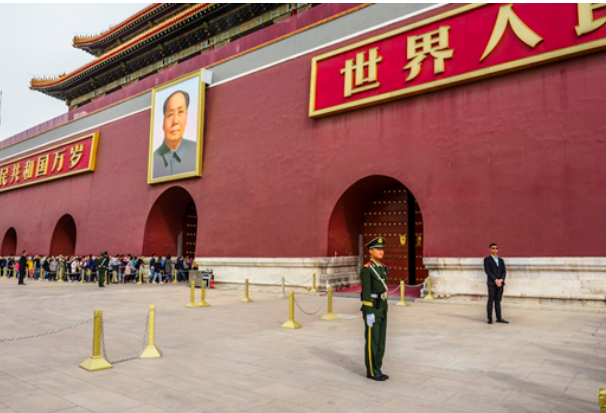
By Louis Brugel.
China intends to spend 1,665 billion yuan ($231.4 billion) on defense this year [1]. However, China’s military budget may be underestimated. In fact, China’s real investments in its security capabilities are allegedly higher than its real defense budget [2].
Chinese ambitions in the Pacific
China is perceived as a threat by many Asia-Pacific nations such as Taiwan, South Korea, Japan, and the Philippines. Beijing has recently claimed it opposed nationalists in Taiwan and has repeatedly argued reunification was a “historical inevitability” [3]. More importantly, China has abandoned the idea of a peaceful annexation of Taiwan [4]. Its current defense spending has propelled China to become the country with the second-most important military budget worldwide [3]. Nonetheless, the potential for conflict does not only lie in Taiwan. China and India have experienced several clashes on their border in the Ladakh region [5]. There is also a potential confrontation between China and the Philippines in the South China Sea [6]. In this context, the Permanent Court of Arbitration at The Hague argues that Chinese claims in the area do not align with international law [3]. At the same time, China feels threatened by Western maneuvers in waters that China claims to be its own [3].
The Chinese defense budget is underestimated
China increased its military budget by 7.2% this year [2]. Such preparation can be linked to the 100th anniversary of the People’s Liberation Army [1]. However, this increase is underestimated. The Middle Kingdom will spend more on its military capabilities than stated in its official budget [2]. Communist China has developed a reputation of opacity; numbers suggest a gap of €58 billion between the official and real budgets [1][7]. China aims to boost its military forces to transform the PLA into a more powerful army [2]. The current budget excludes R&D, materials procurement, paramilitary forces, and coast guards [2]. Therefore, according to Nan Tian from the Stockholm International Peace Research Institute, the real budget is 30-35% higher than what is officially stated by Chinese authorities [2]. The increase in Chinese military spending can be explained by progress in producing missiles, fighter jets, and warships that require greater investments [2]. These expenditures are part of Xi Jinping’s objective to challenge the US via the so-called “integrated national strategic system and capabilities” strategy that implies greater integration between military, civilian, and industrial capacities with strategic capabilities [2]. It seems like Beijing’s strategy is paying; in fact, the US finds it difficult to follow the PLA’s naval construction capabilities [7]. Overall, the technological gap between the two superpowers is increasingly narrowing [7]. This military effort is deepening the mistrust between China and the US, especially since Joe Biden came into office in 2022 [1].
Japanese fears
Japanese officials have regularly expressed their worries about China’s geopolitical ambitions in the region. The two nations notably face tensions regarding the Senkaku Islands [8]. According to Akiyama Nobumasa, a professor at Hitotsubashi University, China is increasing its nuclear capabilities [1]. Such capacities include long-range missiles that are capable of hitting the United States anywhere on its territory as well as short-range missiles that can threaten Japan, the Philippines, and Guam. Japan has no choice but to beef up its defense capabilities. It is not advisable for the country to rely only on the US, especially in a context where Washington is already cut in conflicts in Europe and the Middle East. Japan is, therefore, strengthening its ties with its neighbors in the region: the Philippines, South Korea, Australia, India, Vietnam, Indonesia, and Singapore [1].
But China is also facing obstacles
2024 is the third consecutive year the communist nation will increase its military expenditures by more than 7% despite slowing economic growth [1]. Nevertheless, China is facing obstacles that could jeopardize some of its objectives. Indeed, Beijing is facing slower economic growth than in the past [9]. Xi must thus reconcile the difference between revenues incurred by the government with defense expenditures and the demand for equipment. Military spending is at the heart of China’s budget, roughly representing 40% of total central government expenditures. This number is ten times higher than spending on education and five times higher than the science and research budget. China has reduced spending in other sectors to provide space for the military [1]. Due to slower growth, state-owned contractors are emphasizing low-cost systems to bridge the gap between demand and Chinese capabilities [2]. It is worth mentioning that China is drawing lessons from the invasion of Ukraine, during which Russia has underestimated its need for munitions [2].
One may argue that despite weaker economic growth, China is finding solutions to beef up its military capabilities. This strategy ensures that the Middle Kingdom can achieve its geopolitical targets, especially those in Taiwan.
Edited by Justine Peries.
References
[1] Donnet, Pierre-Antoine. “Chine : Le Budget Militaire En Hausse De 7,2 % En 2024 Sur Fond De Crise.” Asialyst, 9 Mar. 2024, asialyst.com/fr/2024/03/09/chine-budget-militaire-hausse-2024-crise.
[2] Hille, Kathrin. “China’s Military Capability Set to Grow Faster Than Its Defence Budget.” Financial Times, 6 Mar. 2024, www.ft.com/content/499a31ce-32e0-4ef4-989f-1f5bf2174ab6.
[3] Tan, Clement. “China Boosts Military Spending by 7.2%, Vows to ‘resolutely’ Deter Taiwan ‘separatist Activities.’” CNBC, 5 Mar. 2024, www.cnbc.com/2024/03/05/china-defense-budget-2024.html.
[4] Lun Tian, Yew, and Laurie Chen. “China drops ‘peaceful reunification’ reference to Taiwan.” Reuters, 5 Mar. 2024, www.reuters.com/world/china/china-drops-peaceful-reunification-reference-taiwan-raises-defence-spending-by-2024-03-05.
[5] Biswas, Soutik. “India-China Clash: An Extraordinary Escalation ‘with Rocks and Clubs.’” BBC, 16 June 2020, www.bbc.com/news/world-asia-india-53071913.
[6] Fouquet, Claude. “Comprendre La Tension Entre La Chine Et Les Philippines En Quatre Points.” Les Echos, 14 Dec. 2023, www.lesechos.fr/monde/asie-pacifique/comprendre-la-tension-entre-la-chine-et-les-philippines-en-quatre-points-1988954.
[7] Lagneau, Laurent. “La Chine Va Officiellement Augmenter Son Budget Militaire De 7,2% En 2024.” Zone Militaire, 6 Mar. 2024, www.opex360.com/2024/03/05/la-chine-va-officiellement-augmenter-son-budget-militaire-de-72-en-2024.
[8] BBC News. “How Uninhabited Islands Soured China-Japan Ties.” BBC News, 10 Nov. 2014, www.bbc.com/news/world-asia-pacific-11341139.
[9] Reuters. “Why Is China’s Economy Slowing Down and Could It Get Worse?” Reuters, 1 Sept. 2023, www.reuters.com/markets/asia/why-is-chinas-economy-slowing-down-could-it-get-worse-2023-09-01.
https://unsplash.com/fr/photos/un-groupe-de-personnes-debout-devant-un-batiment-6sq3TJe3UmU
[Cover Image] Photo by Alexander Schimmeck licensed under Unsplash


Leave a comment