By Gauthier Perdereau-Bilski.
Introduction
Economic diplomacy operates in the complex sphere of international relations, where power, influence, and cooperation come together. Nevertheless, it remains uncertain if economic diplomacy comprises a broader range of diplomatic strategies intended to affect geopolitical contexts and economic ties or is only a more advanced form of lobbying. Nowadays, economic diplomacy has become more embedded in international relations. Understanding the aspects of industrial dominance and industrial radiation is crucial to understanding international geopolitics. This presents many new opportunities, challenges, and tensions for a global power like the European Union to overcome. Winston Churchill famously remarked, “The art of diplomacy lies in telling people to go to hell in a way that makes them ask for directions.”* This claim illustrates the challenging balancing act between persuasion and negotiation in economic diplomacy as countries strive for economic supremacy in shifting geopolitical situations.
The historical development of economic diplomacy will be examined in this essay, starting with the creation of the Marshall Plan in the years following World War II and ending with the current struggles and power structures in the international economy. We will examine the influence of international laws and policies [1], the function of national industry lobbying, the significance of cultural values and European solidarity in forming contemporary economic diplomacy.
A. Historical evolution of economic diplomacy
a. The Marshall Plan: basis of Economic Diplomacy?
Several considered the United States’ 1948 Marshall Plan launch to be a turning point in diplomatic relations and economic diplomacy history. Europe remained in ruin after World War II, experiencing political turmoil and economic devastation. By giving resources and assistance for reconstruction, the European Recovery Program symbolized a glimmer of hope for countries ravaged by warfare. Beyond its economic impact, the Marshall Plan was crucial to the U.S. projecting its soft power and achieving its diplomatic aspirations. By providing significant loans to European countries, the United States promoted economic recovery and increased its sway on politics and ideological alignment in the area.
- i. Economic Impacts on Diplomacy
Regarding the economic side of the Marshall Plan, the plan provided much-needed capital injections into European economies, which stimulated trade networks and enterprises. This financial injection allowed for market expansion, technical innovation, and rehabilitation of industrial facilities. This laid the foundation for Europe’s post-war economic recovery.
- ii. Political Influence through Economic Means
Political factors are also a key consideration for this strategy. The Marshall Plan solidified friends and bolstered Western solidarity in the face of rising Soviet dominance. When European nations sided with American political and economic interests in return for receiving aid under the Marshall Plan, the transatlantic partnership and containment strategy against communist expansionism were firmly established. This strategic use of economic aid for political ends is a hallmark of economic diplomacy, where economic tools are employed to achieve geopolitical objectives, including building alliances and countering adversarial powers. We can reveal the military challenge facing the United States with the founding of the Organization for Transatlantic Cooperation (NATO) in 1949 to provide both military support and military protection, domination and influence in Europe.
- iii. Cultural Exchange and soft power
Another aspect of economic diplomacy is promoting democracy and American ideals through cultural exchanges supported by the Marshall Plan. The United States increased its soft power and shaped European nations’ social and cultural environments by spreading American culture and ideas along with financial assistance. This strategy emphasizes a more comprehensive view of economic diplomacy, which includes the capacity to influence social and cultural norms and values overseas and exert political and economic influence.
b. Shifting Dynamics: From Cold War to Global Competition
Economic diplomacy changed from an instrument of geopolitical manipulation to a battleground for national interests and international competition as the Cold War faded and the global economic landscape experienced major alterations [2]. This change represented a paradigm shift in which countries began to see economic power as critical to achieving their goals. The end of the Cold War resulted in a phase of internationalization defined by the rise of freshly emerged economic superpowers and the growth of international trade and investment flows [3]. The change has disrupted long-standing power structures and forced countries to reconsider their diplomatic approaches in order to cope with the difficulties presented by the global economy. Since the world is marked by intense commercial tensions, regulation and comprehensive yet neutral control over the entirety of this environment are essential, as is the case with businesses today that have wealth production levels that exceed the gross domestic product of some states4. The constant fight for expansion and competitiveness on the global stage is currently the main issue facing governments globally [5]. In order to advance national interests, protect economic security, and gain strategic advantages in vital industries, economic diplomacy is essential in today’s very competitive world.
B. Contemporary Challenges and Dominance of the United States – Exerting Influences over Global Economic Policies
a. “Law Fare ”, new concept of Economic Diplomacy, going beyond lobbying?
- i. The Committee on Foreign Investment in the United States (CFIUS)
The Committee on Foreign Investment in the United States (CFIUS) shows the laws and regulations that have allowed the U.S. to influence global economic policy. Using this instrument, the U.S. can exert influence over world politics, influence global trade, and enforce U.S. economic policies and antitrust laws on its allies [6]. For example, due to national security concerns, the CFIUS has given the U.S. government the authority to inquire into and perhaps forbid foreign investments in American businesses. It serves as a diplomatic weapon for the economy, assisting the U.S. in maintaining its competitiveness in key sectors, in addition to safeguarding critical infrastructure and sensitive technology [7].
- ii. Other extra-territoriality weapons: The “USA PATRIOT Act” and the “CLOUD Act”
Parallel to this, even if the data is kept on servers outside the country, U.S. law enforcement authorities have broad access to data held by American technology corporations because of the USA PATRIOT Act and the CLOUD Act [8]. Allies are concerned that this might compromise their economic sovereignty because they are subject to data surveillance and American extra-territoriality jurisdiction. Additionally, accusations of industrial espionage have been made against intelligence organizations, including the Central Intelligence Agency (CIA) and the National Security Agency (NSA). According to Marius Vassiliou’s edited book “Economic Espionage and Industrial Spying,” these agencies purportedly get information about foreign businesses and industries to benefit American enterprises economically [9].
The maxim often attributed to Henry Kissinger, “Being an enemy of the United States is dangerous, but being a friend is fatal,” bears an entirely different meaning in this situation. The United States’ primacy in international economic diplomacy, tendency toward using extraterritorial jurisdiction, and engagement in corporate spying constitute a severe danger to other nations’ economic sovereignty. The way the US is using its power to undermine the diplomatic and economic independence of its allies disturbs me as a French citizen.
b. Analysis of Contemporary Economic Diplomacy
- i. National Industrial Lobbying: Examining Mechanisms and Involved Stakeholders
National industrial lobbying has grown more well-known in the current period of economic diplomacy as companies and governments look to enhance their standing in worldwide markets. “Advocacy, bargaining, and strategic alliances were only a few of the tactics used in advocacy to gain a competitive advantage over lawmakers and sway their decisions” [10]. National industrial lobbying involves a variety of actors, including governments, corporations, trade associations, and non-governmental organizations (NGOs). These interested parties engage in lobbying campaigns in order to alter laws, regulations, and standards that affect their markets and enterprises [11]. “Nonetheless, concerns have been raised regarding the potential for regulatory capture and the deterioration of democratic processes as a result of powerful corporate interests engaging in lobbying” [12].
- ii. Impact of International Policies and Legislations on Economic Competition
International rules and regulations increasingly influence states’ ability to collaborate and compete economically. For example, the proliferation of free trade agreements (FTAs) has facilitated international investment and trade expansions for states, but it has also created new challenges for economic diplomacy. Indeed, states find themselves in a difficult position to advance international trade and commercial agreements, but in the process, they adopt a political consensus within their borders and toward their citizens, which is witnessing a decline in purchasing power, a reduction in resources, and an increase in inequality. The French agricultural crisis is a crucial example of the complexity and understanding of international trade. Thus, enforcing public safeguards, social coverage, and consumption support contributes to the current increase in deficits that has reached over 5.5% and places the French public finances in an untenable circumstance. Trade agreements (FTAs) may involve complex deliberations over intellectual property rights, market access, and regulatory standards, potentially leading to discord and tension among participating countries [13]. International rules and regulations may also have unanticipated consequences on economic rivalry. For instance, the European Union’s General Data Protection Regulation (GDPR) illustrates the will of public authorities to protect their citizens’ privacy and personal information. Nevertheless, it has also made conformity more challenging for non-EU companies operating in the E.U., which might hurt them in the European market [14].
- iii. Tensions Among Historical Allies and Implications for Economic Diplomacy
Difficulties amongst former allies characterize economic diplomacy in today’s era as countries strive more and more for economic benefits and influence. These conflicts can be seen in various settings, spanning trade disagreements, rivalry in technological advances, and politics surrounding energy. Today, Boeing and Airbus are parties to a protracted dispute on airplane subsidies between the United States and the European Union. The war has damaged economic cooperation between the two partners by straining transatlantic ties and resulting in tit-for-tat tariffs on various items [15]. Comparably, trade and technology-related tensions between the U.S. and China have risen recently, resulting in tariffs and restrictions on each other’s products and services. This rivalry has significant implications for global economic diplomacy, threatening to fragment the global economy and undermine the multilateral trading system [16]. In a nutshell, complicated systems, a widening range of stakeholders, and changing international policies all influence modern economic diplomacy and greatly impact international relations and economic competitiveness. The examination of national industry lobbying, the effects of international laws and legislation, and disputes amongst historical allies highlight the prospects and problems in the contemporary period of economic diplomacy.
C. Importance of Cultural Values and European Solidarity
Cultural principles and European unity constitute significant concepts in the context of economic diplomacy that go beyond simple lobbying. These elements support global problems, encourage partnerships, and shape international economic ties.
a. European Solidarity: A Cornerstone of European Economic Diplomacy
Cultural values are essential in the global economy as they influence whether nations reach an agreement or form alliances. Common cultural values can promote respect and comprehension across countries, improving agreement-making and sustaining long-term economic cooperation [17]. Additionally, cultural values may influence how a nation approaches trade, investment, development, and economic policies and goals [18]. The cornerstone of European economic diplomacy is the idea of European harmony. It symbolizes the determination of member states of the European Union to support one another and coordinate in order to accomplish shared goals. European unity is essential for trade negotiations since it allows the E.U. to function as a single entity and speak with one voice in global economic fora [19]. The E.U. can better promote its economic objectives and influence global economic governance thanks to its heightened negotiating power and influence due to its cohesion.
b. Call for Collective Action in Tackling Global Challenges, such as Climate Change
Worldwide problems like climate change need worldwide collaboration and collective action. Economic and diplomatic efforts may be significant in tackling such a global issue. Economic diplomacy may assist in creating agreement and the adoption of cooperative measures to address worldwide issues by promoting common ideals, such as longevity and environmental preservation [20]. Through its efforts at economic diplomacy, the E.U. has been actively promoting a green agenda for fighting climate change. This involves advocating for aggressive climate goals, assisting in creating and spreading clean technology and encouraging sustainable financing [21]. Through utilizing its economic might and highlighting the significance of common values, the E.U. hopes to promote international sustainable development action and help achieve a more sustainable future. Beyond lobbying, values such as culture and European solidarity constitute essential elements of economic diplomacy. They help to handle global concerns, promote cooperation, and shape international economic connections. A more inclusive, resilient, and sustainable global economy may be built through economic diplomacy by fostering shared ideals and working cooperatively.
Conclusion
In the broader context, economic diplomacy encompasses diverse diplomatic tactics designed to impact geopolitical environments and economic connections, exceeding mere lobbying attempts. From the historical significance of endeavors like the Marshall Plan to modern-day obstacles, the progression of economic diplomacy highlights the shifting dynamics of worldwide authority and the growing significance of the global economy in accomplishing geopolitical goals.
The dominance of the United States in international economic diplomacy poses a substantial menace to the economic autonomy of other countries, exemplified by its propensity towards extraterritorial legal authority and participation in industrial monitoring. Even so, European cohesion should be emphasized as capable of molding international economic alliances and tackling global issues. By promoting common goals and partnership, and working together to address global issues, international economic diplomacy may foster a more resilient, sustainable, and inclusive global economy. International relations will largely continue to be shaped by business diplomacy as nations tackle the complicated issues of global economic interdependence. Economic diplomacy is an essential tool for negotiating the complexity of the world economy’s interconnection and moving toward a more coherent and long-lasting international system.
Edited by Justine Peries.
References:
[1] Baldwin, R. E. (2016). The Great Convergence: Information Technology and the New Globalization. Harvard University Press.
[2] Haass, R. N. (2017). A World in Disarray: American Foreign Policy and the Crisis of the Old Order. Penguin Press.
[3] Rodrik, D. (2011). The Globalization Paradox: Democracy and the Future of the World Economy. W. W. Norton & Company.
[4] Baldwin, R. E. (2019). The Globotics Upheaval: Globalization, Robotics, and the Future of Work. Oxford University Press.
[5] Friedman, T. L. (2016). Thank You for Being Late: An Optimist’s Guide to Thriving in the Age of Accelerations. Farrar, Straus and Giroux.
[6] Zarate, J. P. (2013). Treasury’s War: The Unleashing of a New Era of Financial Warfare. PublicAffairs.
[7] Drezner, D. W. (2014). The Tools of Economic Statecraft. Oxford University Press.
[8] Farrell, H., & Newman, A. (2019). Weaponized Interdependence: How Global Economic Networks Shape State Coercion. International Security, 44(1), 42-79.
[9] Vassiliou, M. (Ed.). (2009). Economic Espionage and Industrial Spying. Cambridge University Press.
[10] Coen, D., & Katsaitis, V. (2013). The Role of Lobbying in Contemporary Governance: A Research Review. Interest Groups & Advocacy, 2(1), 1-23.
[11] Dür, A., & Mateo, G. (2013). The New Diplomacy: Challenges and Opportunities. Palgrave Macmillan.
[12] Drutman, L. (2015). The Business of America is Lobbying: How Corporations Became Politicized and Politics Became More Corporate. Oxford University Press.
[13] Solís, M. G., Katzenstein, P. J., & Shapiro, D. L. (2015). The Political Economy of Preferential Trade Agreements. Annual Review of Political Science, 18, 351-370.
[14] Kuner, C., Bygrave, L. A., & Docksey, C. (2019). The EU General Data Protection Regulation (GDPR): A Commentary and Guide. Oxford University Press.
[15] Elliott, L. (2021, March 5). U.S. and EU Suspend Tariffs in Airbus-Boeing Dispute. Politico. https://www.politico.eu/article/us-and-eu-suspend-tariffs-in-airbus-boeing-dispute/
[16] Roberts, G. S., Drezner, D. W., & Zeitzoff, T. (2019). The Future of U.S.-China Economic Statecraft. International Security, 44(2), 157-191.
[17] Guisinger, S. (2009). Cultural Values in International Trade Negotiations: A Comparative Analysis of the United States and Japan. Journal of International Business Studies, 40(4), 639-656.
[18] Risse, T. (2011). Cultures of International Relations. In W. Carlsnaes, T. Risse, & B. A. Simmons (Eds.), Handbook of International Relations (3rd ed., pp. 533-552). SAGE Publications.
[19] Whitman, R. G., & Wolff, S. (2012). The European Union as a Global Actor: The Politics of Interregionalism. Routledge.
[20] Bäckstrand, K. (2006). Transnational Climate Governance: The Role of Non-state Actors in Mitigation and Adaptation. Global Environmental Politics, 6(1), 56-80.
[21] European Commission. (n.d.). Climate Diplomacy. Retrieved February 21, 2023, from https://ec.europa.eu/clima/policies/international/diplomacy_en
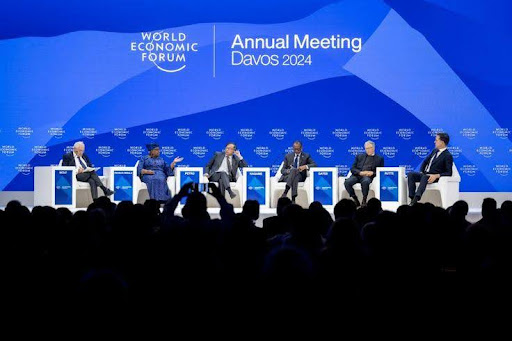
[Cover Image] Rwanda’s President Paul Kagame (third from right) at the World Economic Forum. He said African start-ups lack funding at a global level. Photo: Fabrice COFFRINI / AFP Source: AFP Read more: https://yen.com.gh/business-economy/249868-in-davos-african-nations-a-different-story/
* The quote attributed to Winston Churchill, “Diplomacy is the art of telling people to go to hell in such a way that they ask for directions,” is not found in official records. It is thought to reflect sentiments expressed by those closely associated with his administration, rather than his documented public or written statements.


Leave a comment