
By Alix Poncet.
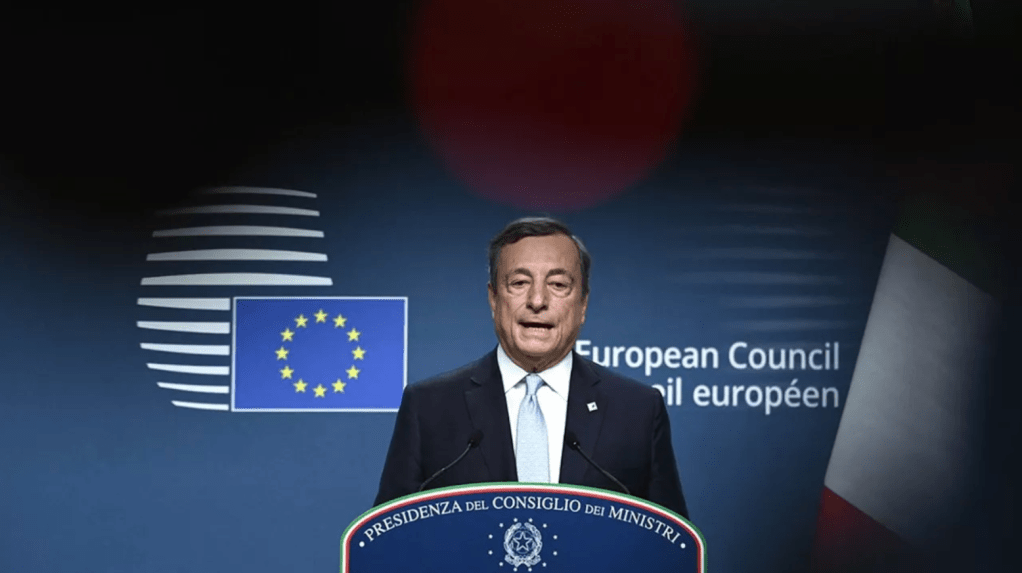
In a landmark report commissioned by the European Union published on September 9, Mario Draghi, former President of the European Central Bank (ECB) and Italian Prime Minister, outlines a bold and urgent strategy to reinvigorate Europe’s competitiveness. As the continent grapples with economic stagnation, declining productivity, and geopolitical instability [1], Draghi’s report serves as a critical intervention aimed to prevent Europe from falling further behind global powers like the United States and China. His recommendations, which include an unprecedented €800 billion annual investment boost, have already sparked significant debate among EU leaders and policymakers [2]. This report is not just a technical document but a clarion call, warning that without substantial reform, Europe will have to compromise on its welfare, environmental goals, and even its freedom [3]. The impact of this report could potentially shape the direction of the European Union’s economic policies for years to come, especially as it coincides with the start of a new European Commission term [4].
Assessing Europe’s economic decline and structural challenges
At the heart of Draghi’s report is a sharp diagnosis of Europe’s economic decline. The report argues that Europe is facing an existential challenge, with its growth and productivity slowing significantly over recent decades. Since 2000, Europe’s GDP has fallen behind that of the United States, and its real disposable income per capita has only grown at half the rate of the U.S. [5]. The continent is particularly vulnerable due to its aging population, which threatens to further stagnate productivity growth. Draghi warns that if productivity does not improve, Europe’s economy will be no bigger in 2050 than it is today, resulting in a future where the region is unable to finance its social model or maintain its geopolitical influence [6].
Beyond the demographic challenges, the report points out that Europe missed the digital revolution, particularly in sectors such as technology and telecommunications, which have driven growth in the U.S. and China. This innovation gap is a major factor behind the continent’s declining productivity, as European companies have specialized in mature technologies with limited growth potential, and regulatory barriers have prevented the commercialization of breakthrough innovations [7] [8]. Furthermore, Draghi highlights Europe’s high energy costs, particularly in comparison to the U.S., where electricity and natural gas prices are significantly lower. This has further hampered Europe’s industrial competitiveness, particularly in energy-intensive sectors like manufacturing [4].
The geopolitical landscape has added another layer of complexity. Europe’s reliance on China’s raw materials and its limited capacity for defense innovation make the region highly dependent on external actors, leaving it vulnerable in an increasingly unstable global order [4]. Draghi’s report underscores that without coordinated action, Europe will be forced to compromise on its core values and ambitions, potentially sacrificing welfare, environmental responsibility, and strategic autonomy.
Strategic pathways to reviving European competitiveness
To address these challenges, Draghi proposes a series of bold and far-reaching reforms centered on an unprecedented investment drive. The report calls for an additional €800 billion in annual investments, bringing Europe’s total investment share of GDP to 27%, levels not seen since the 1960s and 1970s [3]. This investment is essential to revitalize Europe’s technological sectors, accelerate decarbonization, and strengthen its defense capabilities. Draghi emphasizes that these investments must come from both public and private sources, with a portion funded through joint EU debt issuance—a highly controversial proposal that has already encountered resistance from member states like Germany and the Netherlands [3] [4].
One of the most critical areas of reform outlined in the report is the innovation ecosystem. Draghi calls for a complete overhaul of Europe’s approach to innovation, which includes streamlining the regulatory environment, facilitating the commercialization of research, and removing barriers to scaling up innovative companies [7]. Additionally, Draghi urges Europe to focus on artificial intelligence and other emerging technologies, essential for boosting productivity across multiple sectors, including pharmaceuticals, automotive, and defense [5].
In terms of industrial policy, the report advocates for a relaxation of competition rules to enable mergers and market consolidation, particularly in the tech and telecom sectors, to allow European companies to compete globally. This recommendation directly challenges the European Commission’s decision to block mergers like that of Siemens and Alstom, which Draghi argues could have created a European champion in the high-speed train sector [4].
Draghi also identifies energy market reforms as a top priority. He stresses that Europe must lower its energy costs by reforming how energy markets operate [5]. Draghi’s report proposes bold reforms for the EU energy market, focusing on antitrust investigations, decoupling gas from electricity prices, joint energy purchasing, and long-term contracts to enhance competitiveness, reduce emissions, and address geopolitical vulnerabilities, though its success will depend on navigating the EU’s complex regulatory landscape [9]. Moreover, the report calls for a coordinated strategy to secure the raw materials needed for digital and energy transitions, emulating China’s vertical integration in these critical supply chains [4].
Finally, Draghi proposes substantial reforms to EU budgetary policies. He advocates for shifting funds from poorer regions to reindustrialization, digitalization, and innovation policies to align with Europe’s strategic priorities. This also includes the establishment of a common European safe asset, which would facilitate joint borrowing for large-scale projects—a proposal that has garnered support from countries like Spain but faces opposition from more fiscally conservative member states [10].
A blueprint for Europe’s future amid political challenges
Mario Draghi’s report presents a comprehensive and ambitious strategy to reverse Europe’s economic decline and restore its competitive edge in an increasingly volatile global environment. While his recommendations are bold, they face significant political obstacles, particularly regarding joint EU debt issuance and competition reform. Nevertheless, Draghi’s report serves as a critical blueprint for European policymakers, offering a stark warning that without coordinated action and substantial investment, Europe risks falling irreversibly behind its global competitors. As the debate over these reforms unfolds, the report will undoubtedly shape discussions around the future of Europe’s economy, technology, and geopolitical standing.
Edited by Justine Peries.
References
[1] -S&P Global. 2024. ‘Top Geopolitical Risks of 2024’, S&P Global <https://www.spglobal.com/en/research-insights/market-insights/geopolitical-risk>
[2] – Magnus Lund Nielsen, Nicholas Wallace, and Nicoletta Ionta. 2024. ‘EU Politicians Weigh in on Draghi Report’, Www.euractiv.com (EURACTIV) <https://www.euractiv.com/section/politics/news/eu-politicians-weigh-in-on-draghi-report/>
[3] – Tamma, Paola, and Henry Foy. 2024. ‘Mario Draghi Calls for €800bn EU Investment Boost’, Financial Times <https://www.ft.com/content/92f7aedd-67fa-488f-8559-7019b7c2e40a>
[4] – Faggionato, Giovanna. 2024. ‘Draghi Demands €800B Cash Boost to Stem Europe’s Rapid Decline’, POLITICO (POLITICO) <https://www.politico.eu/article/mario-draghi-report-says-eu-must-spend-twice-as-much-after-wwii/>
[5] – The Economist. 2024a. ‘Mario Draghi Outlines His Plan to Make Europe More Competitive’, The Economist (The Economist) <https://www.economist.com/by-invitation/2024/09/09/mario-draghi-outlines-his-plan-to-make-europe-more-competitive>
[6] – The Economist. 2024b. ‘Mario Draghi’s Best Ideas Are Those Europe Finds Least Comfortable’, The Economist (The Economist) <https://www.economist.com/leaders/2024/09/10/mario-draghis-best-ideas-are-those-europe-finds-least-comfortable>
[7] – Malik, Matheo. 2024. ‘Rapport Draghi : 6 Points Clefs et 12 Graphiques à Retenir | Le Grand Continent’, Le Grand Continent <https://legrandcontinent.eu/fr/2024/09/09/rapport-draghi-6-points-clefs-et-12-graphiques-a-retenir/>
[8] – Inman, Phillip. 2024. ‘EU “Needs €800bn-a-Year Spending Boost to Avert Agonising Decline”’, The Guardian (The Guardian) <https://www.theguardian.com/world/article/2024/sep/09/eu-mario-draghi-report-spending-boost>
[9] – Media, Argus. 2024. ‘EU Needs to Shake up Energy Markets: Draghi Report’, Argusmedia.com (Argus Media) <https://www.argusmedia.com/ja/news-and-insights/latest-market-news/2606362-eu-needs-to-shake-up-energy-markets-draghi-report>
[10] – Foy, Henry. 2024. ‘Why Draghi Went for Broke in Calling for €800bn of New EU Spending’, Financial Times <https://www.ft.com/content/76e8458d-3eb7-46d3-8d9c-42d524d60800>
[Cover Image] John Thys/AFP


Leave a comment