
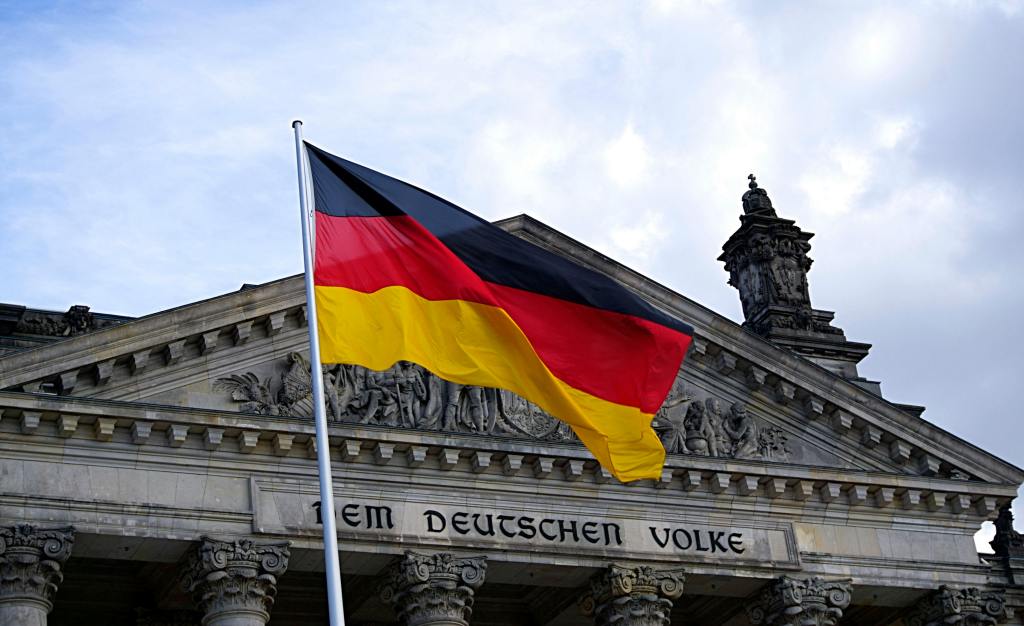
By Julien Huet.
The polls were right. The Alternative für Deutschland (AFD), Germany’s far-right party, won the last regional elections in Thuringia and came in second in Saxony. Although most opinion polls already anticipated this result before the election, it still shocked many people.. This is the first time since World War II that a far-right party has won a regional election in Germany [1], a fact that worries the country’s leading politicians. What led to this situation, and what does it mean for Germany in the years to come?
A rise that is no surprise
The AfD has been part of the political landscape in Goethe’s country for many years now. Founded in 2015 as a reaction to the wave of immigration enabled by Merkel’s policies, the AfD has slowly established itself and found its place in the hearts of many Germans [2]. But how can we explain the rise of a far-right party in a country that still bears the scars of the most tragic event of the 20th century? While the situation may seem paradoxical at first glance, a closer look at the German economic and socio-political climate makes things clearer.
Economic grievances such as teacher shortages, hospital closures, and a sense of inequality have resonated with voters. This is particularly true for people in the eastern regions of the country, who voted more than two times more for AFD than the western ones. The states located in the former GDR are known for being economically underperforming: workers in the East tend to earn 80% of their counterparts in the West [3]. Unemployment is also at its highest level there. As a result, East Germans have long felt forgotten by their political leaders and tend to demand more, faster than their compatriots [4].
This election sadly underscores the major divide between the two reunified halves of Germany. Nearly 35 years after the fall of the Berlin Wall and the reunification of Germany, the populist party is stirring up a rancorous but not new debate across the country. “East bashing”, the negative stereotypes, discrimination, or criticism directed towards people and regions from the former East Germany, is now back in some media. Some Eastern intellectuals have revived the biased narrative that reunification was akin to Western “colonisation,” with assets stripped and Westerners exported to run governments, universities, and courts in the Eastern states [5].
However, that alone does not explain the AfD’s growing popularity. Like all other far-right parties in Europe, the main terrain on which the party has built its power is immigration. As mentioned earlier, the AfD was created in the wake of the German immigration policy of former Chancellor Angela Merkel, famous for her “Wir schaffen das” (« We can do it »). Many Germans felt deprived of jobs and opportunities by the arrival of immigrants (from 1 million in the early 2010 to more than 2 millions in 2015) from North African countries such as Turkey and Morocco. The promise of AFD to become stricter regarding immigration, with slogans such as “The East get’s it done: Summer, sun, remigration”[6], has seduced more and more Germans over the years.
A victory that leads to many political implications
This major political victory gives the AfD new ground. The party, until recently, was on the verge of being banned, due to revelations of a secret plan to deport immigrants and Germans of foreign origin. A clandestine meeting, which took place at the end of November 2023 in Potsdam, aimed, according to the investigative media Correctiv, to launch a network supported by a few wealthy bosses, to operate “a process” of “remigration”, according to the term of the Austrian identitarian Martin Sellner, star guest of this meeting. The stated objective was to give themselves the means to expel to North Africa some 2 million people who currently live in Germany: migrants and asylum seekers, but also German citizens of foreign origin [8]. However, it didn’t prevent AFD from now reaching the top and being poised to reshuffle the deck.
However, it still needs to gain the trust of other forces. Germany’s two main parties, the right-wing CDU and the left-wing SPD have officially proclaimed their strong opposition to the AfD [8]. The AfD’s growing influence poses a dilemma for the German political establishment. Although the main parties say they will never collaborate with the AfD, informal cooperation with the local branches of those same parties is already taking place at the local level in eastern Germany, underscoring the party’s entrenchment [9].
The AfD’s victory highlights the rise of populism in Germany and across Europe. But Björn Höcke’s party does not have a monopoly on this. Meanwhile, the newly formed Alliance Sahra Wagenknecht (BSW) has gained ground, coming third in both elections and questioning Germany’s support for Ukraine while sharing some anti-immigration positions. This new party is also taking advantage of the general discontent of the German people and poses a huge threat to the AfD: it could indeed join coalitions with the centre-right Christian Democratic Union (CDU) in Thuringia and Saxony [10].
What can the AfD opponent do now?
While the results show a continuation of an already rising trend in Germany, there appears to be a counter-movement underway. Chancellor Olaf Scholz called the results “bitter” and criticised the AfD for harming German society and the economy [11]. Germany’s two main parties, the right-wing CDU and the left-wing SPD, have both officially declared their strong opposition to the AfD, and protests against the AfD have taken place, with critics expressing concern about the party’s extremist views and its impact on the German political landscape. Now is the time to consider the future of the forces opposing the AfD [12]. These results are not an isolated event: the far-right party won 15.9% of the vote in the 2024 European Parliament elections and performed impressively in the last general election [13]. It is clear that other parties must find ways to compromise and unite in the hope to protect democracy from the supporters of the extreme right.
Edited by Justine Peries.
References
[1] Nadine Schmidt, Claudia Otto and Matthies Otto. “Germany’s far-right party AfD set to win one state election, and is level in another, exit polls show”, CNN, 1 September 2024, https://edition.cnn.com/2024/09/01/europe/far-right-germany-regional-election-win-intl-latam/index.html, Accessed 22 September 2024.
[2] “Why east Germany is such fertile ground for extremists” The Economist, 29 August 2024, https://www.economist.com/europe/2024/08/29/why-east-germany-is-such-fertile-ground-for-extremists, Accessed 22 September 2024.
[3] “The worrying rise of Germany’s far right” Le Monde, 2 September 2024, https://www.lemonde.fr/en/opinion/article/2024/09/02/the-worrying-rise-of-germany-s-far-right_6724463_23.html, Accessed 22 September 2024.
[4] Why east Germany is such fertile ground for extremists” The Economist, 29 August 2024, https://www.economist.com/europe/2024/08/29/why-east-germany-is-such-fertile-ground-for-extremists, Accessed 22 September 2024.
[5] “The hard right takes Germany into dangerous territory” The Economist, 1 September 2024, https://www.economist.com/europe/2024/09/01/the-hard-right-takes-germany-into-dangerous-territory, Accessed 22 September 2024.
[6] “Immigration to Germany”, Wikipedia, https://en.wikipedia.org/wiki/Immigration_to_Germany, Accessed 22 September 202.
[7] Kirby, Paul; Parker, Jessica, “German far right hails ‘historic’ election victory in east” BBC, 2 September 2024, https://www.bbc.com/news/articles/cn02w01xr2jo, Accessed 22 September 2024.
[8] E Bruno Odent, “« Remigration » : l’effroyable projet de l’extrême droite allemande de déporter 2 millions de personnes”, 29 January 2024, https://www.humanite.fr/monde/afd/remigration-leffroyable-projet-de-lextreme-droite-allemande-de-deporter-2-millions-de-personnes, Accessed 22 September 2024
[9] Christian Edwards, Claudio Otto, Matties Otto and Nadine Schmidt, “AfD becomes first far-right party to win German state election since 1945” CNN, 2 September 2024, https://edition.cnn.com/2024/09/02/europe/afd-germany-election-thuringia-saxony-intl/index.html, Accessed 22 September 2024.
[10] “Sahra Wagenknecht is Germany’s rising political star” The Economist, 30 August 2024, https://www.economist.com/europe/2024/08/30/sahra-wagenknecht-is-germanys-rising-political-star, Accessed 22 September 2024.
[11] “Why east Germany is such fertile ground for extremists” The Economist, 29 August 2024, https://www.economist.com/europe/2024/08/29/why-east-germany-is-such-fertile-ground-for-extremists, Accessed 22 September 2024.
[12] Kirby, Paul; Parker, Jessica, “German far right hails ‘historic’ election victory in east” BBC, 2 September 2024, https://www.bbc.com/news/articles/cn02w01xr2jo, Accessed 22 September 2024.
[13] “Why east Germany is such fertile ground for extremists” The Economist, 29 August 2024, https://www.economist.com/europe/2024/08/29/why-east-germany-is-such-fertile-ground-for-extremists, Accessed 22 September 2024.
[Cover image] – Germany Flag in Front of Building, photo by Ingo Joseph, licensed under Pexels free to use.


Leave a comment