By Clément Gillespie.
General Introduction
In early September, the Conferences team of the ESCP International Politics Society, looking for a topic which would spark meaningful discussions, decided to develop a cycle entitled “Understanding Migrations”. This idea stemmed from the personal lives of all members, some being second generation immigrants trying to explain the lack of cultural legacy from their parents and others trying to explain the impact of migration on their home country. The conferences and discussions organised by ESCP IPS have the ambition of providing a sound base for knowledge and data-based discussions to all while staying as neutral as possible.
As such, on November 22nd 2024, the ESCP international Politics Society had the great honour of hosting Barbara Laubenthal, as part of the “Understanding Migrations” cycle. Dr. Laubenthal’s talk, titled “Assimilation, Integration, or Transnationalism? An Overview of Theories on Migrant Incorporation”, which provided a thought-provoking exploration of the ways societies address the challenges and opportunities of migration.
Dr. Laubenthal, a working German citizen living in the United States embodies the transnational experience herself, making her perspective all the more relevant to the society we live in, which is mainly characterised by its cultural and ethnic diversity. As a professor and author with a deep expertise of migration, integration, and the politics of memory, her work offers critical insights into how historical and contemporary factors shape migrant incorporation processes.
During this discussion, Dr. Laubenthal explained that however new the discussions may seem, the integration of migrants is a concept dating back to the 19th century. This concept has sparked many debates, often heated as it is intrinsically linked to the subjectiveness of human feelings. One of the main questions which overhung our discussion was the possibility of tackling objectively a topic which is by essence a question of feelings, cultures and context.
In this Discussion report, I will aim at summarising the presentation of Dr.. Laubenthal and the discussions that followed, while including my own analysis of the topic.
Summary of the Discussion
I – Introduction
The presentation given by Barbara Laubenthal established how migrant incorporation is a concept inherently connected to the sentiment of xenophobia (“Attitudes, prejudices and behaviour that reject, exclude and often vilify persons, based on the perception that they are outsiders or foreigners to the community, society or national identity” [1]) and which is to be understood from a sociological standpoint. This is why the conceptualisation of the integration of migrants in the receiving society has and still is one of the most researched topics in migration research.
Dr. Barbara Laubenthal, in her article “The Incorporation of Immigrants,” provides a detailed historical and theoretical perspective on the evolution of integration paradigms, from early assimilation concepts to contemporary debates on transnationalism. She highlights how these paradigms emerged in response to specific migration waves, societal changes, and political contexts, such as European migration to the United States in the 19th century, post-colonial migration in Europe, and modern movements like Syrian refugees or migrants from Latin America. Laubenthal stresses that the concepts of Assimilation, Integration, and Transnationalism are not merely academic theories but also reflect power dynamics, agency, and equality between migrants and host societies. These paradigms continue to influence not just scholarly thoughts but also immigration policies and public perceptions across Europe and the United States [2].
It seems therefore important to start with a neutral definition of the concept of integration, which can be explained as “the process of settlement, interaction with the host society, and social change that follows immigration”. We will also define a migrant as a “person who moves away from his or her place of usual residence, whether within a country or across an international border, temporarily or permanently, and for a variety of reasons” [3].
II- Assimilation
Assimilation was the first theoretical term invented around the incorporation of migrants. The concept of assimilation refers to the “process of interpenetration and fusion in which persons and groups acquire the memories, sentiments, and attitudes of other persons or groups, and, by sharing their experience and history, are incorporated with them in a common cultural life. (…) Assimilation denotes this sharing of tradition, this intimate participation in common experiences” [4].
This definition raises a crucial point of proposing a vision of a collaborative incorporation of migrants into society. Indeed, the process of assimilation is not at the expense of the migrant but rather a fusion between the native culture of the latter and that of the host society, which could be envisioned as a third socialisation. As such, in 1914 already, Park recognised in the development of modern societies the merging of small mutually exclusive groups into a larger inclusive society [5].
This reciprocal incorporation of migrants into society often leads to a misinterpretation of the eventual failure in incorporating immigrants into society, which is too often explained as the supposed lack of will of immigrants to assimilate the host country’s culture. Nonetheless, the host society must provide an inclusive framework for any possible incorporation of migrants into the latter. Indeed, often immigrants are faced with prejudices and oppression as they can be seen as a symbol of an identifiable social group more than as individuals. As such they are often opposed to the host society’s cultural norms, for example in Ancient Greece, foreigners were designated as “Barbarians” and individuals living in another city than that of their births were designated as “Metica”. This goes to show that the discrimination against people of foreign origins is far from being a recent topic.
Another point is the central place of culture in the relationship between the immigrant and the society, which Milton Gordon in 1964 tried to expose by conceptualising an assimilation process [6]:
- Cultural or Behavioural (acculturation)
- Structural
- Marital — or amalgamation
- Identificational
- Civic
The first step of the assimilation process is cultural and behavioural as the immigrant will learn what we could call the “code of conduct” of the host society. This process, according to Gordon, takes the form of an acculturation as immigrants will lose behavioural aspects that bind them to their culture of origin and become culturally similar. In a second part, immigrants become a part of the country itself by integrating the labour market and all other steps should automatically follow after the integration of the labour market thanks to the socialisation by peers which is heightened as immigrants come in longer contact with natives. The third step refers to the development by the migrant of a family (by marriage) or of a group of peers/friends native to the host society. The fourth step is the instillation of a deep sense of belonging in immigrants who will identify themselves as members of the society. Finally, the acquisition of a citizenship represents the highest level of involvement in the society’s affairs and the highest level of assimilation, such so interethnic conflicts over values and power are overcome by the shared identity of citizenship.
With this concept, the main points Milton Gordon tries to make is that giving up on one’s own identity is the “price of assimilation” and that ultimately all forms of discrimination should disappear as the immigrant can no longer be recognised as such by the host society.
More recently, multiple researchers tried to modernise the concept, such as Alba and Nee who emphasised on the importance of equality and parity and proposing a two-step assimilation model based on socioeconomic assimilation via social mobility (the possibility to move up the social ladder) and the participation in the labour market (without discrimination compared to natives) [7]. Yet, in these theories, there is still an underlying assumption that there is an institutional core in the host society which acts as a compelling force on immigrants, leading them generation after generation to assimilate the culture of the host society to its core.
Thus, the main recurring criticism made to the concept of assimilation is the idea that the migrant must lose all aspects of their own culture and that the culture of the host country is forced upon him. However, the early concept of assimilation was developed with the idea of being a process of fusion of cultures, based on an exchange between two social groups. Contradictorily, the actual implementation of such concepts often led to a forceful resignation to the acceptance of the host country’s culture, reflected by the French model of migration, which by its universalist approach actually fails to recognise the difference between social groups and tends to promote the standardisation of culture.
In this sense, the American assimilationist model provides a framework which fails to address the issue of unchangeable ethical traits such as skin colour or accent which make up an unerasable obstacle to the annihilation of all characteristics related to a social or ethnic group. More generally, the assimilationist model puts a strong emphasis on culture and tends to leave unaddressed the question of physical differences. This issue comes into direct conflict with the very idea defended by Milton Gordon in the sense that in many situations it is impossible for the immigrant to erase all traits which make them, by prejudice or not, identifiable to a specific ethnic or social group.
III- Integration
As we have seen the concept of assimilation may not be satisfying enough to explain the incorporation of migrants into foreign societies, we are now led to Integration, the second concept analysed by Barbara Laubenthal. Integration is very similar to the American assimilation concept.
The most influential theory was developed by the German sociologist Hartmunt Esser in 1982, which is heavily inspired from the American assimilation concept.
Integration focuses on the migrant’s ethnic group, which is seen as a negative factor in the latter’s integration process and is in this sense correlated with socioeconomic inequality. In other words, in the integration theory, the more immigrants remain amongst themselves, the more they will reject the host country’s culture and be rejected by the host country.
Thus, the integration process emphasises on the need for immigrants to actively abandon their original country’s culture and a step-based process beginning with the arrival of the migrant and ending with their integration:
- Cultural integration (knowledge of behavioural codes, culture and language of the host country)
- Structural integration (integration of the labour market and acquisition of rights)
- Social integration (contact with the host society, friendships and marriage)
- Emotional integration (identification to the host society)
This concept heavily impacted German integration policies, with the idea of phases immigrants must go through in order to be fully integrated in the host society. Indeed, Germany created on this basis programs to promote the integration of immigrants to the labour market with the idea of integrating them into society through work.
One of the main advantages of this concept is that it become possible to measure the integration of immigrants into society, by measuring the number of interracial marriages, the number of active immigrants out of all immigrants or the number of naturalised citizens. However, this concept also leads to much prejudice by assuming all immigrants have a culture different from that of the host country and assuming all immigrants can be considered the same culturally speaking. Integration is in this regard understood as something immigrants must perform but which is prevented by their different culture, and immigrants are pointed as a homogeneous and problematic group.
In a way, this theory of integration is shared by many right-wing movements, who use the concept to identify migrants as an identifiable group with shared and defined cultural traits which pose a threat to the host society. The immigrant becomes with this theory a symbol of a group more than a person. This explains the lack of recognition of the emotional difficulty for an immigrant to assimilate the host society’s culture and the underlying assumption that immigrants cannot be part of society unless they let go of their own cultures.
Moreover, migration policies based on the integration model have proven in recent years to have an undeniable flaw of pushing immigrants to deny their own culture. This indirectly often provokes a reverse effect amongst second generation immigrants who try to reconcile with their parent’s culture of origin, and often, in a more traditional way than the latter.
IV- Transnationalism
The inability of assimilation and integration theories to consider the cultural differences between immigrants leads us to the third concept analysed by Barbara Laubenthal, which aims at avoiding the objectification of immigrants: Transnationalism.
Transmigrants can be defined as “immigrants whose daily lives depend on multiple and constant interconnections across international borders (…) they become incorporated in the economy and political institutions, localities and patterns of life of the country in which they reside” [8].
This concept started as a criticism of existing concepts and aimed at emphasising on the human nature of migrants to prevent their representation as passive objects of the nation-state or as a workforce which can be used during growth and laid off during crises. This concept is based on empirical observations of a diminished significance of national boundaries and a criticism of “methodological nationalism” which could be defined as the “assumption that the nation/state/society is the natural social and political form of the modern world” [9] or in other words the idea that all social relations can only be observed within the Nation-state.
Transnationalism proposes a new vision of migrant incorporation where the migrant does not need to incorporate the culture of the host country to be integrated and in which, the latter may come and go as they please. The concept tries to respond to the interconnectivity of the world, which mixes cultures and blurs the border between migrants and natives. This model therefore provides an explanation to the concept of “melting pot” or “salad bowl”, expressions often used to describe London or New York, but which are now increasingly more relevant to Western countries as a whole.
In politics, a branch of transnationalism focuses on the acknowledgement of the native culture of immigrants in immigration policies in order to preserve the idea of multiculturalism and prevent a vice of standardisation too often seen in immigration policies today. This is particularly shown by the recent integration of cultural and identity tests in naturalisation applications in Germany, highlighting the emphasis put on the assumed inadequacy of the host society’s culture and the immigrant’s culture, regardless of their country of origin and based on their status of immigrant.
However, this model is heavily flawed by the assumption cultures can be flexible and that borders can be crossed without obstacles which for now may be a reality for European citizens inside the European Union’s territories theoretically but is pragmatically only true for those with the financial resources to travel freely across borders. Moreover, this concept also raises the question of the possibility to be loyal to more than one country, and to have multiple homes (in the sense of a place to which an individual is emotionally attached and where the individual feels a deep sense of belonging). Therefore, undocumented migrants can hardly be concerned by this concept.
V- Homemaking
The most modern research on the incorporation of migrants has taken distance from the emphasis on cultures and the nation state and precisely focuses on the integration of migrants at the local level. This change in perspective aims at taking an immigrant’s standpoint as their integration happens at the local level and as their relationship with the host society is highly theoretical. The idea is to study behaviours from a microsocial perspective.
This is where the concept of homemaking comes into play, which is a concept aiming at analysing the way immigrants elaborate their inclusion into the host society and accept the society as their home. In other words, how migrants achieve the level of emotional integration through their relationship with local communities. This concept focuses on the day-to-day mechanisms of integration which naturally take place without the intervention of the state through integration policies. The idea defended is that the interaction between migrants and local communities sets a quasi-intimate context in which symbolic bindings effective outside of this social setting are blurred. In this sense, immigrants are seen as being naturally incorporated in the society in this quasi-intimate interaction which nullifies the symbolic image the immigrant and their counterpart represent.
This concept is an interesting take on migrant incorporation which works well in a setting where the migrant develops a lot of interactions with the host society. This raises the question of whether homemaking can comprise the possibility of settling in a country without interacting with the local population if immigrants stay amongst themselves.
This concept may also provide an answer to the point raised earlier regarding the disregard for emotions in the assimilation and integration models and hence in immigration policies. Emotions in the migration process are difficult to address as policies very rarely recognise the emotional challenge lived by immigrants. This is where the local level comes into play; as most immigrants carry a heavy emotional trauma when arriving in the host country, they may find a sense of relief in their relationship with local populations by developing relationships and being able to share their memories with people in which they trust. Taking the example of war refugees, the trauma carried by individuals who left their country against their will and in such circumstances often builds a social barrier which is hard to overcome but which is eased by the interaction with the local population. In this sense, migration policies can hardly address the social reclusion encouraged by the trauma lived by migrants and this is where the homemaking concept provides a solution based on the interaction between migrants and the local community. Nevertheless, this idea is based on the optimistic assumption of a friendly host society.
Changing perspective on the homemaking concept and coming back to assimilation, we can also explain how the less a country has contact with immigrants the higher the level of xenophobia observed will be. Interaction between natives and immigrants is very scarce in this situation, thus creating an artificial bubble similar to that to which migrants remaining amongst themselves are exposed. This lack of exposure to other cultures makes social groups unable to see the impact of their culture on their behaviour and how to adapt it. Thus, with the arrival of an external culture, the host society assumes an inevitable clash of cultures as part of the natural human fear of the unknown and of the symbolism represented by the immigrant. The immigrant, to the eyes of a closed society, is an individual with an abnormal behaviour which is difficult to understand, and their lack of integration is often therefore blamed on their lack of will to integrate.
The “cultural abnormality” shown by the migrant makes them more easily recognisable and leads to prejudices which leads people – encouraged by far right-wing parties – to believe in the idea of a mass invasion. The key to successful migration policies may therefore indeed be a mix of both national and local level policies to ensure a safe interaction between the immigrant and the local population and an integration of national values by the immigrant.
VI- Integration as participation
In the political field, another recently elaborated concept is integration as participation. The idea developed by Klaus Bade is to promote the integration of migrants into society by equally providing immigrants and natives with the possibility to participate in the society, they will be naturally integrated into the latter. In this theory, Bade puts a strong emphasis on the labour market and the importance of its equal accessibility as a precondition to the existence of a social independence of the migrant from his community.
An example of a policy representing this idea of integration via labour is the European free Labour market, where one of the main ideas behind the abolishment of obstacles to the integration of the labour market is the reinforcement of the European identity. Indeed, by allowing people to migrate from their home country to another country of the European Union, the steps of emotional and social integration are quick to follow. The Shenghen space reinforces this policy in the way that it is much easier not only to meet with other European citizens but also to physically stay in contact and to combine professional and personal life bindings. Thus, if we identify the European Union as an association of countries more than as a theoretical federal state, the policies implemented by the latter can be seen as following the theory of Bade. In this sense, we could even envision intra-European migrations as following a principle of double integration with the assimilation of the host country’s culture and a deepening of the sense of European identity.
Yet, the current integration crisis (“My main concern as a researcher is the integration crisis, the fact that many western societies face a backlash against immigration”, Barbara Laubenthal) faced by Western societies tends to question the idea that integrating the Labour market automatically enables a full integration of the host society. Indeed, if it may be an unavoidable condition or an enabler, other factors must be considered to explain the failure of integration policies. One of the main factors is the rise of the extreme-right, which often instrumentalises immigration as a means to cleave the political scene. This instrumentalisation of immigration is achieved through the objectification of the migrant as a threat to the stability of the society, where the migrant plays the role of a scapegoat to the society’s problems. This phenomenon is also amplified by the general rise in the use of social media and in particular the use of social media as a means to access news. Indeed, whether it be from the lack of sources, the overload of information (which may prevent individuals from selecting relevant information or lead them to avoid news as a mean of emotional protection), the cleaving effect of social media, there is an observed tendency of a radicalisation of ideas defended by people using social media as a means to access news compared to people using traditional media to access news. This phenomenon is emphasised by the intervention of famous public figures using social media to spread fake news such as the idea Haitians could eat dogs [10].
VII- Conclusion
In light of these elements, it seems clear that assimilation, integration and transnationalism theories all provide a certain level of depth to the analysis of migrant incorporation. These concepts allow us to better see the necessary steps to take to fully integrate a host society and the way policies can best answer the issues raised by migrant incorporation.
Nevertheless, these theories alone only provide an explanation of how migrants are integrated but fail to recognise the emotional weight often carried by migrants and make a strong focus on the assimilation of the host society’s culture by the migrant. This leaves the other side of the coin unaddressed: how do foreign cultures and in particular those brought by migration impact our societies ?
Edited by Arthur Descazeaud.
References
[1] xenophobia – European Commission.
[2] Barbara Laubenthal, Introduction: Assimilation, integration or transnationalism? An overview of theories of migrant incorporation, 2023, International Migration journal, International Organization for Migration.
[3] Blanca Garcés-Mascareñas and Rinus Penninx, Integration Processes and Policies in Europe, Context Levels and actors, 2016.
[4] Glossary on migration, International Organization for Migration, IML Series No. 34, 2019.
[5] Park, R.E. and Burgess, E.W., Introduction to the Science of Society, 1921, University of Chicago Press.
[6] Park, R.E, Racial assimilation in secondary groups with particular reference to the negro, 1914, University of Chicago Press.
[7] Gordon, M.M., Assimilation in American life, 1964, New York: Oxford University Press.
[8] Alba, R., & Nee, V., Rethinking assimilation theory for a new era of immigration, 1997, International Migration Review, 31, 826-874 and Remaking the American mainstream: Assimilation and contemporary immigration, 2003, Cambridge, MA: Harvard University Press.
[9] Glick Schiller, Linda Basch and Cristina Szanton Blanc, From Immigrant to Transmigrant: Theorizing Transnational Migration, 1995.
[10] Andreas Wimmer and Nina Glick-Schiller, Methodological nationalism and beyond: nation-state building, migration and the social sciences, 2002.
[11] Park C. S., Does too much news on social media discourage news seeking? Mediating role of news efficacy between perceived news overload and news avoidance on social media, 2019.
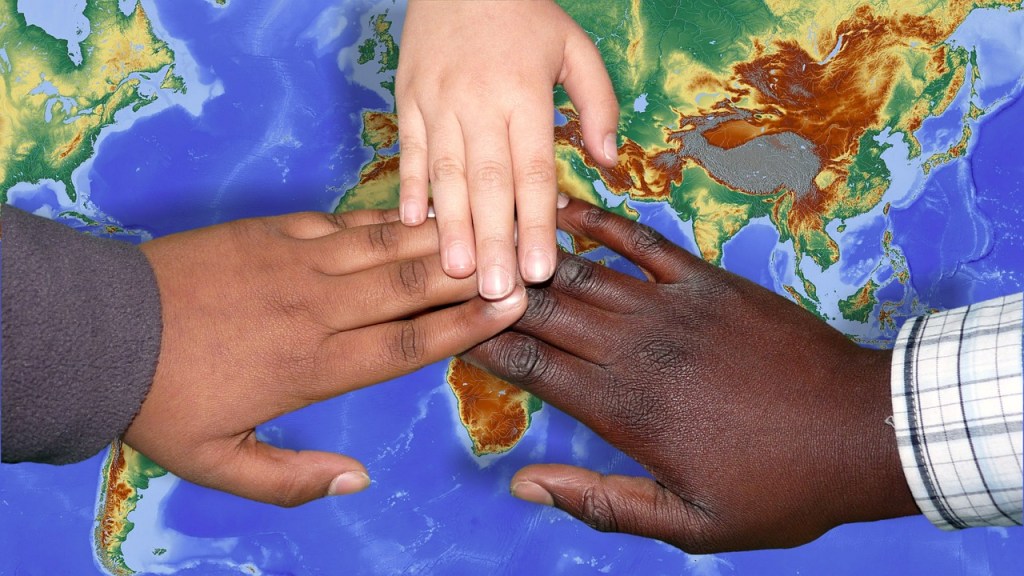
[Cover Image] Image by Ralph from Pixabay, free for use under the Pixabay Content License.


Leave a comment