
By Julien Huet
Donald Trump’s return to the White House has marked the resurgence of “Trumponomics,” a pro-growth agenda encouraging tax cuts, deregulation, and a renewed preoccupation for protectionist trade policy [1]. The term Trumponomics was coined by Stephen Moore and Larry Kudlow, two conservative economists and advisors to Donald Trump during his 2016 presidential campaign, to describe the effects of his policies on a global scale.. This has set off a fire in the U.S. markets due to greater concerns over inflation, trade wars, and global economic stability. As investors hail the chance for growth, the world is getting ready for turbulence.
Tax Cuts and Deregulation: Whipping Up Domestic Growth
The economic agenda of Trump hangs, for the most part, on tax cuts and regulation rollbacks as instruments to fire up domestic growth [2]. Leading items are efforts by Trump to extend and expand his earlier tax cuts, including a reduction in the corporate tax rate from 21% to as low as 15% and possible extensions of cuts to individuals [3]. With these tax cuts and with a Republican-dominated Congress, this really provides a very good environment for businesses and investors; hence, stock prices and business optimism have risen accordingly. Trump’s tax reform, for instance, doubled the estate tax exemption, allowing individuals to pass down up to $11 million tax-free. This change significantly reduced the tax burden on large inheritances until at least 2025.
Another very important aspect of his approach: deregulation. Trump vows to roll back regulations that hit the technology, finance, and energy industries. Plans include lifting oversight on artificial intelligence and cryptocurrency markets and reducing restrictions on oil and gas drilling on federal land. This will, in all likelihood, be of minor short-term benefit to corporations, while many analysts warn of possible long-term consequences in terms of such areas as environmental protection, consumer safety, and financial transparency [4]. While these policies were intended to unleash business growth, they may also foster unchecked risks.
Protectionism and Global Trade: Heightened Tensions Ahead
Protectionism remains a defining feature of his economic appeal to this day. Building on the tariffs he set in his first term, Trump has proposed new tariffs of 10–20% on all imports and as high as 60% on Chinese goods [5]. This approach, designed to shield American industries from foreign competition, may increase domestic manufacturing but also risks a trade war with major economies like China and the European Union likely to retaliate.
Higher tariffs would increase the cost for imported goods and hit American consumers directly by hiking the prices for items they regularly buy. Global trade tensions could undermine supply chains, particularly in countries expected to take retaliatory measures that could cause bottlenecks for basic items [6]. The policies of Trump are supposed to protect American jobs and industries; however, doing so risks pitting the country against its significant friction with its trade partners, which could stifle investment and dampen economic growth globally. Key industries, such as agriculture and manufacturing, both highly integrated with global markets, may face higher costs and reduced demand from abroad.
Impact on the U.S. Economy and the Global Landscape
The consequences of Trump’s economic program on both the United States and the rest of the world will be substantial. In the short term, the economy of the United States will grow and create jobs as a result of the tax cuts and deregulation. But these also will add to the federal deficit, already projected to swell to 6 percent of GDP over the coming decade, and could continue to fire up inflation, adding pressure on the Fed to raise interest rates in a bid to cool off upward price pressures [7].
Abroad, the Trump agenda promises to reshape trade relations as nations retaliate against American tariffs with protectionist measures of their own. There is a risk of China, the EU, and Canada retaliating with their own tariffs, making a spiral of retaliation highly destructive to growth across the world. Emerging markets will likely bear economic shocks, especially those countries heavily exporting to the U.S., while trade declines and global supply chains become more fragmented and less efficient [8]. It should also be noted that the higher tariffs and lower immigration flows could mean a labor supply shortage that would affect industries reliant on immigrant labor, such as agriculture and construction, thereby pushing wages up and contributing to inflationary pressures.
Conclusion
With the return of Trumponomics, the U.S. economic landscape is about to change, and so is its role in the global economy. While tax cuts and deregulation can be considered specific short-term economic boosters, protectionist trade policies and restrictive immigration reforms come with significant risks. This may mean a short-term gain for America’s economy, but the implications of rising inflation, ballooning deficit, and strained trade relationships would lead to instability in the global economy. The world will be watching closely as Trump’s policies unfold, acutely aware that America’s path into the future under Trumponomics will have sharp impacts both at home and abroad.
Edited by Justine Peries.
References
[1] Jim Probasco, “Trumponomics: Definition, Key Principles, and Impact”, Investopedia, 31 October 2024, https://www.investopedia.com/trumpenomics-definition-8419795, Accessed 11 November 2024.
[2] Roula Khalaf, “Swamp Notes: Trumponomics 2.0”, Financial Times, 9 November 2024, https://www.ft.com/content/1e894c7b-5b23-4c28-bff7-e60ccfa5ab30, Accessed 11 November 2024.
[3] Pierre Pincemaille, “Faut-il s’inquiéter du retour des “Trumponomics”?”, L’Écho, 12 November 2024, https://www.lecho.be/opinions/general/faut-il-s-inquieter-du-retour-des-trumponomics/10573417.html, Accessed 11 November 2024.
[4] ‘Welcome to Trump’s world”, The Economist, 6 November 2024, https://www.economist.com/leaders/2024/11/06/welcome-to-trumps-world, Accessed 11 November 2024.
[5] “The return of Trumponomics excites markets but frightens the world”, The Economist, 6 November 2024, https://www.economist.com/finance-and-economics/2024/11/06/the-return-of-trumponomics-excites-markets-but-frightens-the-world, Accessed 11 November 2024.
[6] “Why investors’ “Trump trade” might be flawed”, The Economist, 3 November 2024, https://www.economist.com/finance-and-economics/2024/11/03/why-investors-trump-trade-might-be-flawed, Accessed 11 November 2024.
[7] Alana Semuels, ‘What Donald Trump’s Win Means for Inflation’, Times, 11 November 2024, https://time.com/7175083/donald-trump-presidency-inflation/, Accessed 11 November 2024.
[8] Sam Meredith, ‘What Trump’s historic election victory means for the global economy’, CNBC, 7 November 2024, https://www.cnbc.com/2024/11/07/what-trumps-historic-election-victory-means-for-the-global-economy.html, Accessed 11 November 2024.
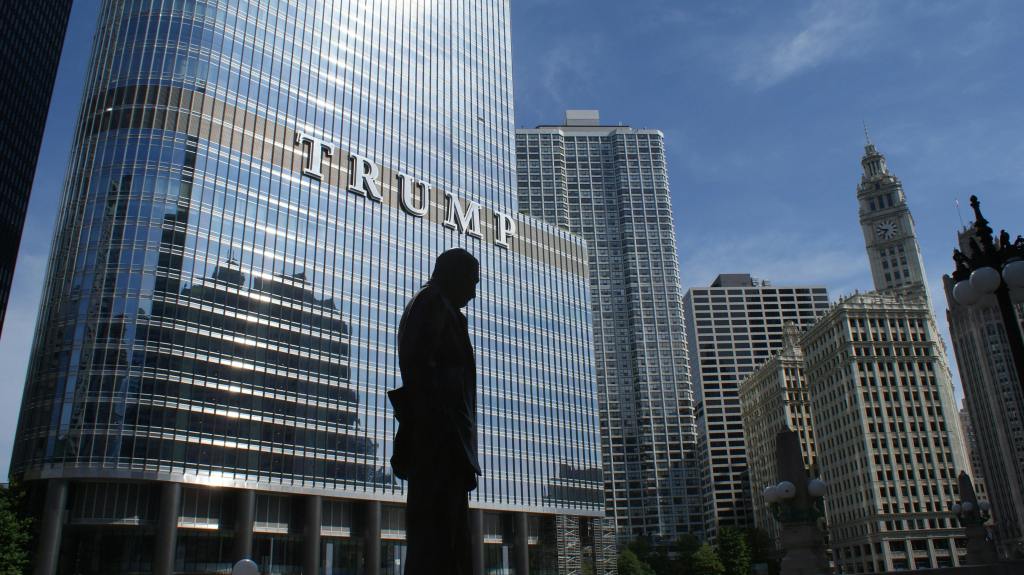
[Cover Image] Photo from Carlos Herrero, free to use under Pexels license.


Leave a comment