
By Annarita Magliaro
Romania’s Constitutional Court recently invalidated the presidential elections due to alleged Russian interference, causing a significant impact on the country’s political landscape. The country employs a popular vote system to elect the president, with a second round held if no candidate achieves an absolute majority in the first. Romania’s political landscape has traditionally been dominated by a multiparty system, alternating between left-leaning and center-right policies. However, the recent rise of nationalist and far-right parties such as Alliance for the Union of Romanians (AUR) has disrupted the traditional power balance. After the first round of voting on 24 November 2024, the ultranationalist and pro-Russian candidate Călin Georgescu emerged as the frontrunner, investigations conducted by Romanian intelligence revealed a disinformation campaign put in place by Moscow with the objective of influencing the election outcome. [1]
Declassified documents from Romania’s Supreme National Defence Council revealed that the country was the target of ‘aggressive hybrid attacks’ [2] by Russia during the election period. That includes a network of more than 25,000 fake accounts on TikTok, activated two weeks before the elections, that intensively promoted Georgescu’s candidacy since 11 November [3]. In addition, a single account allegedly made payments of €381,000 in a single month to users promoting Georgescu [4]. It also seems that more than 85,000 cyber attacks aimed at exploiting vulnerabilities in the electoral system were reported, which attempted to interfere with election day proceedings and tamper with results, with a level of coordination that suggests the operation of state-sponsored actors [5]. Romanian officials stated that these activities mirrored similar operations previously attributed to Russia in Ukraine and Moldova. [6]
In light of these revelations, the Constitutional Court (nine independent judges) unanimously decided to annul all election results and ordered the government to set a new election date. In its statement, the Court emphasised that the annulment was indispensable to ensure the fairness of the electoral process. The decision provoked mixed reactions. Călin Georgescu announced his intention to appeal to Romania’s High Court of Cassation, calling the decision a ‘coup d’état’ and stating that ‘the Romanian people are sovereign and will remain sovereign’. George Simion, leader of the far-right party Alliance for the Union of Romanians (AUR), criticised the decision as an attack on democracy but urged its supporters not to resort to violence, stressing that the abuse must be punished democratically, by challenging the annulment through Romania’s legal system or by engaging with European institutions. [7]
The incumbent president, Klaus Iohannis, from the National Liberal Party, declared that he will remain in office until his successor is elected, reassuring investors, the EU and NATO that Romania remains a stable and solid country. [8]
The international community has expressed concerns over the reported Russian interference. The United States warned that such interference could affect Romania’s relations with NATO, highlighting the need for thorough investigations to maintain the integrity of democratic processes. [9]
The European Union called for increased security in social networks and respect for the democratic process.
The cancellation of the elections opened a new phase of political uncertainty for the country. The government must now organize new elections while addressing the challenges posed by foreign interference and ensuring the transparency and legality of the electoral process. The situation requires a coordinated national and international response to restore trust in democratic institutions and prevent future external interference.
Social media platforms like TikTok, often seen as entertainment tools, are increasingly being weaponised for political purposes. These recent developments highlight once again the vulnerabilities of democratic processes in the face of modern threats of disinformation and cyber-attacks. The country’s and the international community’s response will be crucial in determining the resilience of democratic institutions in an increasingly complex geopolitical context.
Edited by Justine Peries.
References
[1] El País. “El Constitucional de Rumanía Anula la Primera Vuelta de las Elecciones Presidenciales Tras Detectar Interferencia Rusa.” El País, 7 Dec. 2024, elpais.com/expres/2024-12-07/el-constitucional-de-rumania-anula-la-primera-vuelta-de-las-elecciones-presidenciales-tras-detectar-interferencia-rusa.html.
[2] The Times. “Romania Election Marred by Russian Cyber Attacks, Constitutional Court Steps In.” The Times, 7 Dec. 2024, www.thetimes.com/world/europe/article/romania-election-russia-cyber-attack-s6clzzw3x?region=global.
[3] Radio Free Europe/Radio Liberty. “Romania Alleges Russian TikTok Interference in Presidential Elections.” Radio Free Europe/Radio Liberty, 7 Dec. 2024, www.rferl.org/a/romania-russia-election-interference-tiktok/33227010.html.
[4] Associated Press. “TikTok under EU Scrutiny for Role in Romanian Election Interference.” Associated Press, 6 Dec. 2024, apnews.com/article/tiktok-romania-european-union-election-0638e90cb3898fc61619e8aed4731a53.
[5] “Romania’s Election Systems Targeted in Over 85,000 Cyberattacks.” Bleeping Computer, 7 Dec. 2024, www.bleepingcomputer.com/news/security/romanias-election-systems-targeted-in-over-85-000-cyberattacks/?utm_source=chatgpt.com.
[6] The Times. “Romania Election Marred by Russian Cyber Attacks, Constitutional Court Steps In.” The Times, 7 Dec. 2024, thetimes.co.uk/article/romania-election-russia-cyber-attack-s6clzzw3x.
[7] Associated Press. “Romania’s Constitutional Court Annulles Election Amid Russian Interference Concerns.” AP News, 7 Dec. 2024, apnews.com/article/9e64a5420df7314f07d34644b5cbeaa9.
[8] Associated Press. “Georgescu and Romania’s Elections in Crisis.” AP News, 7 Dec. 2024, apnews.com/article/georgescu-romania-elections-9e64a5420df7314f07d34644b5cbeaa9.
[9] Cadena SER. “EE.UU. Avisa de Que la Injerencia de Rusia en las Elecciones de Rumanía Puede Influir en su Relación en el Seno de la OTAN.” Cadena SER, 5 Dec. 2024, cadenaser.com/nacional/2024/12/05/eeuu-avisa-de-que-la-injerencia-de-rusia-en-las-elecciones-de-rumania-puede-influir-en-su-relacion-en-el-seno-de-la-otan-cadena-ser/.
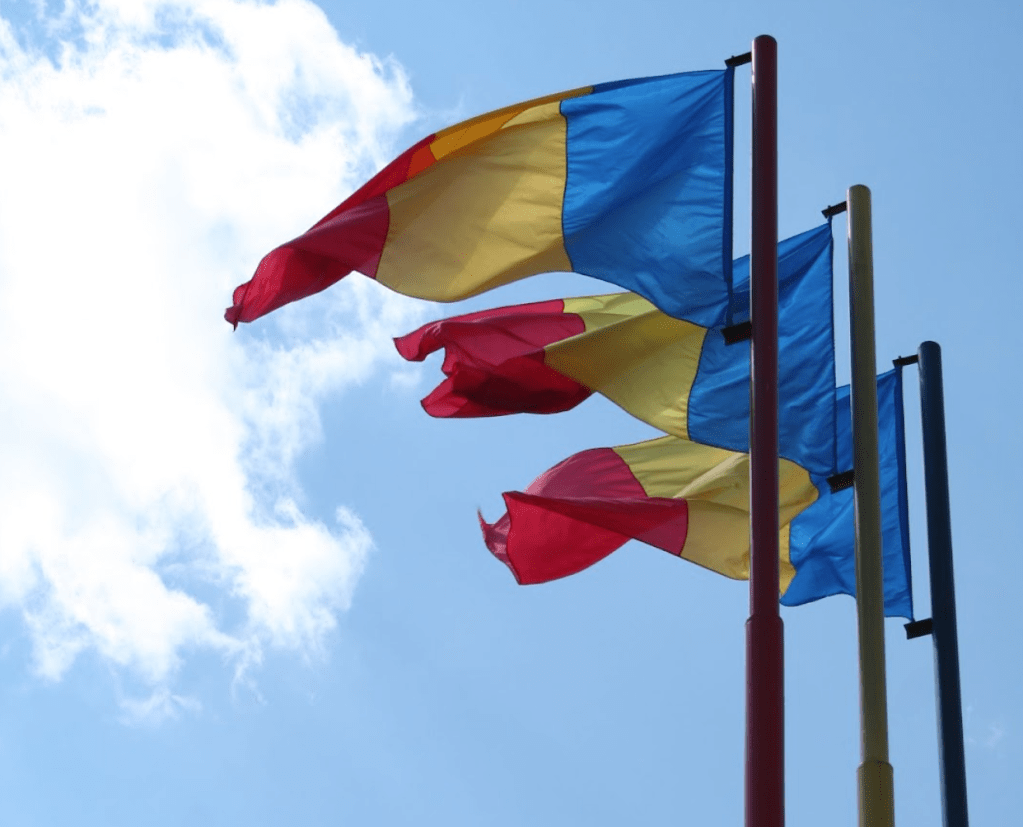
[Cover Image] Photo of Romanian Flag by Nrares licensed under Flickr.


Leave a comment