
By Justine Dukmedjian.
On Wednesday, December, 17th 2024, the ESCP International Politics Society had the immense pleasure to host a discussion with Northeastern University London teacher Charlotte Grant.
Professor Grant just co-edited a book, Cultures of London. Legacies of Migration, and was invited by our association to talk about the effects migrations have on societies’ art and culture [1]. This conference was meant to close a cycle of conferences initiated by Clément Gillespie (VP Business Development & Events of the ESCP International Politics Society), Pedro dos Santos Braz (Head of Conferences) and Joseph Zgheib (Conferences Associate) as a mean to approach migrations from a different angle (culture and art), after conferences tackling more commonly discussed topics about migration (like its economic implications).
The mere cover page of her book invites to think about the multiculturalism of London and how migration has shaped the city’s culture, as Prof. Grant puts it: the cover is a photograph of Chila Kumari Sing’s installation on the Tate Britain’s facade for its 2020 Winter Commission [2]. This technicolour installation, called “Remembering a brave new world” refers to a lot of themes, stemming from the artist’s multicultural upbringing – she is a Liverpudlian of Indian descent – and beautifully represents some of the different cultures London is made of.
Prof. Grant, during her speech, after presenting her book and its cover page, broached a lot of topics related to the many links between migration and art and culture in London, and we decided to focus on a few themes only. First, we will start by discussing the definitions of culture and art and their intrinsic relationship to migrations. Then, we will endeavour to present all the major migration waves that shaped London. Finally, we will focus on London’s neoclassical architecture, as a tangible example of how migrations deeply influence culture and art.
I. what exactly are art and culture? And why think about their link with migrations?
Prof. Grant gave us the following definition of culture and art : there are obvious kinds of art and culture, like literature, dance, performance, opera, etc. Architecture is a form of art and an expression of culture as well, and there are many other cultural practices. Such as, for example, to give you a better understanding of how subtle and wide cultural practices are, Londoners enjoying a drink in a pub on a Friday night after leaving the office earlier than the rest of the week. Prof. Grant brought this example as, for her, it sort of embodies how omnipresent cultural practices are, and how different they can be between societies: indeed, she is always amused at how her foreign students look bewildered at the vision of the packs of people drinking in pubs at the beginning of the weekend.
The Cambridge Dictionary gives several definitions of “art”. After reviewing them, we offer the following: art can be understood as an activity or a production that is beautiful and/or allows people to express their feelings and/or ideas.
As for “culture”, the Cambridge dictionary also gives several definitions [1]. Upon reading them, we offer this definition of culture: the existence (and, sometimes, expression) of habitual and shared customs; beliefs; attitudes; opinions; arts; behaviors; attitudes; habits of a particular group within a society. Culture is not written in stone: it changes between times and places.
The link between culture and art thus appears to be clear: art seems to be a way to express culture (but not exclusively) and culture seems to shape art (the shared beliefs of your cultural group shape, for example, how you envision beauty and thus how you make art).
But what about the link between them (art as well as culture) and migration?
Let’s go back to the definition of migration – thanks to, again, the definitions of the Cambridge dictionary [5]. We can see migration as a people’s departure from a place to settle into another, for a period of time that is usually long, and for reasons that can be economic and/or linked to safety concerns and/or religions; etc. Migrants can travel to a new place within a country, or, more generally, to another country. They usually travel in rather large numbers, since drivers for migration tend to impact several people.
In other words, migrants are groups of people travelling from their place of origin to another where they come with their cultural baggage. And, as we said earlier, culture is far from being set in stone but is rather permeable and changes for a lot of reasons: like the introduction of a new form of culture brought about by foreigners settling in. So, concluding this cycle of discussions about migration through the prism of art really allows us to understand people’s movements and integration from a new perspective, by helping to demonstrate how intrinsically linked they are to the process of cultural and artistic evolution.
II. London’s migration waves
Ian Sanjay Patel’s book title “We’re here because you were there. Immigration and the end of Empire.” highlights how the British Empire was a driver for migrations from all over the dominiums, and especially from India or African countries [6]. Yet, London was culturally and artistically shaped by migrations far before the migrations coming from the Empire. It all started, as Prof. Grant reminded us, more than a thousand years ago, of the Roman Empire.
According to an illuminating article by Alwyn Collinson for the London Museum, we indeed have archeological evidence from London being a multicultural city since the Roman creation and occupation of Londinium [7]. Collinson mentions the analysis of the human remains of a 14 year-old girl excavated from Lant Street as a proof. Indeed, scientists, through analysis of ancient DNA and tooth enamel isotopes, were able to retrace the origins of the girl: her mother’s was from South-Eastern Europe and West Eurasian descent; the girl was born in Africa and emigrated to Londinium at least four years before her death – she had blue eyes. Specialists then inferred, due to all these elements and the knowledge that a lot of Roman soldiers from Africa and Europe were based in Londinium, that the girl might belong to a soldier’s family or be a slave. Collinson also mentions the tablet dedicated to the god Mars Camulos by a member of the Belgian tribe of Bellovaci, in c. 160 CE, Tiberinius Celerianus, as a proof of the multiculturalism of Londinium – this tablet also happens, incidentally, to be the first mentioning in written the word “Londiniensi” (Londoners).
Multiculturalism, according to historical and archeological evidence, does not stop with the fall of the Roman Empire. Indeed, the Vikings, and especially the Danish also contributed to the multiculturalism of London, after their first incursions in England in 793 AD [8]. They attacked London in 842 and 851, and the Great Heathen Army (the coalition of Scandinavian warriors that launched an invasion of England in 865) even spent the 871-872 in the city [9].
According to Collinson’s article [10], there is also a lot of archeological evidence demonstrating a rich Jewish cultural presence in London during the Middle Ages, before King Edward I chased the Jewish out of the kingdom. A lot of medieval Sabbath lamps have been found in cities known to have sheltered Jews during the Middle Ages, including London. Though scientists are unsure if the lamps were actually made by Jews and used by them or made by Christians in the design of Sabbath lamps, they still show how Jewish culture was imprinted on medieval London.
The French Huguenots also make up for a huge migration wave in London’s history, between the 16th and 18th centuries. According to the UK national archives websites, between the 1572 St Bartholomew’s Day Massacre and the 18th Century, hundreds of thousands of Huguenots fled religious persecutions in France, tens of thousands of them landing in England and thus, London [12]. Collinson brings up the example of a pocket watch made by David Lestourgeon in 1702 to illustrate the Huguenots’ immigration to London [13].
Finally, as Charlotte Grant explained to us, the creation of the British Empire led to migrations from different parts of the Empire to London: people came (and are still coming, even though the Empire has long fallen) from India; Pakistan; the Carribeans; etc.
We could not cover in detail all the migrations waves that came to London, and thus decided to only focus on the broad strokes of the major London migrations waves in the past two millennia. Yet, this should show you how London is, at its core, a multicultural city shaped by human migrations.
III. London and neoclassical architecture
This multiculturalism is so inscribed in London’s DNA that it expresses itself through the city’s architecture, and particularly through the many neoclassical buildings you can find while strolling in the city – some of them now being emblems, in popular culture and imagination, of the city. As Prof. Grant pointed out to us, neoclassical architecture is not native to England: it was imported in the city, and found a fertile ground in London.
Neoclassical architecture is defined by the Royal Institute of British Architects as “revival style that looks back to the Classical past and the architecture of ancient Greece and Rome, but unlike the re-interpretation of classical forms seen in the Renaissance, this was a much more academic approach.” [14]. The beginning of this style can be traced back to mid-18th century France. It was promoted in England by the architects James Stuart and Nicholas Revett, who published their book Antiquities of Athens in 1762 [14]. Neoclassical architecture is a return to simplicity and geometrically pure forms. It favors clarity; proportion; and symmetry. Examples of neoclassical buildings in London include the western front of Buckingham Palace; the Bank of England and the National Gallery [16].
To conclude, this conference with Prof. Grant shed light on an aspect usually overlooked of migrations: culture. Through the History of migrations in London, we can indeed see how deeply intertwined migrations and culture are: people necessarily bring their culture with them and thus help their original culture and the one of their country of election merge overtime, leaving tangible and intangible traces of their travels.
Edited by Maxime Pierre.
References
[1] Bloomsbury, https://www.bloomsbury.com/uk/cultures-of-london-9781350242012/ .
[2] Tate Britain Press Realse, Winter Commission 2020: Chila Kumari Singh Burman – Remembering a Brave New World, November, 13th, 2020, https://www.tate.org.uk/press/press-releases/winter-commission-2020-chila-kumari-singh-burman-remembering-brave-new-world .
[4] Cambridge Dictionary, Art, https://dictionary.cambridge.org/dictionary/english/art#google_vignette .
[4] Cambridge Dictionary, Culture https://dictionary.cambridge.org/dictionary/english/culture .
[5] Cambridge Dictionary, Migration, https://dictionary.cambridge.org/dictionary/english/migration#google_vignette .
[6] Amazon, https://www.amazon.fr/Were-Here-Because-You-There/dp/1788737679 .
[7] [10] [11] [13] COLLINSON, Alwyn, “London is open and always has been”, London Museum Blog, July, 14th, 2016, https://www.londonmuseum.org.uk/blog/london-migration-history/
[8] Højlund, Barbara, London, https://www.vikingeskibsmuseet.dk/en/professions/education/the-viking-age-geography/the-vikings-in-the-west/england/london#:~:text=Viking%20attacks,town%20in%20AD%20871%2D72. .
[9] ANASTASI, Luciano, The Great Heathen Army: A Viking Invasion of England, June, 23rd, 2023,
https://historymedieval.com/the-great-heathen-army-a-viking-invasion-of-england/ .
[12] The National Archives, Huguenots in England,
https://www.nationalarchives.gov.uk/education/resources/huguenots-in-england/ .
[14] [15] The Royal Insiste of British ARchitects, Neoclassicism in Architecture, https://www.architecture.com/explore-architecture/Neoclassical#:~:text=Neoclassicism%20in%20architecture,a%20much%20more%20academic%20approach. .
[16] Daeadalian Glass Studios, Georgian Neoclassicism: The epitome of Londons architectural class, https://www.daedalianglassstudios.com/glass-design/georgian-neoclassicism-the-epitome-of-londons-architectural-style/#:~:text=It%20is%20the%20style%20that,Somerset%20House%20and%20Spencer%20House. .
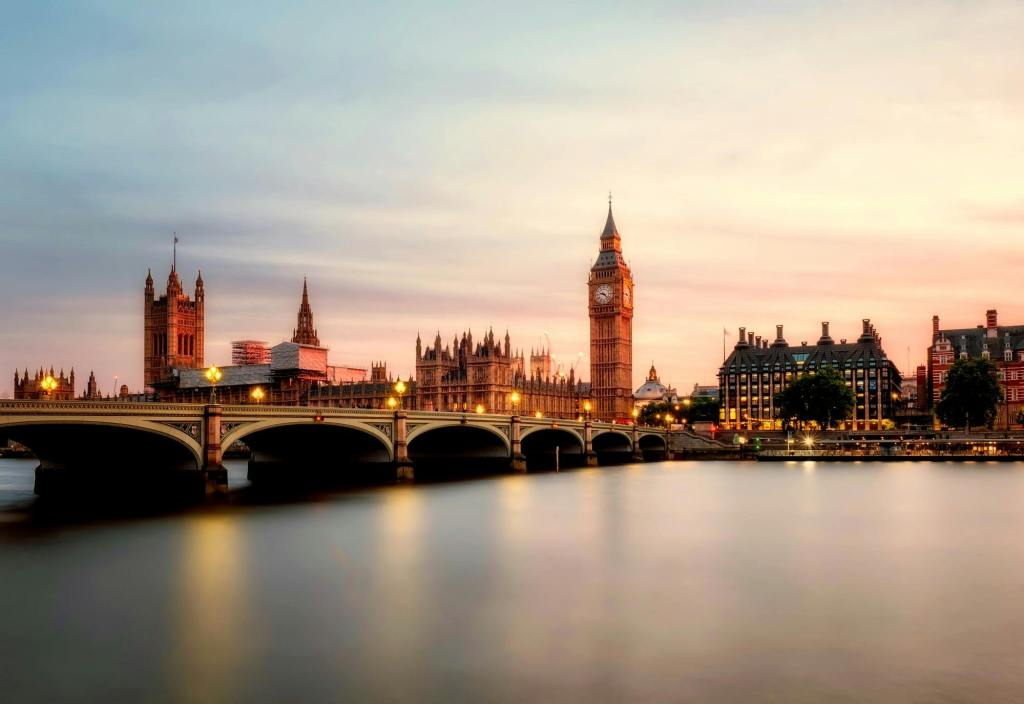
[Cover Image] Photo by Pixabay, licensed by Pexels (https://www.pexels.com/fr-fr/photo/paysage-urbain-de-londres-460672/).


Leave a comment