
By Jules Rouvreau.
On July 8–9, 2025, the French NewSpace Summit was held in Paris. The event brought together numerous international stakeholders from the space sector, both public and private [1]. On this occasion, French officials emphasized the need for an “alliance between a strategically-minded State and bold private actors” [2] to address current space-related challenges. This expression encapsulates the ongoing transformation of the global space industry. Whereas during the Cold War the space sector was largely monopolized by the State, it is now subject to increasing hybridization between public power, entrepreneurial logic, and geopolitical ambitions. At the heart of this shift lie public-private partnerships (PPPs), now employed by nearly all national space agencies to share risks, attract private capital, and accelerate innovation [3]. Behind this term lies a diversity of strategic models. In the United States, NASA has gradually adopted the posture of a “sophisticated customer,” funding the development of private vehicles like SpaceX’s Crew Dragon to maximize “the efficiency of every dollar spent” [4][5]. In Europe, ESA and national agencies favour modular PPPs, balancing industrial policy and market-driven approaches [6]. In China, authorities have recently opened their space market to domestic start-ups, seen as a new lever for national growth [7]. Conversely, Russia retains a centralized structure, inside of which private companies were admitted only recently and remain marginal players [8]. These different approaches are not merely technical choices : they reflect competing visions of the State’s role in the space economy and already shape its power dynamics. This article seeks to analyse the PPP strategies implemented by major space agencies and what they reveal about the broader ambitions of the actors involved.
Although beginning as early as the 1980s [3], PPPs in the space sector really became relevant (and increasingly diverse) in the last twenty years. A robust analytical framework, capable of capturing the technical, economic, political, and institutional dimensions of such collaborations has already been developed, with works like those of M. Hashimoto in 2009 [9] or M. Kim in 2021 [10]. Even though this subject would be too long to tackle here, three main structural problems stand out. 1: Conflict-of-interest loops, where industrial profitability goals come into friction with public service objectives. 2: Forecasting failures, tied to the technological and budgetary uncertainty of long-cycle projects. 3: User satisfaction, often sidelined despite its key role in assessing the real-world impact of space programs.
Those issues motivated an important strategic shift since the mid-2000s, spearheaded by NASA’s deputy administrator at the time, Lori Garver [11]. The shift aimed at reconciling short-term investment logics and long-term public missions, whose results may be uncertain or delayed. This model has been progressively adopted by many of the world’s space agencies, although with varying degrees of cooperation between the private and public sectors. Based on the OECD comparative framework for analysing the post-Covid evolution of space agencies [3], three typical roles of public authorities may be identified, that we will call Developer State, Customer State and Partner State.
The Developer State remains the most traditional form of public intervention in space. Inherited from the major scientific and military missions of the Cold War, this model involves near-total public coverage of development costs, either through internal agency labs or cost-plus contracts with the industry. These contracts reimburse the supplier’s expenses plus a negotiated margin, prioritizing investment stability over cost competition [10]. The OECD notes that this model remains predominant for non-commercial public-interest missions, such as scientific programs, navigation satellites, or national strategic infrastructures [3]. Examples include the James Webb Space Telescope, funded by NASA with strict technical oversight, or the Galileo program, developed by the European Commission and ESA as a European sovereignty infrastructure. This role is also typical in space powers where the private market is still embryonic or dominated by state-owned conglomerates, such as China or India. In China, space firms remain largely state-controlled, and funding for strategic innovations comes directly from the central budget [7]. ISRO in India still leads most of its missions, while gradually outsourcing the manufacturing of launchers and satellites to industrial consortiums [3].
This model offers undeniable advantages in terms of technological continuity, supply chain security, and the ability to pursue very long-term projects. It allows the State to retain direct control over strategic priorities such as defence or exploration and to protect investments in unstable markets. However, it is also the most expensive and least flexible. It exposes agencies to high budgetary risks (as shown by the NASA Space Launch System cost overruns [3]) and can slow technology transfer to the industry. It also relies on heavy governance and offers limited incentives for disruptive innovation, which is why OECD countries are increasingly confining this model to non-competitive market segments, most notoriously deep-space exploration, such as planetary exploration probes and large astronomy observatories. The upstream sector is widely less subject to private initiatives than the more profitable downstream sector, the latter most often funding the former in private initiatives. This is best illustrated by SpaceX : while the company achieved profit since 2023 [22], this is mostly due to Starlink’s user base tripling between late 2022 and mid-2023 and overtaking the space transportation department[23], showing the shift in SpaceX strategy from a launch provider to a diversified operator.
The Customer State emerges when the market is considered mature enough. The public agency evolves into a buyer of end services: it no longer funds development but purchases services from private operators. This is the case with ISS resupply contracted out to SpaceX and Northrop Grumman, or the NOAA’s commercial weather data acquisition programs. This approach encourages innovation and transfers risk to the private sector, provided the industrial base is robust enough to respond to competitive tenders.
Since NASA’s shift in the 2000s toward a public-private partnership model based on “prime contracting”, the agency acted more and more not as the mission architect, but as a sophisticated customer. This shift crystallized through the Commercial Orbital Transportation Services (2006) and Commercial Crew (2010) programs, which enabled the design, funding, and operation of spacecrafts via public co-funding. The cost-effectiveness of this model is remarkable: Crew Dragon’s development cost about one-third that of the Orion program [4].
This evolution is part of a broader strategy centered on the Artemis Accords, established in 2020, combining diplomatic cooperation with private-sector inclusion in lunar and cislunar exploration [12]. Article VI of the Accords explicitly recognizes the role of non-governmental entities in space resource exploitation, while assigning oversight responsibility to States [13]. This marks a break from the traditional framework of the 1967 Outer Space Treaty, which was based on state sovereignty.
However, this approach has drawn criticism. While it has empowered the U.S. private sector, it has also created a technological dependency on actors like SpaceX, whose Starship may become a critical link in the Artemis program. Some analysts warn of a risk of NASA becoming a mere “back-office for SpaceX,” where the agency’s innovation and planning role is reduced to simple contract validation [14].
Between these two poles lies a hybrid approach, emblematic of the Partner State : public-private co-financing through fixed-price contracts, traditional PPPs, or more innovative schemes like “satellite condominiums” [6]. This model is emerging in segments with real but uncertain commercial potential like telecom, Earth observation and in-orbit services, mostly downstream, Earth-focused, activities. The OECD cites the development of Ariane 6, a partnership between ESA and ArianeGroup (Airbus/Safran) and Canada’s Radarsat-2 program [3].
ESA, for its part, has adopted a more modular and institutional PPP approach [6]. Projects such as HYLAS, Galileo, or Eutelsat Quantum showcase Europe’s ability to mobilize strong technical partnerships. However, development timelines remain relatively slow and sometimes bureaucratic, as illustrated by the partial failure of Galileo’s original partnership model [3]. Ariane 6, in particular, embodies the tension between industrial ambition and institutional inertia. Although it was intended to compete with SpaceX, its high production costs and lack of reusability put it at a strategic disadvantage. As the Financial Times recently wrote, “Ariane 6 is an answer to a 2010 question being asked in 2025” [15]. Europe thus faces a dilemma : defend its technological sovereignty or deeply reform its contract and funding models. Moreover, the geo-return principle of ESA mandates that national contributions must largely return to domestic industry through contracts, regardless of competitive cost structures, which was another considerable logistical burden on European initiatives while increasing the financial cost tenfold.
These three roles are not mutually exclusive: a single agency may adopt them simultaneously depending on the objectives of each project it has, as showcased in the previous examples about NASA and ESA. However, a clear trend toward decentralization can be observed, especially in OECD countries, where governments are moving away from centralized development to act instead as market architects and clients, supporting the emergence of a structured private ecosystem [16].
In this regard, a recent and marginal actor deserves mention: since the creation of the Luxembourg Space Agency (LSA) in 2018, the Grand Duchy has emerged as an unconventional player, relying almost exclusively on PPPs aimed at start-ups. In a fiscally and regulatory attractive environment, the LSA operates like a strategic investment fund, actively supporting companies such as Spire, iSpace, or Kleos [18]. The agency has also developed financing programs for space resource exploitation, positioning the country at the forefront of the extraterrestrial mining debate. Although limited in scale, this model serves as a strategic laboratory where agility, private capital, and space diplomacy converge. It suggests what a post-national space ecosystem could look like: modular, entrepreneurial, but also dependent on broader geopolitical dynamics—particularly in the case of the United States, whose legal framework since the SPACE Act and the Artemis Accords strongly supports this kind of initiative [13][12].
The PPP strategies adopted by space agencies are not mere technical trade-offs between efficiency and cost : they embody fundamental political choices about the State’s role, the nature of innovation, and visions of sovereignty in a now highly strategic environment (not to say that it wasn’t before, but it has become in new fields). This gradual shift reflects both a desire for budgetary rationalization and a broader repositioning of public institutions within a globalized space ecosystem. But it is also bringing a more daring approach to the space industry, stemming from the private sector (one might think of the numerous failures of SpaceX before the conception of a successful reusable launcher) [19]. This shift, a clear sign of market maturity, is comparable to the commercialisation of personal computers and the digital revolution that ensued [20]. While the United States promotes the rise of a legally and diplomatically supported private sector, Europe continues to seek a balance between open innovation, industrial sovereignty, and internal cohesion. Caused mainly by the multilateral structure of the European Union, these balancing efforts have impaired Europe’s race for space [4]. While this development, away from the State’s dominion, opens up a wide array of business opportunities and contributes to making the stars more accessible, it also poses a new danger to programs already struggling to adapt to the pace of space exploration, as can be seen with the setbacks of Ariane 6, a program commercially outdated before its first launch [21].
Edited by Justine Dukmedjian.
1. “The upstream segment includes: research, space manufacturing and ground systems (fundamental and applied research activities, scientific and engineering support activities, material and components supply, manufacturing of space systems, subsystems and equipment, telemetry, tracking and command stations).” ESA Space Economy Portal 2. “The downstream segment includes: space operations for terrestrial use, and products and services which rely on satellite technology, signal, data to function (e.g. satellite broadcasting, selected GIS, GNSS-enabled devices).” ESA Space Economy Portal
3.International Space Station.
4. National Oceanic and Atmospheric Administration.
5. Prime contracting is a project delivery method where a single contractor is alone responsible for the completion of said project. The primary contractor therefore oversees potential subcontractors, and assures the liaison with the project owner (the U.S. Government in NASA’s case).
References
[1] According to the event homepage : https://lesassisesdunewspace.org/en/homepage
[2] Vie-publique.fr. (2025). Déclaration de M. Marc Ferracci, ministre chargé de l’industrie et de l’énergie, sur l’industrie spatiale, à Paris le 9 juillet 2025. https://www.vie-publique.fr/discours/299498-marc-ferracci-09072025-industrie-spatiale
[3]Undseth, M., C. Jolly and M. Olivari (2021), “Evolving public-private relations in the space sector: Lessons learned for the post-COVID-19 era”, OECD Science, Technology and Industry Policy Papers, No. 114, OECD Publishing, Paris, https://doi.org/10.1787/b4eea6d7-en.
[4]Financial Times. (2024). How Europe and America can regain space power. Retrieved from nouveau-europresse-com.bnf.idm.oclc.org/Document/View?viewEvent=1&docRefId=0&docName=news·20240917·GF·199276457&docIndex=3
[5]NASA. (2020). NASA’s Economic Impact Report. https://www.nasa.gov/sites/default/files/atoms/files/nasa_economic_impact_report.pdf
[6] European Space Agency (ESA). (2023). Public-Private Partnerships at ESA: Policy Framework and Lessons Learned. https://www.esa.int/About_Us/Corporate_news/PPP_framework
[7] Global Times. (2024). China’s New Space Policy Opens the Doors to Commercial Firms. Retrieved from https://www.globaltimes.cn/page/202401/1290346.shtml
[8] Lafleur A. (2025). Challenges and Priorities: Russia’s Space Program After 2024 Report. SpaceInsider. https://spaceinsider.tech/2024/07/22/challenges-and-priorities-russias-space-program-after-2024-report/
[9] Hashimoto, M. (2009). Public-Private Partnerships in Space Projects: An Analysis of Stakeholder Dynamics [Master’s thesis, Massachusetts Institute of Technology]. DSpace@MIT. https://dspace.mit.edu/bitstream/handle/1721.1/52751/501191812-MIT.pdf?sequence=2&isAllowed=y
[10] RAND Corporation. (2023). A Decision Framework for Public-Private Partnerships in Space Systems. https://www.rand.org/pubs/rgs_dissertations/RGSDA2739-1.html
[11] Wired. (2022). How Lori Garver Launched NASA’s Commercial Space Partnerships. Retrieved from https://www.wired.com/story/how-lori-garver-launched-nasas-commercial-space-partnerships
[12] NASA. (2020). Artemis Accords: Principles for Cooperation in the Civil Exploration and Use of the Moon, Mars, Comets, and Asteroids for Peaceful Purposes. https://www.nasa.gov/specials/artemis-accords/
[13] U.S. Congress. (2015). U.S. Commercial Space Launch Competitiveness Act (SPACE Act), Pub. L. No. 114-90. https://www.congress.gov/bill/114th-congress/house-bill/2262/text
[14] Forbes. (2025). Le gouvernement américain est coincé avec SpaceX, mais Donald Trump a encore des ressources. Retrieved from https://www.ft.com/content/2abdea1a-d985-4f25-90ee-af74524b736f
[15] Financial Times. (2024). European plans to create space champion face challenging timeline. Retrieved from https://www.ft.com/content/9336743a-28f2-4850-af38-016e8c74c9a0
[16] Financial Times. (2024). Europe’s newest rocket launches into space. Retrieved from https://www.ft.com/content/2abdea1a-d985-4f25-90ee-af74524b736f
[17] Forbes. (2024). The Transformative Power Of Public-Private Partnerships In Space Exploration. Retrieved from https://www.forbes.com/councils/forbestechcouncil/2024/06/24/the-transformative-power-of-public-private-partnerships-in-space-exploration/
[18] Luxembourg Space Agency. (2024). National Space Strategy 2023 – 2027 Successes and impacts of the previous action plan. Retrieved from https://space-agency.public.lu/dam-assets/publications/2024/nationalspacestrategy-successesimpacts.pdf
[19] Parks J. (2024). The Dawn of a New Frontier: Why Did the Commercialization of Space Happen?
. Discover Magazine https://www.discovermagazine.com/the-sciences/the-dawn-of-a-new-frontier-why-did-the-commercialization-of-space-happen
[20] Oxford Saïd Business School. (2022, February 15). Space: The new digital? Oxford Saïd. https://www.sbs.ox.ac.uk/oxford-answers/space-new-digital
[21] Financial Times. (2024). Rocket revolution threatens to undo decades of European unity on space Retrieved from https://www.ft.com/content/90888730-fc05-4058-8027-8b4f74dbde02
[22] The Motley Fool. (2023). Despite rare profit SpaceX still mostly loses cash Retrieved from https://www.fool.com/investing/2023/08/27/despite-rare-profit-spacex-still-mostly-loses-cash/
[23] SpaceNews. (2025). Starlink outpaces launches : SpaceX enters new era of profitability Retrieved from https://spacenews.com/starlink-outpaces-launches-spacex-enters-new-era-of-profitability/
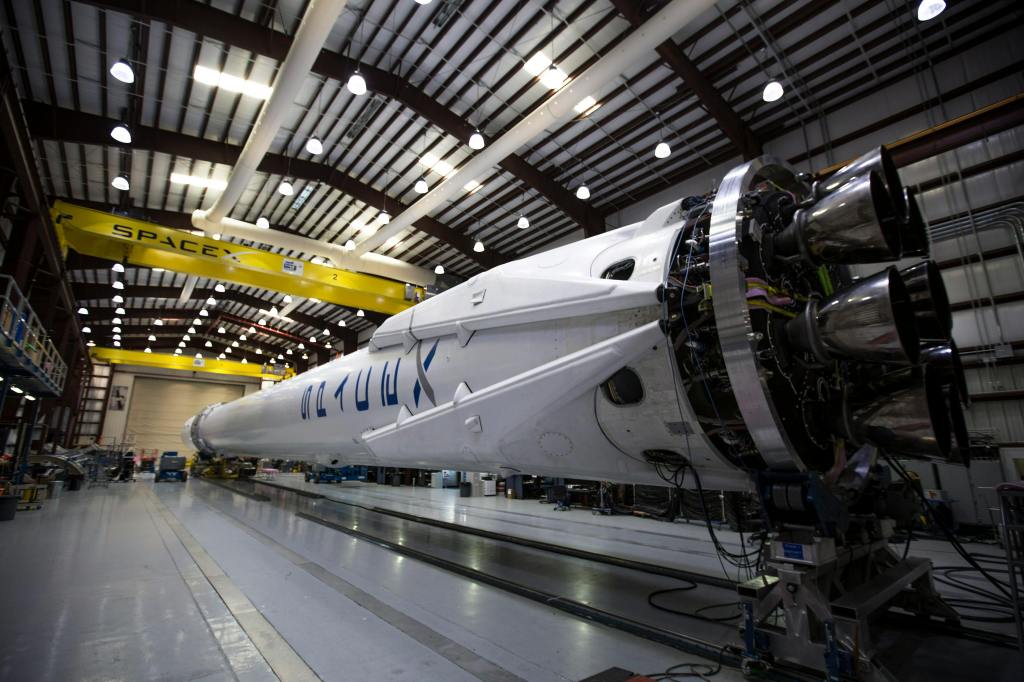
[Cover Image] Picture by SpaceX (https://www.pexels.com/fr-fr/photo/lumieres-espace-blanc-hangar-60130/). Licensed under Pexels (https://www.pexels.com/fr-fr/).


Leave a comment