
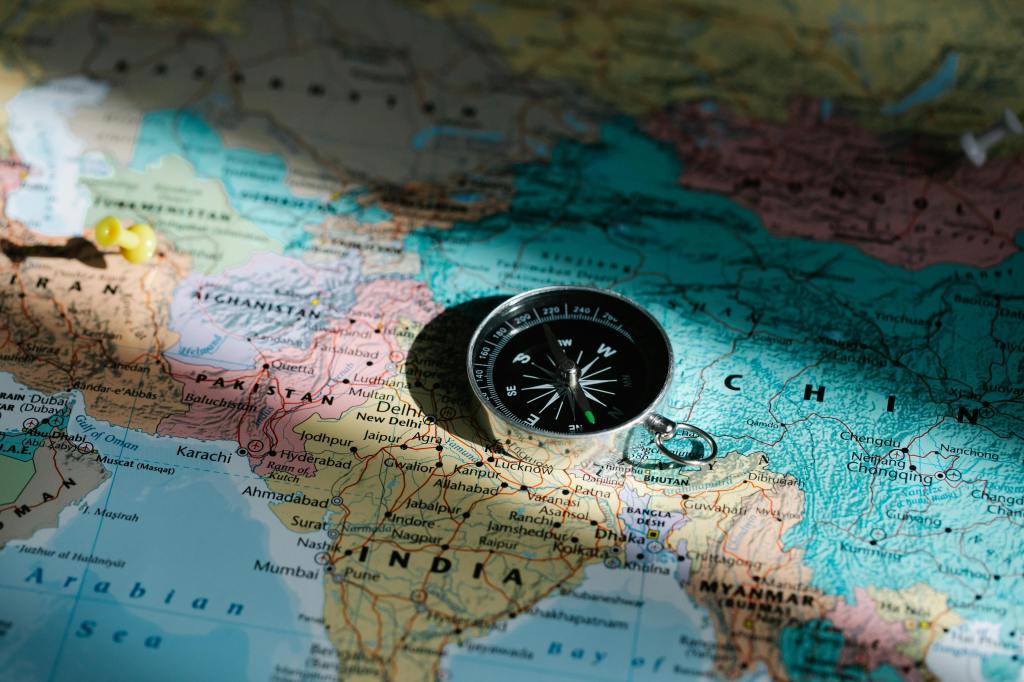
By Paolo Castellaro.
On May 10, 2025, it was announced that the US mediation had successfully led to a ceasefire between India and Pakistan after their reciprocal exchanges of missiles at the beginning of the month. The conflict started after India launched missile raids on targets in Pakistan under “Operation Sindoor”, in retaliation for a bloody terrorist attack against Hindu tourists on April 22, 2025 in Pahalgam (Indian Kashmir) [1]. India blamed a Pakistani terrorist group for that attack, which led to the death of 26 civilians.
Islamabad responded to Operation Sindoor with similar strikes on Indian bases.
The four-day conflict left at least 66 civilians dead, displaced thousands of people along the Line of Control (LoC—the de facto border between Jammu and Kashmir established after the 1971 war), caused significant damage to the infrastructure, and also prompted repeated accusations of territorial violations by both sides [2]. The fact that both neighbours are equipped with a nuclear arsenal also raised widespread fear of a nuclear conflict, prompting many governments across the globe to call for an immediate ceasefire. Mere hours after its signature, explosions were reported in Srinagar and Jammu, and drones were sighted over Kashmir, casting doubt on the stability of the truce [1]. In response, the international community—led by the United States, China, and the Gulf states— urged for immediate de-escalation and a resumption of the diplomatic dialogue, stressing that the prospect of war between two nuclear powers remained a global threat [3][4].
The roots of this cyclical rivalry date back to the era of the British Raj, the Crown’s colonial rule over the Indian subcontinent from 1858 to 1947, during which the London administration employed a “divide et impera” strategy to maintain control, exacerbating religious and cultural divisions between Hindus and Muslims [6]. As early as 1905, at the time of the first Partition of Bengal—ostensibly made for administrative reasons—communal tensions sharpened when majority-Muslim areas were separated from majority-Hindu ones [5]. At the same time, colonial authorities classified certain ethnic groups as “martial races,” favoring their recruitment into the army and fostering feelings of superiority and mistrust among different communities [6].
However, in spite of all those communal tensions, the independence began as a united front under the Indian National Congress, though growing Muslim demands soon found expression in the All-India Muslim League, founded in 1906 [6]. In the 1930s, Muhammad Ali Jinnah and his supporters carried on in the same vein by providing an ideological justification for separation through the Two-Nation Theory, which held that Hindus and Muslims constituted two distinct and incompatible “nations”[6]. In 1940, the Lahore Resolution formally called for the creation of an autonomous Muslim Dominion, backed by intellectuals such as Allama Iqbal and Syed Ahmed Khan[6]. In response, the Congress leadership under Gandhi and Nehru advanced the idea of a composite nationalism, opposing the notion of a confessional state[6].
When the British Crown enacted the Indian Independence Act on July 18, 1947, the Radcliffe Commission hastily drew new borders in Punjab and Bengal based on religious majorities, creating the Dominions of West and East Pakistan alongside the Republic of India [6]. The Partition unleashed one of the largest mass migrations in modern history: some 15 million people crossed the new borders under harrowing conditions, while communal violence claimed over a million lives[6]. These population flows shattered established communities and left enduring scars on both nascent nations [6]. Amid administrative chaos and mutual suspicion, the Maharaja Hari Singh of Jammu and Kashmir—initially neutral—was compelled by the Instrument of Accession to join India in October 1947 after an invasion of Jammu and Kashmir by Pakistani tribal militias, igniting the First Indo-Pakistani War (October 22 1947–January 1 1949)[6]. That conflict ended in a UN-mediated ceasefire and the establishment of the Line of Control[6]. Subsequent decades saw the Second War of 1965, sparked by skirmishes along and beyond the LoC, and the Third War of 1971 which concluded with the fall of Dhaka and the emergence of a separate State: Bangladesh [6]. The 1999 Kargil Crisis, involving high-altitude Pakistani incursions, again drew worldwide attention to this limited yet perilous conflict [6].
The 1998 nuclear tests ushered India and Pakistan into a precarious balance of terror, effectively ruling out large-scale conventional warfare and placing atomic deterrence at the heart of both countries’ security doctrines [7]. Against this backdrop, India has seen the ascent of Hindutva, the cultural-nationalist ideal articulated by Vinayak Damodar Savarkar in 1922 and defended today by the Rashtriya Swayamsevak Sangh (RSS)—a nationwide volunteer paramilitary-style movement founded in 1925 to unify Hindus—and by its political offshoot, the Bharatiya Janata Party (BJP), a national party created in 1980 that now dominates the central government on a Hindu-nationalist platform [6]. Pakistan, meanwhile, continues to draw ideological legitimacy from the Two-Nation Theory, envisaging the state as the homeland of South Asia’s Muslims and grounding governance in an explicitly Islamic identity [6].
Since 1989, Kashmir has been the scene of an armed insurgency by groups like Lashkar-e-Taiba and Jaish-e-Mohammed, which have attacked both civilian and military targets, with Pakistan accused of providing training and logistical support via its intelligence services [8].
The Indian government’s 2019 revocation of Jammu and Kashmir’s special status (Article 370) further inflamed tensions, prompting internal protests and international condemnation [8]. Indian Army operations—from Operation Rakshak to humanitarian efforts such as Mission Megh Rahat—have punctuated decades of asymmetric conflict, but have failed to address the insurgency’s underlying causes [8].
The 1960 Indus Waters Treaty, mediated by the World Bank, allocated the western rivers to Pakistan and the eastern rivers to India[9]. On April 23 2025, New Delhi unilaterally suspended the treaty in response to the recent terrorist attack, heightening the risk of a “water war” as Islamabad warned of nuclear retaliation against any prolonged disruption[9]. The suspension has already drastically reduced Chenab River flows, prompting Pakistani threats of reprisal of the war[9].
The early-May 2025 escalation—in which dozens of rockets and missiles were intercepted over Srinagar and Rawalpindi—broke through nuclear deterrence, forcing urgent international diplomacy to avert a humanitarian and ecological catastrophe in a densely populated region long scarred by conflict[10]. The toll stands at dozens killed, hundreds wounded, and extensive infrastructure damage, while exhausted local populations wonder how much longer this low-intensity war can continue[10].
Edited by Justine Dukmedjian.
References
[1] Reuters – “Explosions reported after India and Pakistan agree to ceasefire,” May 10 2025 reuters.com
[2] Time – “India and Pakistan Agree to Full, Immediate Ceasefire: Trump US Mediation,” May 2025 time.com
https://time.com/7284654/india-pakistan-ceasefire-trump-us-mediation-kashmir-conflict-strikes/
[3] Al Jazeera – “Why did India strike Pakistan? All we know about Operation Sindoor,” May 7 2025 aljazeera.com
[4] Stimson Center – “Four Days in May: The India-Pakistan Crisis of 2025,” May 2025 stimson.org
[5] Britannica – “Partition of Bengal” updated 2025 britannica.com
https://www.britannica.com/event/Partition-of-Bengal
[6] Britannica – “Partition of India” updated 2025 britannica.com
https://www.britannica.com/event/Partition-of-India
[7] Arms Control Association – “Looking Back: The 1998 Indian and Pakistani Nuclear Tests,” June 2008 armscontrol.org
https://www.armscontrol.org/act/2008-06/looking-back-1998-indian-and-pakistani-nuclear-tests
[8] Al Jazeera – “India revokes Kashmir’s special status,” September 4 2019 aljazeera.com
https://www.aljazeera.com/news/2019/9/4/india-revokes-kashmirs-special-status
[9] Reuters – “What is the Indus Waters Treaty between India and Pakistan?” April 24 2025 reuters.com
[10] Stimson Center – “Four Days in May: The India-Pakistan Crisis of 2025,” May 2025 stimson.org
https://www.stimson.org/2025/four-days-in-may-the-india-pakistan-crisis-of-2025/
[Cover Image] Photo by Lara Jameson: https://www.pexels.com/fr-fr/photo/directions-itineraire-orientation-carte-8828681/ Licensed under Pexels (https://www.pexels.com/fr-fr/).


Leave a comment