To French ears, the word “debt” hardly carries a pleasant ring. Yet in practice, it can be a powerful financial instrument – one that enables both companies and states to leverage growth. Misused, however, it quickly becomes a crushing burden, a vicious snowball effect that stifles any prospect of sustainable development. In France, the issue has caused a political deadlock, leading to an impasse that paralyses decision-making, but other countries are facing similar problems. Against this backdrop, some might be tempted to play a game: hide-and-seek. Or better yet: hide, and never seek.
China is accustomed to playing this perilous game. Enter the world of hidden Chinese debt, better known as Local Government Financing Vehicles (LGFVs) or the “Wuhu Model” [1]. Before diving into its potential consequences, we first need to examine what LGFVs are and what they enabled China to achieve.
In practical terms, an LGFV is a state-owned investment company that borrows to finance infrastructure projects. These entities emerged in the mid-1990s, following Beijing’s sweeping fiscal reform aimed at centralising revenue collection [2].
Before 1994, China’s fiscal system was largely decentralised: local governments collected nearly 80% of tax revenues and shouldered about 70% of public spending. The 1994 reform upended this balance by redirecting tax revenues to the central government. Funds would then trickle back to local authorities through a complex system of transfers. Yet these local governments were still expected to drive development, even as the central government’s tight restrictions on bond issuance left them without sufficient financing. The result was a stark mismatch. By 1994, local governments collected only 45% of tax revenues while still covering the same share of expenditures [3].

(Andrew Batson, “The real source of China’s local government money problems,” Personal Blog, July 2015, https://andrewbatson.com/2015/07/21/the-real-source-of-chinas-local-government-money-problems/)
The story of LGFVs begins in Wuhu, where Chen Yun helped establish the Wuhu Construction Investment Company, the first of its kind. Its core purpose was to leverage land: local governments sold land-use rights, while the LGFV raised funds from banks or public markets through bond issuance. These funds were then invested in developing the land, which could later be resold to companies seeking low-cost industrialisation. This financial structure not only stimulated growth through housing and foreign direct investment but also generated tax revenues for local governments, creating a self-reinforcing cycle.
Today, analysts estimate that around 12,000 such companies are active, some of them buried deep within the lower layers of local bureaucracy, blurring the line between what is public and what is not. Moreover, looking at Chinese local government revenues, the three main components, land concession revenues, central transfers, and tax revenues, are currently roughly equally divided, totaling around Rmb8.6 trillion in 2022 (approximately $1.2 trillion), about eight times the amount recorded in 2000 [4].
This arrangement allowed local governments to continue acting as engines of China’s development without recording large deficits in their own financial statements. They also competed fiercely with one another to attract capital and stimulate growth in their territories. This fuelled the development boom as well as the annual growth rates China experienced in recent decades, often referred to as the “Chinese economic miracle”. This miracle was mainly driven by sectors such as infrastructure and real estate, which together accounted for between 14% and 30% of China’s GDP in 2022, higher than the corresponding share in the United States in 2008 [5].
Yet the darker side of this seemingly brilliant financial design has emerged, and now poses a significant macro-financial risk for China and therefore the global economy, especially in the wake of the pandemic.
One source of danger is that LGFVs have not confined themselves to infrastructure projects [6]. They have also become deeply entangled with China’s corporate sector. The International Monetary Fund (IMF) found using Standard and Poor’s Capital IQ database that LGFVs hold direct or indirect stakes in nearly 3,400 companies, and share a common parent investor with another 1,600 [7]. Therefore, today we observe vast interconnected financial networks in which the fragility of a single actor can transmit risks throughout the entire system. Moreover, studies indicate that non-financial firms associated with LGFVs generally invest more relative to their income while maintaining higher debt burdens, in other words : LGFVs’ debts tend to suppress corporate risk-taking, as markets perceive these firms as having implicit state backing. This stems from preferential treatment in the credit market, which results in over-leveraged firms and heightens systemic financial risk [8].
Today, despite the central government’s efforts to regulate LGFVs and the banking sector supporting them in the 2010s, the situation has never been closer to a systemic financial crisis than it is today. Following a series of global and domestic crises in recent years, Chinese local governments and their financing vehicles now face significant financial strains. Tax relief measures introduced to combat the pandemic were financed through LGFVs. Additionally, they supported the housing market by purchasing land and providing funds to distressed housing projects. At the same time, the value of land used as collateral has fallen. This has weakened the financial position of these institutions and reduced tax revenues from land sales, while also eroding the financing advantage that LGFVs once enjoyed in the market [9]. The downfall of Evergrande in 2024 – once the world’s most valuable real-estate company – illustrates how debt-fuelled speculation can turn rapid growth into a sudden and systemic housing collapse. This crash, driven by excessive leverage, triggered a liquidity crunch across the property sector, leading more than 50 other developers to default on their debts. A similar scenario involving LGFV defaults could prove even more destabilising, given their close ties to the broader financial system [10].
Figures from the IMF, combined with the limited data available from China, are staggering. In 2020, the financial statements of roughly 2,200 LGFVs revealed that their total assets and liabilities had reached 120% and 70% of GDP respectively, after five consecutive years of annual growth averaging 15% [11]. In short, any single LGFV could ignite a crisis, one that might spread rapidly across LGFVs, the companies tied to them, and the local banks that supported their rise. On this subject, the IMF noted that “even a small LGFV default rate of 5 percent would be equivalent to roughly a 75 percent increase in the banking system’s Non-Performing loans (NPL)” – when borrowers stop making payments for a significant period. Furthermore, what could ultimately trigger such a financial crisis is the massive volume of debt-at-risk: debt not backed by earnings sufficient to cover interest payments, which already amounts to 37% of GDP [12].
Thus, the instrument that once fuelled China’s rapid development now appears to be turning against the very model it helped create. The Middle Kingdom is now confronted with the challenge of addressing this mounting debt in a sustainable manner, so as to avoid triggering macroeconomic instability both domestically and abroad. Moreover, the authorities must be prepared to intervene in financial markets and design programmes to mitigate the severity of the crisis. In this context, an IMF paper outlines several potential policy options for the Chinese government: bailouts by local governments, local government’s state–owned enterprises, or the central government, as well as debt write-downs or debt reprofiling [13]. According to the IMF, debt reduction through insolvency represents the most effective approach. This would force banks and shareholders to absorb losses. The IMF believes this would more evenly distribute losses across sectors while enhancing market discipline and governance within the financial system.
These measures are now of critical importance, as China is the world’s second-largest economy. While economists suggest that an LGFV default “Armageddon” would not spread like the 2008 financial crisis, a Chinese crisis could still have significant global repercussions. The central government would likely bail out its banks, and since its infrastructure financing is not closely tied to the global financial system, the contagion effects would be limited. Nevertheless, the world economy would feel the impact as China accounts for around 40% of global growth [14].
“It doesn’t mean I think we’re headed for a repeat of 2008, but the point is that what sometimes appear to be local, domestic concerns can have an effect on us all — even in ways that we wouldn’t have imagined,” asserted Deborah Elms, Executive Director of the Asian Trade Centre in Singapore [15].
Edited by Maxime Pierre.
An earlier version of this article (paragraph 4) stated that local governments had “no legal rights to borrow” after the 1994 reforms. LG were in fact allowed to issue bonds, but with a very constraining cap imposed by the central government, preventing appropriate funding. Therefore the sentence has been modified.
References
[1], [4], [6] Schneider, J. (2024). The Rise and Fall of LGFVs: How China’s local government financing vehicles (LGFVs) became China’s most complex economic challenge. ChinaTalk. 19 septembre 2024 — https://www.chinatalk.media/p/the-rise-and-fall-of-lgfvs
[2] Reserve Bank of Australia. (2024, October). The ABCs of LGFVs: China’s local government financing vehicles. RBA Bulletin. https://www.rba.gov.au/publications/bulletin/2024/oct/the-abcs-of-lgfvs-chinas-local-government-financing-vehicles.html
[3] Andrew Batson, “The real source of China’s local government money problems,” Personal Blog, July 2015 – https://andrewbatson.com/2015/07/21/the-real-source-of-chinas-local-government-money-problems/
[5] Carré, T., Chalmel, L., Villani, E., & Yang, J. (2022, August). La dépendance de la croissance chinoise au secteur immobilier (Trésor-Éco No. 311). Direction générale du Trésor, Ministère de l’Économie, des Finances et de la Souveraineté industrielle et numérique. https://www.tresor.economie.gouv.fr/Articles/05e0fbe4-fcdb-4041-94a0-420076567622/files/730ca0e9-0cf4-4478-9fdb-4341bfad6b81
[10] YIP Institute. “Economic Implications of Evergrande Collapse.” Youth Initiative for Progress Institute, 2023 – https://yipinstitute.org/policy/economic-implications-of-evergrande-collapse
[7], [11], [12] International Monetary Fund. (2022). Monetary policy normalization in an uncertain world — IMF Working Paper No. 22/102. Washington, D.C.: International Monetary Fund. — https://www.elibrary.imf.org/downloadpdf/view/journals/002/2022/022/article-A003-en.pdf
[8] Bao, F., Li, X., Wang, Y., & Zhang, Z. (2024). The impact of local government financing vehicles debt on corporate risk-taking and the modulatory effect of land transfer income. Finance Research Letters. Advance online publication. – https://www.sciencedirect.com/science/article/pii/S1544612323013132
[9], [13] International Monetary Fund. (2024). Article A003 — IMF Working Paper No. 50/02 — Washington, D.C.: International Monetary Fund. — https://www.elibrary.imf.org/view/journals/002/2024/050/article-A003-en.xml
[14], [15] Nick Marsh. (2023, September 14). Hundreds of big global companies say they’re cutting back — but the idea that their power ensures global prosperity has been exaggerated. BBC News. https://www.bbc.co.uk/news/business-66840367
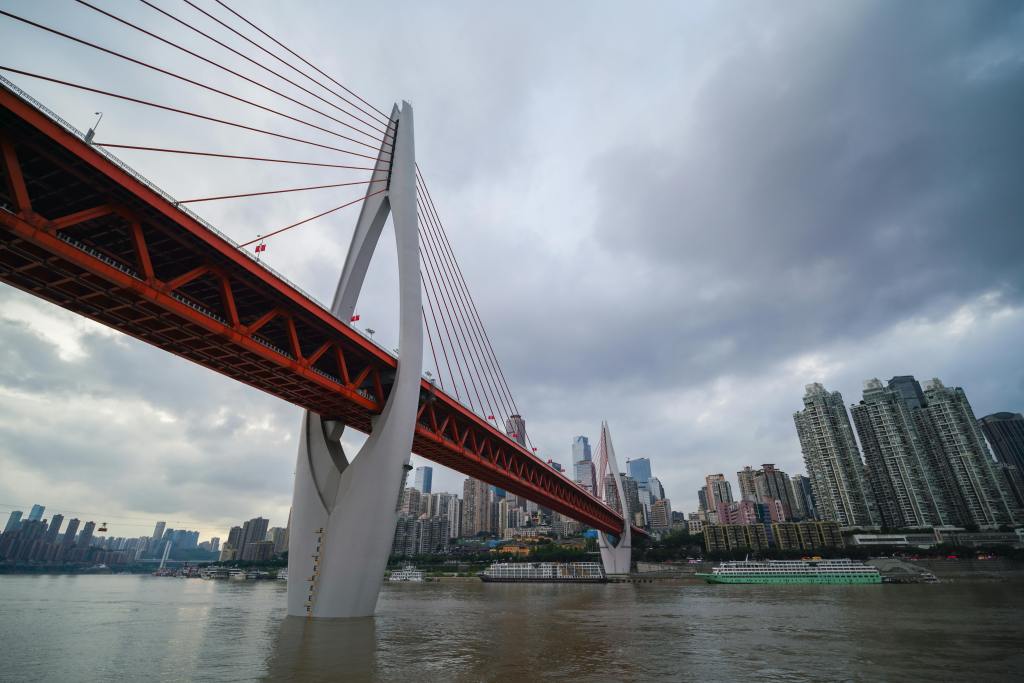
[Cover image] ““Pont Dongshuimen Sur Le Fleuve Yangtze à Chongqing”, n.d (https://www.pexels.com/fr-fr/photo/pont-dongshuimen-sur-le-fleuve-yangtze-a-chongqing-34295532/) by Quintion Jan
(https://www.pexels.com/fr-fr/@quintion/) licensed under Pexels.


Leave a comment