
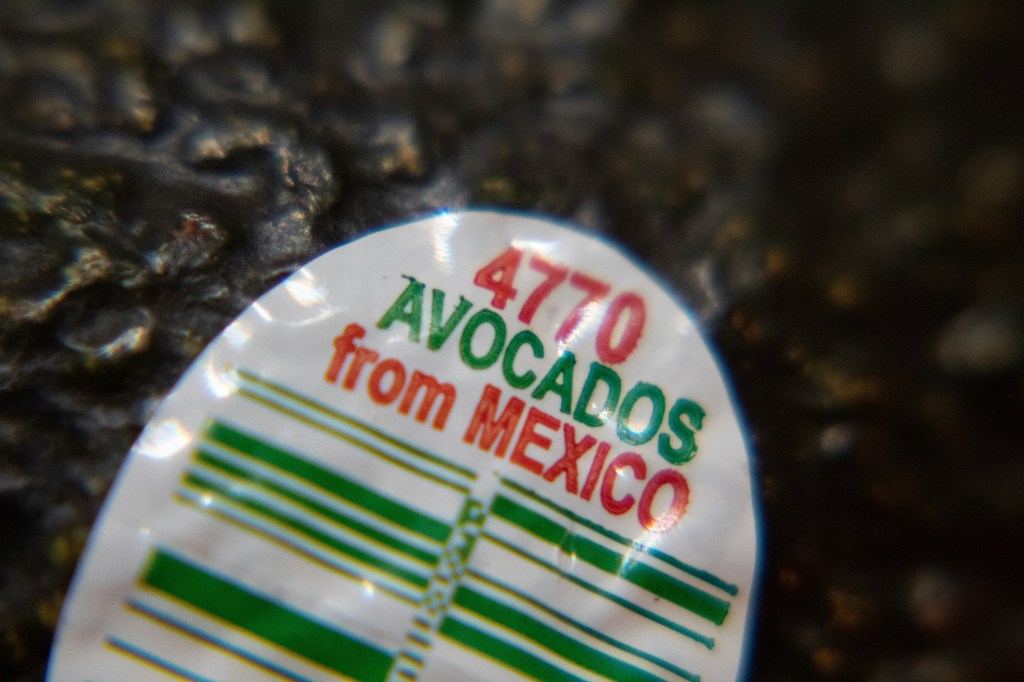
On average, seven to ten avocado trucks are stolen every week in the state of Michoacán, resulting in annual losses of up to $5 million [1]. Once known for its poppy fields, the region’s green hills have become the new front line of Mexico’s evolving drug war [1]. As the United States’ demand for fentanyl has overtaken that for heroin since 2015, Mexican cartels have sought new sources of revenue – infiltrating the lucrative avocado trade through extortion, land grabs, and coercion of local producers [3]. What began as a shift in narcotic markets has metastasised into a violent struggle over “green gold” [3].
President Donald Trump’s 2025 strategy has intensified punitive measures abroad: 25% tariffs on Mexican exports, and the unprecedented designation of cartels as foreign terrorist organisations has avoided addressing the root causes for the opioid crisis domestically [5]. Such policies will impact the avocado industry, as well as other high exporting sectors in the country [6]. They have strained bilateral relations, and further militarised the border – all while leaving US consumption and arms flow untouched [6]. By attempting to crush cartels, Washington has instead deepened their economic logic for diversification.
This article traces how the fentanyl boom reshaped Mexico’s criminal economy, how US trade policy magnified the consequences, and why the current approach risks turning avocados into another blood-soaked commodity, like iron ore before that [12].
Drug Shift and Diversification
The collapse of Mexico’s heroin market following the rise of fentanyl in the United States has fundamentally altered the country’s criminal economy. Heroin had long been the main source of cartel exports to the US, but the rapid increase in fentanyl use decreased heroin demand, forcing cartels to diversify their financial resources to survive. This shift directly contributed to the increase in violence in avocado-producing regions, especially Michoacán, where cartels have seized the opportunity to infiltrate a profitable legal market [1]. Turning towards avocados is a way for cartels to launder their profits and dominate the market through extortion of farmers and bribery of officials [2].
EIPS promotion

The shift has redrawn the geography of violence in the country. Due to a 50% decrease in the production of heroin, poppy-growing regions have seen a notable decrease in the level of violence, while avocado-growing regions, especially in Michoacán, have seen a notable increase in homicides and extortion. Contrary to assumptions that new criminal groups are responsible for the shift, evidence shows that existing cartels and fragmented offshoots have deepened their presence in these areas, targeting civilians rather than rival organisations [3]. Fragmented cartels, already armed and organised, seized an opportunity to expand their operations, exploiting both their manpower and territorial knowledge to capture avocado trade profits [4].
The criminal diversification was made possible by the conjunction of falling illicit profits and weak rural property rights. In such a context, rising prices of legal agricultural goods generate incentives for organised crime to extract rents through coercion. Cartels have taken advantage of dependency by embedding themselves in the production chain, using an extraction model based on extortion of producers, theft of trucks, and “protection” payments [3]. Such practices have given rise to the use of armed labour and escalating violence against civilians [3].
The consequences of this shift go beyond violence and social instability. Avocado production requires enormous quantities of land and water posing serious environmental challenges [5]. Cartel control has fueled illegal logging, deforestation, and land grabs targeting indigenous communities. In response, anti-avocado (violent) civilian militias have emerged to defend communal land and natural resources. In the town of Chéran, the residents banned avocado cultivation and have obtained autonomy to enforce the ban [5]. Indigenous militias – like the ‘communeros’ in the Chéran municipality – have successfully resisted cartel incursions, protecting both their territory and the biodiversity essential to their way of life [5].
Policies in both the United States and Mexico have failed to address the root causes driving criminal organisations and drug dependency. While intended to strengthen security and reduce trafficking, these approaches have instead reinforced the very dynamics they sought to dismantle [1]. At the same time, Mexico’s internal governance failures have compounded the problem. Despite public commitments to reform, corruption and weak institutional control at the regional and local levels continue to allow cartels to bribe officials and operate within avocado-growing regions [2]. President Sheinbaum’s militarisation of the war on drugs, initially applauded by those seeking greater security, has since faced growing criticism [8]. The use of force, if applied hastily and without local, regional and national actors “risks triggering a cycle of retaliation” having the opposite effect than mitigating crime and cartel power [10].
What began as a market adaptation to falling drug revenues soon collided with Washington’s punitive trade policy – deepening the very violence it claimed to curb.
Tariffs and Diplomatic Fallout
President Trump’s strategy in 2025 to combat the fentanyl crisis has taken a punitive turn, targeting Mexico through economic and security measures that have produced unintended and damaging consequences [1]. Although the administration announced a 25% tariff on Mexican imports, enforcement was temporarily suspended for ninety days – until the end of October [7] . Nevertheless, the uncertainty generated by the threat of renewed tariffs has already destabilised trade relations [7]. Importers, wary of future disruptions, have begun seeking alternative suppliers and diversifying their supply chain to reduce dependence on Mexican avocados [6]. This climate of instability has primarily harmed legitimate producers rather than the cartels themselves [2].
The ripple effects of these economic measures risk weakening Mexico’s legal export sector, thereby narrowing opportunities for lawful employment and inadvertently creating space for further criminal infiltration. The tariffs imposed by the United States – and the uncertainty surrounding their possible reactivation – have raised critical questions about the future of Mexico’s avocado industry. With 85% of Mexican exports destined for the US market, the economic repercussions are potentially devastating [11]. These measures threaten the livelihood of rural producers and amplify the environmental degradation already caused by intensive avocado cultivation [5].
The second tier of Trump’s strategy – framing cartels as foreign terrorist groups – has proven even more detrimental. Instead of fostering bilateral cooperation, it has deepened diplomatic friction and obstructed joint policy coordination against transnational crime [8]. The revocation of Mexican officials’ visas, the expansion of U.S. drone and surveillance operations along the border, and a broader militarisation of the border policy have further strained relations [8]. These heightened security measures represent the most significant and enduring impact of Trump’s policy so far, as they have redefined bilateral relations through militarisation rather than cooperation [1].
By framing cartels as foreign terrorists, Washington not only criminalises Mexican actors but also absolves itself of responsibility for the factors sustaining the crisis – most notably the persistent domestic demand for fentanyl and the unchecked flow of U.S-made weapons arming Mexican criminal groups [9]. The terrorist designation has simultaneously legitimised an expanded U.S. security posture: the number of active-duty troops stationed along the border have tripled, supported by drones, spy planes and armoured vehicles [8]. Mexico, under pressure, has responded with its own security escalation – tightening port surveillance and expanding military jurisdiction in the name of counter-narcotics enforcement [8]. Yet, despite a modest decline in official homicide rates, the number of disappearances has surged, suggesting that violence is being displaced and obscured rather than resolved [8].
Meanwhile, in avocado-producing regions, violence continues to intensify. Populations have been displaced, leaving behind ghost towns now occupied by cartels [9]. In response, armed civilian groups have emerged to defend their land and communities – the town of Chéran remaining the most prominent example of local resistance [5].
The rise of fentanyl has redrawn the contours of Mexico’s criminal economy, pushing cartels to infiltrate new legal markets like avocados through violence, extortion, and land grabs. Rather than addressing the domestic roots of the opioid crisis, the Trump administration’s punitive tariffs and security measures have externalised blame, undermining Mexican producers and intensifying regional instability. Both governments remain trapped in a reactive cycle – one that fights symptoms instead of causes. Breaking that cycle requires coordinated social, economic, and health policies that treat addiction and violence as shared challenges, not foreign threats. Until then, the war on fentanyl will continue to sow its own casualties – one “green gold” harvest at a time.
The more Washington securitises the drug war, the less room remains for coordinated social and health policies that could actually reduce fentanyl demand.
Edited by Maxime Pierre.
References
[1] Iztel de Haro. ‘Fentanyl, Avocados, and Tariffs’, Phenomenal World, July 17th, 2025. Available at: https://www.phenomenalworld.org/analysis/fentanyl-avocados-and-tariffs/ (Accessed: October 3rd, 2025).
[2] Agustín Del Castillo and Fred Pearce. “In Mexico’s ‘Avocado Belt’ Villagers stand up to protect their lands”, Yale 360, May 2nd, 2025. Available at: https://e360.yale.edu/features/mexico-indigenous-avocado-growers. (Accessed October 9th, 2025).
[3] Itzel De Haro. “Avocados: Mexico’s green gold, drug cartel violence and the US opioid crisis.” World Development191, July 2025. https://doi.org/10.1016/j.worlddev.2025.106942.
[4]OEC.‘Avocados, fresh or dried (HS 0804) – Mexico (MEX)’, OEC.World. Available at: https://oec.world/en/profile/bilateral-product/avocados-freshdried/reporter/mex (Accessed: 12 October 2025).
[5] Alexander Sammon. “Inside Mexico’s anti-avocado militias.” The Guardian. June 11th, 2024. Available at: https://www.theguardian.com/news/article/2024/jun/11/inside-mexico-anti-avocado-militias. (Accessed: 10 October 2025).
[6] Jame Doubek. “Why Trump’s tariffs on Mexico would mean higher avocado prices at the grocery store.” NPR, December 23rd, 2024. Available at: https://www.npr.org/2024/12/23/nx-s1-5214649/avocados-tariffs-mexico-trump-organic. (Accessed: 10 October 2025).
[7] Chantal Flores. “Mexico’s footwear industry could benefit from US tariffs. But it’s not.” Al Jazeera Economy, October 25th, 2025. Available at: https://www.aljazeera.com/economy/2025/10/25/mexicos-footwear-industry-could-benefit-from-us-tariffs-but-its-not. (Accessed: 25 October 2025).
[8]The Economist, “Mexico battles the MAGA movement over organized crime.” The Economist, May 20th, 2025. Available at: https://www.economist.com/the-americas/2025/05/20/mexico-battles-the-maga-movement-over-organised-crime. (Accessed: 9 October 2025).
[9] Paulina Villages. “With Drones and I.E.D.s, Mexico’s Cartels Adopt Arms of Modern War.” New York Times, September 1st, 2025. Available at: https://www.nytimes.com/2025/09/01/world/americas/mexico-cartel-weapons.html?searchResultPosition=1. (Accessed: 11 October 2025).
[10] Doug Livermore. “US intervention against Mexican cartels carries major risks.Here’s how to mitigate them.” Atlantic Council Blogs – New Atlanticist, January 14th, 2025. Available at: https://www.atlanticcouncil.org/blogs/new-atlanticist/us-intervention-against-mexican-cartels-carries-major-risks-heres-how-to-mitigate-them/. (Accessed: October 15th, 2025).
[11] Trading Economics. Mexico Exports By Country. Available at: https://tradingeconomics.com/mexico/exports-by-country (Accessed: 12 October 2025).
[12] The Associated Press. “Mexican cartel earns more from mining and logging than drugs.” CBC, May 7th, 2014. Available at: https://www.cbc.ca/news/business/mexican-cartel-earns-more-from-mining-and-logging-than-drugs-1.2575826. (Accessed November 14th 2025).
[Cover image] “Ornement rond blanc, rouge et vert”, 2021 (https://unsplash.com/fr/photos/ornement-rond-blanc-rouge-et-vert-pVh4J7SvafQ) by Brian Wangenheim (https://unsplash.com/fr/@brianwangenheim) licensed under Unsplash.com.


Leave a comment