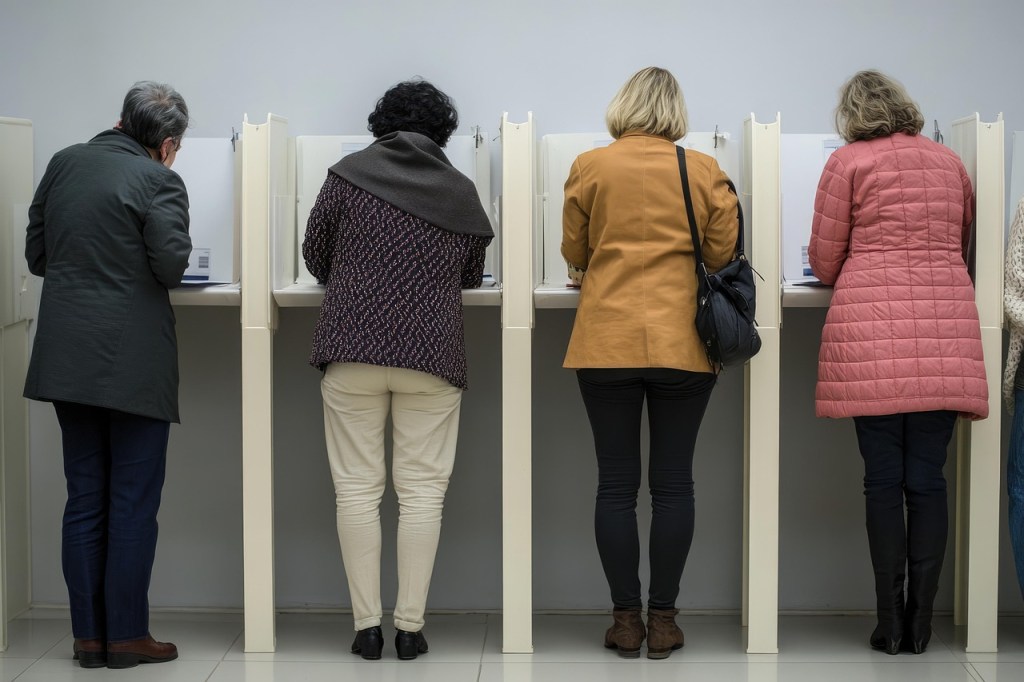
After almost three weeks of delay, the Honduran elections have led Nasry Afura (Tito), the Trump-backed candidate, to power on Christmas Eve 2025 [1].
The ballots were cast on November 30. The count dragged on for weeks amid alleged outages and interruption of the National Electoral Council (CNE) reporting website and a shift from preliminary digital tallies to slower manual verification [11]. In such a tight race, delay becomes a political weapon, allowing the losing camps to explain defeat as manipulation or as stolen, while winning camps frame scrutiny as obstruction. MercoPress captured this volatility early on, reporting that the lead ‘flipped’ after an interruption and that the pause itself became part of the political battle over legitimacy [8].
Counting delays are weaponised politically. They are used to undermine the result and delegitimise the winning candidate. Nasralla used the delays to explain his loss and call out fraud in the counting as the results flipped in favor of his opponent after the first suspension of counting [8]. Donald Trump suggested on Truth Social that fraud likely happened, without offering any evidence [11].
However, international election observers did not discern systemic fraud. The Organisation of American States (OAS) Electoral Mission took note of the certification by the mandated authority and affirmed that it did not identify any fraudulent elements; thus, considering the results as reflecting the will expressed by citizens in the ballots [4]. The EU Mission was harsher on the administration, warning that the electoral work had been harmed by “consecutive and intentional paralysis”, yet still stated that the process had been conducted transparently and that political parties had access to the election result forms [9].
Despite these findings, the prolonged count became the focal point of escalating political accusations. As the processes unfolded, Honduran President Xiomara Castro accused the United States, especially Donald Trump, of interfering in a sovereign democratic process, denouncing what she described as an “electoral coup” that violates “the constitutional principle of the Honduran people’s sovereignty” encouraged by Washington [5].
US Pressure and the Delegitimisation of the Electoral Process
Trump’s involvement in the Honduran election was unusually explicit. Before the vote, he publicly endorsed Nasry Asfura, and threatened to cut US aid should Hondurans not elect him[5]. As the count stalled, Trump posted: “Looks like Honduras is trying to change the results of their Presidential Election. If they do, there will be hell to pay!” [6]. Reporting stressed that the post offered no evidence and ignored that pauses can be expected in Honduras’ two-stage reporting and verification process: digital counting, followed by manual verification [6].
The threat mattered because leverage is real. US foreign assistance obligations to Honduras in 2025 was over $100 million and spread across education, governance, climate resilience as well as justice & security programs [13]. This is exactly the sort of aid that could be used as political leverage when threatened with withdrawal. More broadly, Honduras’ economic exposure is shaped by migration and remittances, accounting for 26% of its GDP in 2025 [7]. Recent reports show remittances — transfers sent by migrants to their home countries — make up a major share of Central American’s GDP, sharpening the political weight of Washington’s rhetoric on “illegal migration” and cooperation [10].
On the eve of the election on November 28, Trump pardoned a close ally of Asfura, Juan Orlando Hernandez —sentenced to 45 years in prison in the US on drug trafficking charges [2]. This move was widely perceived as a symbolic signal of Washington’s preferred political outcome. Honduran ruling-party described the move as interventionist, reading it as a signal of which political network Washington was ready to rehabilitate [5].
Fraud allegations without evidence
The fraud allegations were pushed from two directions: Trump and domestic contenders. While the CNE urged patience through the “technical problems”, both leading candidates claimed they were ahead based on internal tallies. After certification, opposition figures alleged the altering of results in favor of Nasry [1].
Washington escalated through targeted sanction. In a press statement on December 19, US Secretary of State, Marco Rubio revoked Mario Morazon’s visa — head of the CNE — accusing him of undermining the democratic process in Honduras [3]. Rubio further warned that additional visa restrictions could follow [3]. The move was justified in security terms, warning that the US would not tolerate actions undermining national security and regional stability [3].
These actions stood in sharp contrast to the assessment of international observers. While both the OAS and the EU criticised institutional weaknesses, neither found evidence of fraud. Nonetheless, Rubio called on all political actors “to respect the confirmed results” once Asfura was declared president-elect [1]. The actions contributed to turning the delay into the delegitimisation of Honduran politics.
Honduras Within Trump’s “Peace Through Strength Strategy”
The Honduran case does not exist in isolation. Since his re-election, Trump has framed US foreign policy around the idea of bringing back peace through strength, and reaffirming the US army as the most powerful fighting force in the world [12]. This approach signals unilateral action, ideological alignment, and security-based justifications.
A recent paper for the Ghent Institute for International and European Studies, Alberto Maresca demonstrates how the second Trump administration has shown “unprecedented focus on Latin America” [7]. Maresca goes further and argues that interference in the region’s domestic politics is “causing turmoil” while pressure campaigns such as the ones in Venezuela and in Honduras risk deepening polarisation [7]. Honduras becomes a key example of the administration’s strategy, under which peace is promised on Washington’s terms and domestic sovereignty is considered negotiable should the leader not be the preferred partner [5].
Edited by Maxime Pierre.
References
[1] MercoPress (2025) Honduras: Fraud allegations erupt as Nasry Asfura proclaimed President-elect, 26 December. Available at: https://en.mercopress.com/2025/12/26/honduras-fraud-allegations-erupt-as-nasry-asfura-proclaimed-president-elect? (Accessed: 26 December 2025).
[2] Le Monde (2025) Donald Trump a gracié l’ex-président du Honduras Juan Orlando Hernandez, qui est sorti de prison, 2 December. Available at: https://www.lemonde.fr/international/article/2025/12/02/donald-trump-a-gracie-l-ex-president-du-honduras-juan-orlando-hernandez-qui-est-sorti-de-prison_6655718_3210.html (Accessed: 26 December 2025).
[3] U.S. Department of State (2025) Visa restrictions on Honduran government officials interfering with the 2025 election vote count, 19 December. Available at: https://www.state.gov/releases/office-of-the-spokesperson/2025/12/visa-restrictions-on-honduran-government-officials-interfering-with-the-2025-election-vote-count (Accessed: 23 December 2025).
[4] Organization of American States (2025) OAS Electoral Observation Mission takes note of the certification of Honduras’ presidential election, 24 December. Available at: https://www.oas.org/en/media_center/press_release.asp?sCodigo=E-093/25 (Accessed: 9 January 2026).
[5] The Guardian (2025) Honduras president alleges ‘electoral coup’ under way amid Trump ‘interference’, 9 December. Available at: https://www.theguardian.com/world/2025/dec/09/honduras-president-alleges-electoral-coup-under-way-amid-trump-interference (Accessed: 22 December 2025).
[6] Nicas, J. and Ernst, J. (2025) Trump intervenes again in Honduras vote, alleging fraud without evidence, The New York Times, 2 December. Available at: https://www.nytimes.com/2025/12/02/world/americas/honduras-presidential-vote-trump.html. (Accessed: 9 January 2026).
[7] Maresca, A. (2026) The impact of the second Trump administration on Latin American foreign policy, Ghent Institute for International and European Studies – Ghent University, 12 January. Available at: https://www.ugent.be/ps/politiekewetenschappen/gies/en/research/publications/gies_papers/2025-one-year-trump/the-impact-of-the-second-trump-administration-on-latin-american-foreign-policy.htm?utm_source=chatgpt.com. (Accessed: 15 January 2026).
[8] MercoPress (2025) Vote count flips in Honduras after interruption, 3 December. Available at: https://en.mercopress.com/2025/12/03/vote-count-flips-in-honduras-after-interruption. (Accessed: 15 January 2026).
[9] European External Action Service (2025) Press release: European Union Election Observation Mission to Honduras 2025, 20 December. Available at: https://www.eeas.europa.eu/sites/default/files/2025/documents/20251220%20Press%20release%20EU%20EOM%20Honduras%202025.pdf. (Accessed: 15 January 2026).
[10] Armus, T. (2025) Facing a crackdown, Central American immigrants are sending more money home, The Washington Post, 13 July. Available at: https://www.washingtonpost.com/immigration/2025/07/13/central-america-immigrants-money-remittances/. (Accessed: 17 January 2026).
[11] Associated Press (2025) Conservative Salvador Nasralla leads Honduras presidential vote after pause in results reporting, 2 December. Available at: https://apnews.com/article/honduras-election-trump-vote-count-54881250f5c07df520c9c4e5b1ea6137. (Accessed: 17 January 2026).
[12] The White House (2025) President Trump is leading with peace through strength, 4 March. Available at: https://www.whitehouse.gov/articles/2025/03/president-trump-is-leading-with-peace-through-strength/. (Accessed: 17 January 2026).
[13] ForeignAssistance.gov (2025) U.S. foreign assistance obligations for Honduras, fiscal year 2025. Available at: https://foreignassistance.gov/cd/honduras/2025/obligations/0 (Accessed: 17 January 2026).
[Cover image] “Ai Generated, Election, Vote”, 2024 (https://pixabay.com/illustrations/ai-generated-election-vote-9073523/) by Yamu_Jay licensed under the Pixabay Content License.


Leave a comment