
The following article retraces the life of Ternopil residents on November 18 using direct testimonies and regional Telegram channels. In the wee hours of the 19th, the worst single strike on Ukrainian civilians since the beginning of the war killed 38, including eight children, three adults are still missing.
On Tuesday, November 18, 2025, Ternopil’s residents woke up to cold and slushy weather. Snow was forecasted for the coming days. At 7 a.m, official regional Telegram channels announced that, due to worsening temperatures, thousands were left without power — in addition to the planned outages already affecting dozens of housing blocks across the city.
For months, Russian strikes have devastated Ukraine’s civilian power infrastructure. In early November, most regions endured daily cuts of up to 16 hours. Undeterred by these attacks, a war crime under the 4th Geneva Convention of 1949, Ukrainians have long learned to live and survive in silence [1]. Over half a million Kyiv residents were forced to leave their city due to the worsening blackouts, compounded by plunging temperatures [6].
Soon after dawn, the sumptuous 18th-century white cathedral in the historic centre began live-streaming its divine service. The odd routine of a peaceful country forced into war went on.
Geographically, Ternopil is situated in western Ukraine, closer to the Polish border than to Kyiv, and over 500 km from the nearest front line. Until then, it had been spared from intense air and drone strikes. According to ACLED (Armed Conflict Location & Event Data), 20 such attacks were recorded, with one civilian fatality — while Kharkiv, near the north-eastern border with its fratricidal neighbour, had nearly 5,000 attacks and 500 civilian deaths.
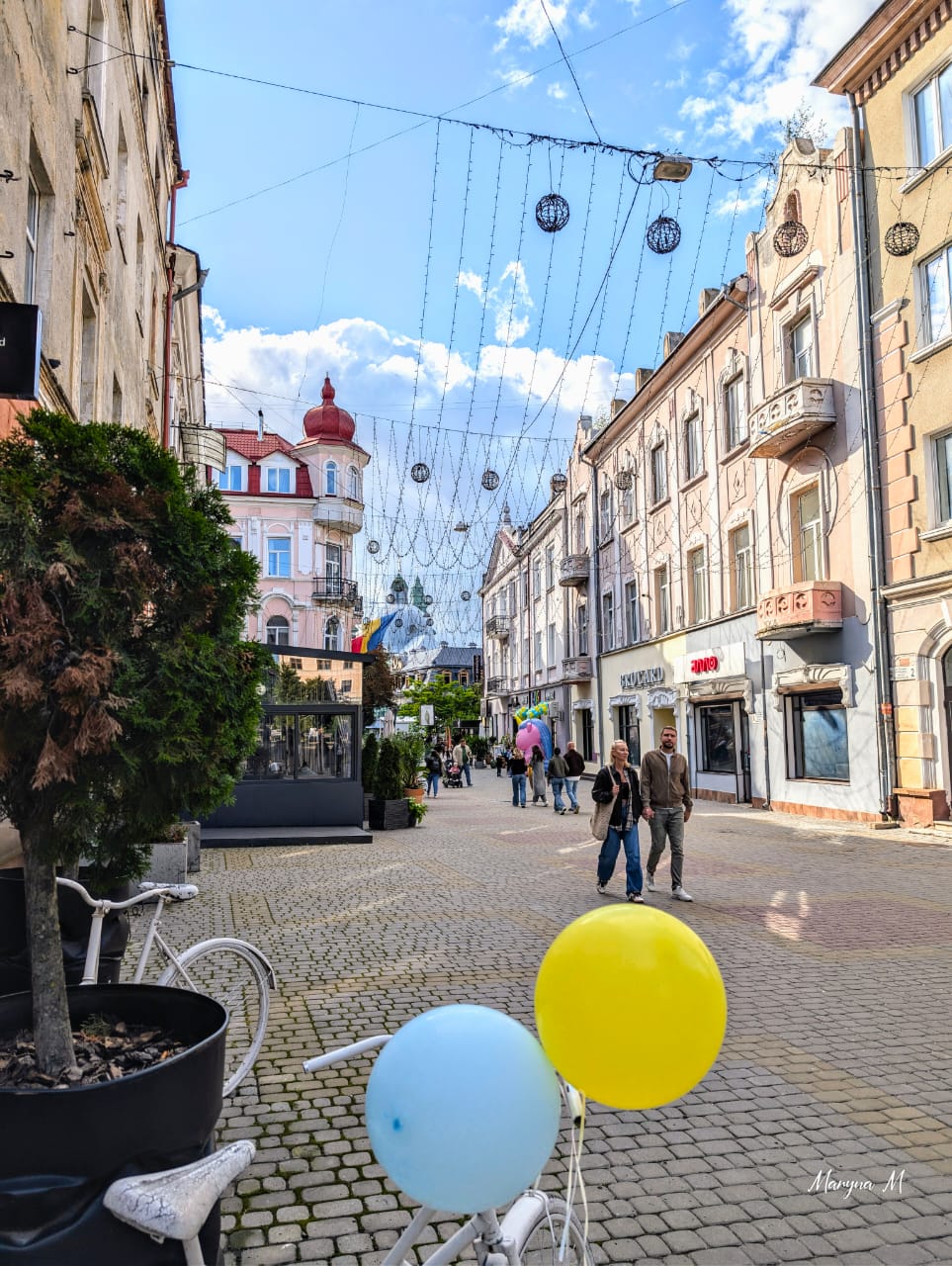
Ternopil boasts a well-preserved city centre, with cobbled streets and heritage architecture. Walking down Valova Street, along the main road and its trolleybus lanes, one reaches a 300-hectare lake that residents describe as the town’s social heart.
“In the warm season, there are wonderful boat trips on the lake […] Some days the orchestra has even given a concert of live music on boats in the middle of the lake. It is very special and atmospheric,” Maryna, a native resident, told the EIPS (ESCP International Politics Society). “But most of all I love the evening beauty of my city and the incredible sunsets by the lake […] when the lights of the city are reflected in the lake. It’s an incredibly beautiful sight.”

(Ternopil lakeside, 2025. Image rights granted by Maryna Moshchova)
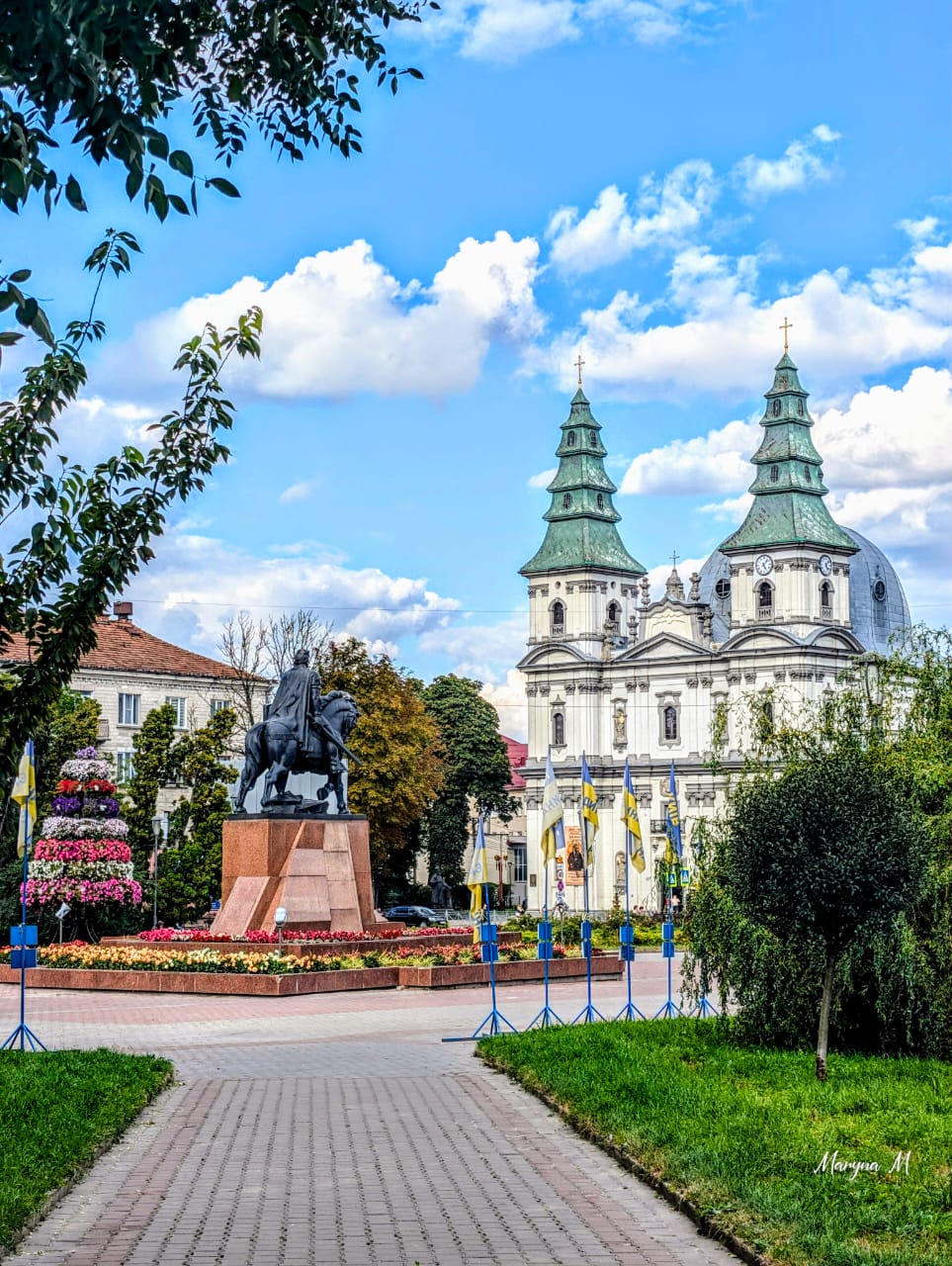
(Cathedral of the Immaculate Conception of the Blessed Virgin Mary, 2025. Image rights granted by Maryna Moshchova)
The calm lake-side atmosphere is complemented by the surrounding Shevchenko Park — named after the 19th-century poet and political figure central to Ukraine’s national movement.
During the unforgiving winter months, Ternopil inhabitants find warmth in the city’s restaurant scene. “Despite […] the blackouts,” Maryna says, “[they] have excellent service and try to create a magical, unique atmosphere in and around their establishments, which pleases Ternopil residents and guests in these difficult times of war.”
At first glance, Ternopil could resemble any other Eastern European city. Yet the markers of war are omnipresent. Men of fighting age are largely absent, leaving only essential workers, soldiers on leave, and wounded veterans. Rear cities have become fragile refuges where a semblance of normal life persists.
Leonid, a local pastor and chaplain, cautioned: “[rear cities] seem safe, but it is an illusion. Here live displaced families, children, people who fled the war. At any moment, they can lose everything.”
In the summer of 2024, a Shahed drone struck an industrial facility in the suburbs. From his apartment, Leonid watched plumes of smoke rise above the treeline [2].
“Rear cities also need protection, because they are shelters for those who have already lost their homes,” he added in remarks to the EIPS.
As the timid nightly frost gave way to the first sunrays on this early Tuesday morning, workers of all stripes are readying themselves for the day ahead.
On the eighth floor of a Brezhnev-era building in the suburbs, its side panels bearing blue and grey mosaics, Iryna, 58, saw her husband off to work. She left shortly after for Bogdan Publishing House’s office, elegantly dressed as always, where she works as a senior editor and author.
At 8:59 a.m, regional Telegram channels sent their daily reminder:
“🕯️ Every morning we honor with a moment of silence all those who died for the independence of our country. We express our sincere condolences to the families and loved ones of the soldiers! Eternal honor to all Heroes of Ukraine! We remember!”
Across Ukraine, a minute of silence is observed. Traffic halts, drivers and passengers step out, and pedestrians pause to pay homage. On the 18th, four funeral services were held for fallen soldiers of the Ternopil region, as on almost every day: three on the 17th, four on the 16th, two on the 15th.
Iryna’s workday began at 9:01 a.m, after the minute of remembrance for the fallen, like many businesses in Ukraine.
Around the same time, the Ukrainian Air Force posted its grim summary of the previous night’s aerial attacks: between November 17 and 18, 114 drones of various kinds and four Iskander-M ballistic missiles were launched, most of them were intercepted by air-defence units. Despite these successful interceptions, ten civilian casualties were tragically reported. The following night’s attack would dwarf that tally.
In parallel with explosions across eastern towns and glide bombs dropped over Donetsk oblast at 11 a.m, intelligence services detected concerning aviation activity in south-west Russia.
Far from the frontline, Natalia visited Ternopil. After a breakfast near the neoclassical drama theatre, she posted a photograph on Google of the lake, its banks lined with leafless trees. “Beautiful city with a wonderful lake, peaceful without unnecessary noise and fuss […] I recommend coming for the weekend, with children,” reads the caption [3].

(Academic Theater of T. Shevchenko, 2025. Image rights granted by Maryna Moshchova)
As Ternopilians headed for lunch, messages warning of new aerial threats intensified.
During their noon break, employees at Bogdan Publishing House discussed their Christmas plans — Iryna dreamt of a future trip to Italy. Meanwhile, Ternopil’s mayor celebrates on Telegram the opening of a Christmas market in the city centre, scheduled for the following week.
Five hundred metres from Natalia’s lakeside promenade, the central library on the main street — its surrounding buildings entwined with trolleybus cables, like drone-blocking nets on frontline roads — announces the collection of 1.5 tonnes of Russian books for disposal. The “Russian literature — for waste paper” proceeds will replenish library funds and be donated to the army.
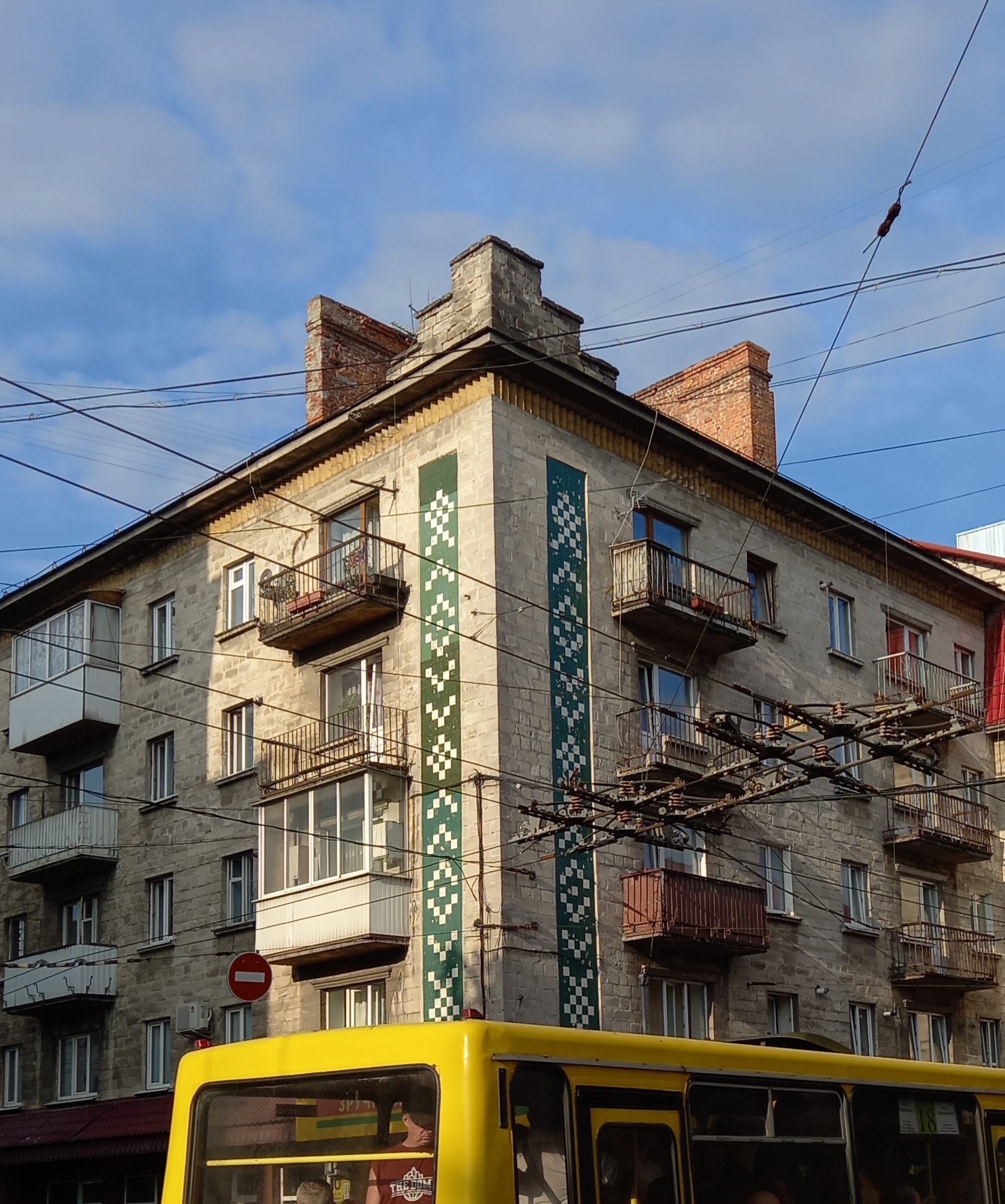
(Mosaic on facade and trolleybus cables, Ternopil, 2024. Image rights granted by M.P)
Western Ukraine’s relative calm is largely due to its distance from Russia. Those few hundred kilometres give regional authorities and residents crucial time to react and, if necessary, take shelter. Further east, that reaction window shrinks from hours to minutes.
At 2:44 p.m, the Air Force spots tactical aviation activity in the northeast. Six minutes later, guided aerial bombs are dropped by enemy aircraft over the Chernihiv region, north of Kyiv, bordering Russia. After another six minutes of silence, at 2:56 p.m, an open-source monitoring channel reports multiple explosions. This time, no one is injured.
In the same area, however, two elderly women were killed in their sleep earlier that morning by strike drones, hours before sunrise. They were 72 and 75 [4].
By dusk, early signs of a large-scale attack become apparent. The gloomily titled “Where Is the Rocket?” channel warns at 7:22 p.m of “certain activity detected that may indicate enemy strategic bombers being airborne in the coming hours”, corroborated by another Telegram group chat: “Threat of a COMBAT flight of ‘stratavia’ |Tu-95/22| tonight. In the event of a strategic aircraft flight, we will warn you additionally.”
Kh-101s, Kinzhals, Shahed-131s, KABs, Su-30s, MiGs — Ukrainians have grown familiar with military jargon, for their lives may depend on it. Between homework and bedtime stories, children can hear, identify and name incoming threats more easily than recite poems.
The risk of Tu-95/22 bombers being airborne entails the launch of devastating Kh-101 cruise missiles — low-flying, jet-propelled rockets travelling at subsonic speed, often targeting civilian infrastructure. These are not small frontline drones, but 2.5-tonne cruise missiles designed to obliterate their targets.
After repeated drone alerts throughout the afternoon, a visual map of Ukraine shows the first salvo of a dozen Shahed kamikaze drones entering Ukrainian airspace above Kharkiv at 7:44 p.m. This aerial threat, too, relies on psychological warfare through its loud, crisp propeller-engine sound — hence the nickname “flying moped”. Even the Air Force’s official Telegram channel uses a scooter emoji to describe them.
Each incursion triggers air-raid alerts in the affected regions — a strategy the Kremlin applies tirelessly: faked aerial activity to activate sirens and freeze civilian life momentarily. The town of Sumy, located no more than 20 km from Russia’s border, experienced approximately 1,100 alerts this year alone.
In Ternopil, families gathered for dinner. The east was already under intense bombardment. The night ahead would be different.
9:21 p.m, Ternopil Community Channel:
“❗️Preparing for a heavy night: launches of UAVs (Shaheds) have been recorded from at least six locations — more launches are possible during the evening/night. At least five MiG-31K aircraft at the ‘Savasleyka’ airfield are being prepared for combat sorties.”
By 10 p.m, half of the country was under attack. The wave of alerts slowly crept westward, turning Ukraine’s map blood-red, one region after another. A new swarm of nearly 30 Shaheds was launched over Sumy, their sound echoing across the Ukrainian land, all the way to the deepest-dug bomb shelters. By 11 p.m, 35 Shaheds were hovering over Ukraine; 45 minutes later, the number rose to 50.
Air alert map channel: 23:00 “💥 Kaniv/surroundings – explosions 23:02 💥 Odessa – explosions (air defense working) 23:03 💥 Kharkiv – another series of explosions 23:05 💥 Odessa & Kharkiv – explosions 💥 Kharkiv – >15 explosions, UAV hit high-rise building 😢 23:16 💥 Poltava district – explosions 23:19 💥 Pavlohrad district – explosions 23:23 💥 Snovsk (Chernihiv) – explosions 23:41 ⚠️ ~50 UAVs in airspace 23:41 💥 Odessa & district – explosions 23:56 💥 Pavlograd – explosions again”
Another group of nine drones appeared on radar, this time approaching from the Black Sea toward the city of Odesa. Spreading across the territory, the first groups are now only two regions away from Ternopil oblast.
One hour after the 15 consecutive UAV explosions heard in Kharkiv, rescuers announced that 29 people were injured in a suburban high-rise building. An all-too-familiar scene follows: cars in flames; a smoke-filled, debris-littered neighbourhood; and residents in the streets in the middle of the night, wearing whatever they managed to grab before fleeing into subzero temperatures. Among the hospitalised were four children [5].
Shortly after 2 a.m — after new groups of kamikaze drones appeared on radar — two missile carriers were deployed in the Black Sea, preparing the launch of 14 Kalibr cruise missiles toward central and western Ukraine, further overwhelming air-defence units.
The surviving drones were now only a region away from Ternopil’s dormant residents, closing in simultaneously from both the north and the south-east. At 2:19 a.m, nearly 80 drones were swarming Ukrainian airspace. Five minutes later, regional Telegram channels issued their own air-raid alerts.
“!!ATTENTION!! AIR RAID ALERT!!” reads the post on Ternopil’s mayoral channel. Another group warns repeatedly: “❗️ 🚨 ❗️ ATTENTION ❗️ 🚨 ❗️ AIR ALARM – EVERYONE TAKE SHELTER.”
The Ukrainian Air Force monitors the entry of the first group of drones from the north, heading south-west. Air-raid sirens were triggered across the oblast, their slow, gloomy tone rising to a plateau before fading again, looping every 15 seconds. Phones began vibrating. The official air-raid alert app fires a more oppressive, high-pitched version of the siren already reverberating outside — many have learned to mute it.
People can grow accustomed to sirens, especially when living far from their source; sleeping through one or several becomes commonplace. Humans are adaptable. The odd routine of a peaceful country at war continues.
“I was at home with my family. The siren sounded like a familiar warning, but this time it became a prophetic cry. My wife woke me because of a strange roar above the house — heavy, reactive, unknown,” Leonid recalled in testimony to the EIPS. This wave of drones would be the first of many.
Nadiyka lives in a small hamlet near Ternopil with her husband, teenage daughter and newborn. When a rocket flew over the city — belatedly detected on radars south of Kyiv — she heard it from her home.
“At about three in the morning, as I was nursing our baby […] I heard a missile flying overhead,” she remembers in remarks shared with our journal. “Then there was the sound of a drone, and it was terrifying. The missile sound is heavier but smoother. The drone sound is rattling, screechy. It makes you feel small.”
Her cousin in Dnipro, who has lived through years of daily raids, once told her: “If you hear a missile, it’s not coming for you.” Appeased by this crude thought, the family went back to sleep.
Amid the frenzied Telegram messages and the soundwaves of the strident siren bouncing off the central lake, cathedral, drama theatre and surrounding housing blocks, a lone message arrived at 3:03 a.m:
“⚠️✈️ Tu-95MS group departure from Olenya; if COMBAT: launches ~05:30–06:30; missiles in UA airspace ~06:30–07:30 – ‘Do not ignore alarms’.”
Up north near Finland, 2,000 km away from Ternopil, and 40 minutes after air-raid sirens began wailing across the oblast, six strategic bombers took off with their payloads of Kh-101 cruise missiles, a handful destined for Ternopil. More than 90 Shahed drones were now in national airspace flying for the most part west.
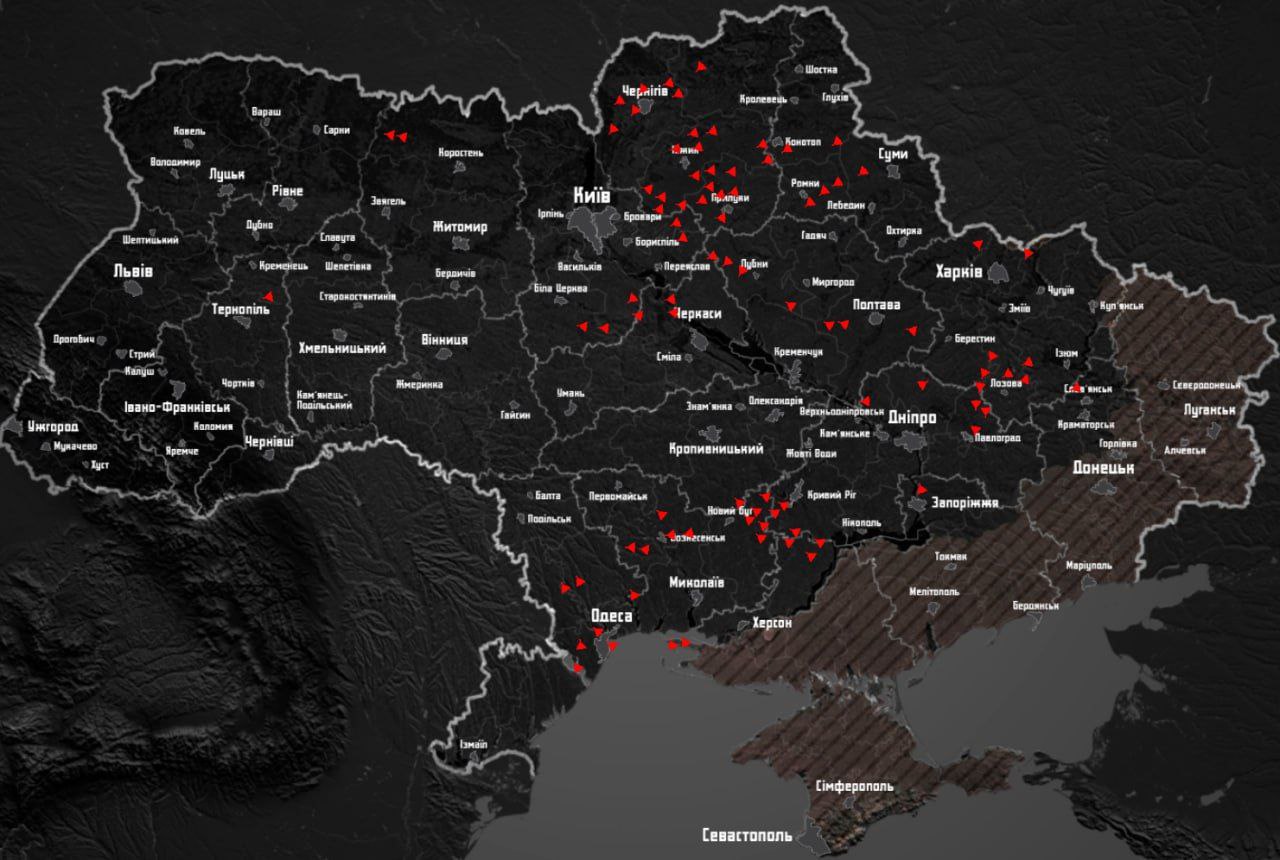
(‘Where is the Rocket? 🚀 | Monitoring’ telegram channel, drone situation, 2:40 a.m)
The group of five Kalibr cruise missiles launched from Black Sea carriers at 4:42 a.m was now only 50km away from Ternopil after a 40-minute flight. Simultaneously, two new departures were recorded in the Russian Federation: five MiG fighter jets carrying Kinzhal “Dagger” missiles, and four strategic bombers likely equipped with Kh-101s.
At 5:15 a.m, a Telegram channel announced that all regions were under air alert. The first swarms of drones have reached as far west as possible with even a few violating Polish airspace. Kamikaze drones and cruise missiles were now in Ternopil’s sky, swirling around the regional capital, hovering threateningly. Telegram channels sent updates at a heightened pace.
Ternopil community channel: 05:00 — Four Tu-160 aircraft added 😱❤ • 05:02 — By UAV: 2 in the north of Ternopil heading to Lviv region, 7 from Khmelnytskyi region flying to Ternopil region 🤬🤯❤ • 05:03 — The first missiles are already in Ukrainian airspace 🤬❤ • 05:16 — UAV in the west of Ternopil region, heading west 🤬❤ • 05:28 — Missiles already in Vinnytsia region, continuing west 🤬❤ • 05:33 — 6 north of Ternopil, then heading west 🤬❤ • 05:33 — +4 MiG-31K 🤬❤ • 05:39 — Missiles fly into Ternopil region 😢❤😱😭🤬 • 05:41 — Course northwest 🤬❤ • 05:46 — All missiles are flying towards/through Ternopil 🤬❤👏😢 • 05:47 — Ternopil — stay in shelters! 🤬❤ • 05:53 — Flew to the Frankivsk region 🤬❤👍😢
At 6:13 a.m, more than 40 cruise missiles were in Ukrainian airspace, 20 of them travelling above Cherkasy oblast, south of Kyiv, on a westward trajectory. They were expected to reach Ternopil within half an hour.
Despite the air-raid alert, the early morning routine continues for some residents. The sound of drones and missiles is audible across the region, yet some people wake up, make coffee and check on their families.
Nadiyka, who managed to go back to sleep for two more hours, woke again to nurse her baby, who, she recalls, “was cooing happily” even in the midst of a bombardment.
“I went downstairs to make myself some coffee and pulled the living room curtains open,” she said. “The lawn and the garden bushes were covered in frost. The sky was pink; the light was tender and magical.”
Moments later, cruise missiles began striking the regional capital.
“Three explosions, like heartbeats, and six more that tore the night apart,” Leonid recalls. “The windows shook, the building trembled, and we understood: the war had entered our home.”
One of the missiles, following a pre-programmed course, crossed Ternopil’s south-eastern fields at low altitude before entering the city and heading toward suburban residential areas.
Iryna’s husband, awake and determined to go to work, had just stepped outside their building. A few metres from the entrance, he felt the air vibrating before he could see the missile. Coated in matte-black paint, it was barely visible against the dawning sky.
Only seconds before impact did it become clearly visible, its jet engine audible as it descended. The missile struck the fourth floor of a nine-storey building, causing the upper levels to collapse.
That building was a Brezhnev-era residential block, with its side panels bearing blue and grey mosaics, where Iryna and dozens of others resided.
After the air-raid alert was lifted, Leonid went to the strike site to assist first responders and survivors. Although schools remained largely open that Wednesday, Maryna decided to stay home with her son due to concentration of harmful substances in the air — her husband nonetheless went to work, “as usual”. Not far away, Nadiyka remained in her house with her husband and newborn because of widespread power outages affecting her neighbourhood.
“Everybody was checking on everybody,” she said. “The power was out. My husband started a fire in the fireplace to keep us all warm.”
Even after nearly four years of a war that has deliberately targeted civilians, community support remains strong.
“People united as never before,” Leonid said. “They brought clothes, food, medicine; everything they could.”
Exactly as forecasted, that Wednesday morning, November 19, was cold and slushy — the kind of late-autumn morning Ternopil knows well. Just like the day prior, the white cathedral in the historic centre began live-streaming its divine service online. In Ukraine, life continues. So does resilience.
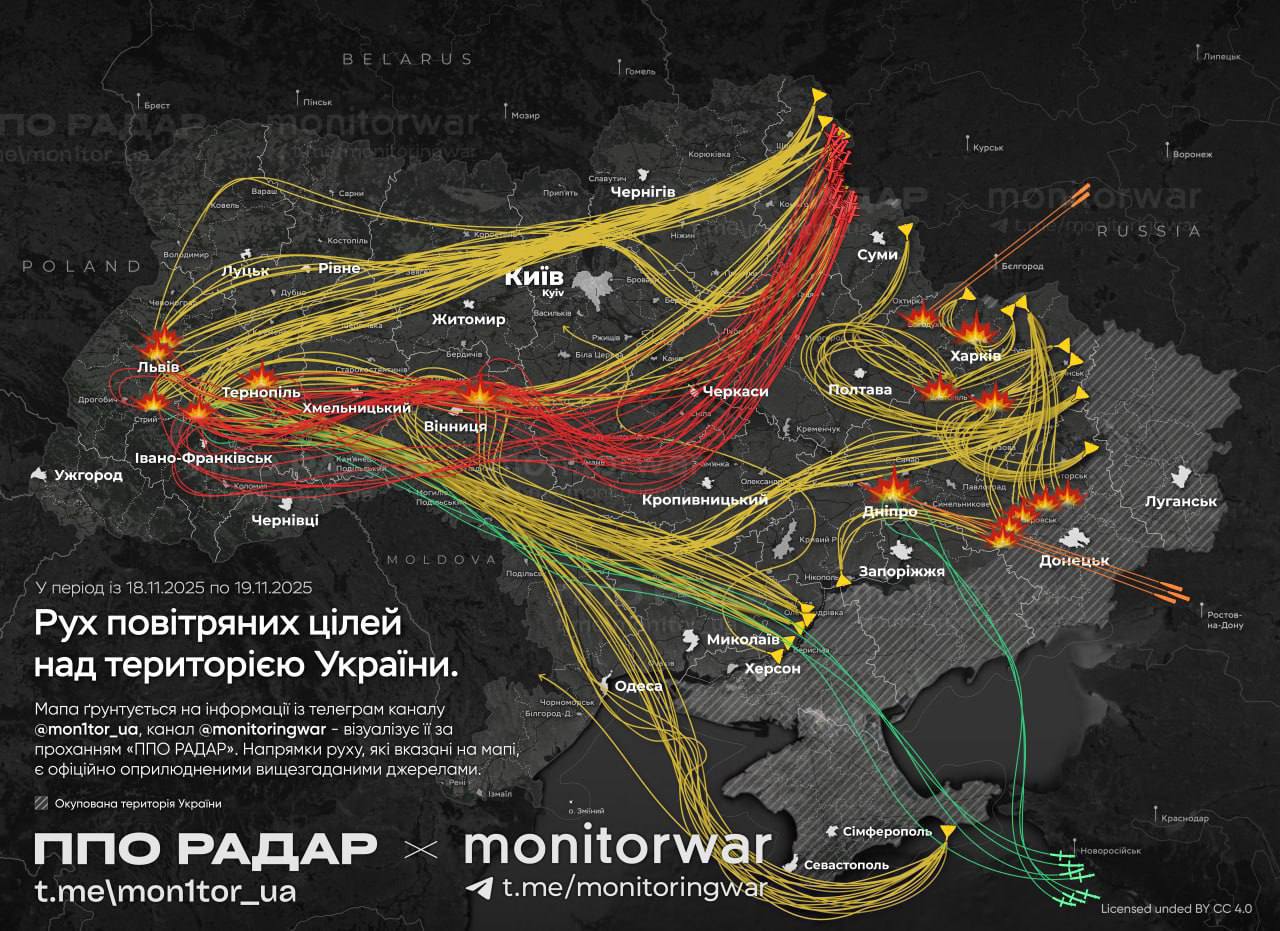
(‘monitorwar’ telegram channel: Overnight attacks, 19 November 2025)
Edited by Felix Dubé.
References
[1] Watson, I. (2025, November 9). Ukraine facing widespread power cuts after generating capacity reduced to zero by Russian attacks. The Guardian.
https://www.theguardian.com/world/2025/nov/09/ukraine-facing-widespread-power-cuts-after-generating-capacity-reduced-to-zero-by-russian-attacks
[2] Reuters. (2024, August 20). Russia launches fifth missile attack on Kyiv, Ukraine’s military says. Reuters.
https://www.reuters.com/world/europe/russia-launches-fifth-missile-attack-kyiv-august-ukraines-military-says-2024-08-20/
[3] Moshchova, M. [maryna.moshchova27]. (n.d.). Review of Ternopil lake. Google Maps.
https://www.google.com/maps/contrib/115238081511142263623/reviews/@50.1495555,27.3891713,7z/data=!3m1!4b1!4m3!8m2!3m1!1e1
[4] Ukrinform. (2025). Russians attack Horodnia in Chernihiv region with drones, killing two women. Ukrinform.
https://www.ukrinform.net/rubric-ato/4059876-russians-attack-horodnia-in-chernihiv-region-with-drones-killing-two-women.html
[5] Channel 24 UA. (n.d.). Telegram post reporting injuries following UAV strike on residential building. Telegram.
https://t.me/channel24_ua/194682
[6] Terajima, A. (2026, January 21). Over half a million left Kyiv in January amid Russia’s energy blitz, mayor Klitschko says. The Kyiv Independent. https://kyivindependent.com/klitschko-says-600-000-people-left-kyiv-in-january-amid-russias-energy-blitz/
[Images] Moshchova, M. [maryna.moshchova27]. (n.d.). Photographs. Facebook. Image rights granted to the EIPS.
https://www.facebook.com/maryna.moshchova27
[Telegram chat log timeline] Telegram air-alert monitoring log, compiled by the EIPS (18–19 November 2025). (n.d.). Google Sheets.
https://docs.google.com/spreadsheets/d/1QlA6dRpgv_3kZSEKAAHXqhq6c7G8geV59SXXDPpfhmk


Leave a comment