Last update: 9:00 am, March 22, 2026
The author is a former Armenian diplomat posted to NATO and IAEA (International Atomic Energy Agency), and a former OSCE and UN political and security governance advisor with experience in Kosovo, Timor-Leste and multiple African countries. She has been consulted by UNDP, EU, DCAF (Geneva-based Security Governance Center) and Freedom House. Her policy and academic work focuses on foreign policy, security governance, Euro-Atlantic integration, small states, ethnic conflicts and information warfare. She holds degrees from Harvard Kennedy School and ESCP and is currently a PhD candidate at Sorbonne Nouvelle. In 2025, she co-founded and is now leading a new think tank – Yerevan Center of Foreign and Security Policy.
1. Inside Iran: US Tactical Gains, Strategic Uncertainty
US and Israeli strikes have degraded parts of Iran’s missile, drone, and military infrastructure and disrupted elements of its leadership and command structure, including the killing of Supreme Leader Ali Khamenei, followed by the appointment of his son Mojtaba Khamenei as his successor. Subsequent strikes have targeted senior leadership, including key figures such as Ali Larijani, as well as other senior military and security officials. A significant escalation concerns the involvement of nuclear-sensitive sites. US–Israeli strikes have targeted Iran’s Natanz enrichment facility on 3 March and allegedly, an Israeli strike on 21 March, while Iran has launched missile attacks toward the Dimona, home to Israel’s main nuclear facility – and nearby town Arad wounding more than 100 people, although confirmed damage to the site itself remains unclear.
US President Donald Trump has presented the strikes as a “spectacular military success” that have “obliterated” key nuclear facilities, while insisting that the objective is to ensure that “Iran cannot have a nuclear weapon.” In practice, the US has achieved partial military objectives. Iran’s capacity to project force has been reduced, but not eliminated. Its nuclear and missile programmes have been degraded and partially disrupted, but not dismantled, and its ability to retaliate—both directly and through regional actors—remains intact. At the same time, the regime remains in control, and core state functions continue to operate.
The conflict has intensified internal pressure, with damage to infrastructure and civilian areas adding to an already fragile domestic environment following recent repression. Notably, despite leadership decapitation strikes, no large-scale protests have emerged, reflecting a combination of repression, wartime consolidation, and limited organisational capacity of opposition forces, as external military confrontation shifts attention from internal dissent toward the external threat. Recent assessments reported in Western media further indicate that there are no signs of imminent regime collapse, suggesting that state structures remain resilient despite sustained military pressure. Assessments suggest that regime change in Iran would require a ground component, as air strikes alone are unlikely to achieve this outcome, while the US has not shown clear willingness to deploy ground forces for such an operation.
2. From Localised Conflict to Multi-Theater War
The conflict has expanded beyond a bilateral confrontation into a multi-theater regional war. What began as US–Israeli strikes now involves multiple interconnected fronts: Iran, Israel, the Gulf maritime domain, and secondary theaters in Lebanon and Iraq.
In the Gulf, escalation has taken a direct interstate form. Iranian retaliation has targeted US military bases, energy infrastructure, and maritime routes, drawing Gulf states into the conflict due to their hosting of US forces and their central role in global energy exports.
In Lebanon, the conflict has intensified through exchanges between Israel and Hezbollah. This front remains structurally linked to Iran but is primarily driven by Israeli efforts to contain Hezbollah rather than direct US engagement.
In Iraq, escalation is mediated through Iran-aligned militias targeting US and coalition, such as French positions, which resulted in casualties, alongside continued Israeli strikes against Iranian-linked assets. These theaters function as proxy-based extensions of the conflict.
Jordan has also been affected, with missile and drone activity linked to the conflict targeting sites associated with US presence and crossing its airspace. Cyprus has already been affected by the conflict. An Iranian drone struck the British base, underscoring how the island is exposed and generating a discourse about the feasibility of having UK sovereign bases.
Additional disruptions have been reported in Azerbaijan and, to a lesser extent, Turkey, reflecting the wider geographic reach of the conflict. Israeli strikes carried out on March 18–19 targeted Iranian naval assets near Bandar Anzali on the Caspian Sea, reportedly hitting multiple vessels and port infrastructure. Taken together, these developments confirm that the war has become structurally regionalised, combining direct interstate confrontation, proxy warfare, and economic disruption.
3. The Strait of Hormuz: Global Economic Pressure Point
The Strait of Hormuz has become the central lever of escalation. Iranian disruption—through drone and missile activity, maritime obstruction, and suspected mining—has affected a corridor through which roughly 20% of global oil consumption and a significant share of seaborne oil trade transit.
The consequences are immediate. Oil prices have surged above $100 per barrel, volatility remains high, and tanker traffic disruptions are affecting global supply chains.
For Gulf states, the impact is direct. Major exporters face infrastructure risks, rising transport and insurance costs, and limited alternative routes.
For Europe, this represents a second major energy shock after the war in Ukraine. Despite reduced dependence on Russian energy, European economies remain exposed to external disruptions, with industry and energy-intensive sectors under increasing pressure.
At the same time, the targeting of energy infrastructure is emerging as a central feature of the conflict. Reciprocal strikes on oil and gas assets increase the risk of sustained disruption and provide Iran with a significant asymmetric lever over global markets. Beyond hydrocarbons, attacks on desalination facilities in Iran and Bahrain highlight the vulnerability of water infrastructure in the Gulf, raising the risk of broader humanitarian consequences if escalation continues.
4. Political and Legal Ambiguity: No Clear Moral or Strategic High Ground
The war’s framing remains contested, with no actor able to claim clear normative legitimacy. Iran’s regime is widely recognised as repressive, a characterisation reinforced by the January 2026 crackdown on nationwide protests, during which official figures confirm 3000 casualties, while Western estimates exceed 30,000. At the same time, Israeli and US military action is subject to legal and political scrutiny.
Each actor advances a distinct justification. Israel frames Iran’s nuclear and missile programmes as an existential threat. US President Donald Trump presents the intervention as necessary to prevent Iran from rebuilding its nuclear programme and expanding its missile capabilities. Iran’s Foreign Minister Abbas Araghchi characterises the conflict as a war initiated by the United States in coordination with Israel, rejects the legitimacy of the strikes, and denies that Iran is pursuing nuclear weapons. He presents Iran’s response as calibrated and defensive, while warning that Tehran has used only a “fraction” of its capabilities and would show “zero restraint” if its energy infrastructure is targeted again.
US objectives lack a clear timeline or defined end state, creating uncertainty about the direction of the campaign. Official statements emphasise the elimination of Iran’s nuclear and missile capabilities and the degradation of its military infrastructure, while at times implying broader aims, including regime decapitation or change. These justifications are contested within the US political system, where members of Congress and policy analysts have questioned whether an imminent nuclear threat existed to warrant the use of force, exposing divisions over both the intelligence basis and the legal grounds of the intervention. At the same time, some US political figures have suggested that Israeli actions played a role in drawing the United States into the conflict, framing Washington’s involvement as reactive rather than the result of a clearly defined strategy. This debate is further reflected in the absence of explicit congressional authorisation and in limited public support, with polling indicating skepticism about the scope and duration of the war.
The Director General of the International Atomic Energy Agency, Rafael Grossi, has stated that there is no evidence that Iran is currently building a nuclear weapon and that the Agency does not see a structured programme aimed at weaponisation. At the same time, he has warned that Iran’s nuclear activities remain a serious concern, pointing to its stockpiles of highly enriched uranium and its reduced level of cooperation with international inspectors. As a result, the Agency is not in a position to provide full assurance that Iran’s programme is exclusively peaceful.
The intervention against Iran has not been endorsed by the UN Security Council, reinforcing perceptions of unilateralism. The UN SC adopted a resolution condemning Iran’s attacks on regional neighbours and threats to navigation in the Strait of Hormuz. However, it did not address the US and Israeli strikes that triggered the escalation, reflecting divisions among major powers and limiting its practical impact. UN Secretary-General António Guterres has warned that the war risks spiraling out of control, urged the US and Israel to halt military operations, and called on Iran to stop attacks against neighboring states, emphasising the need to keep the Strait of Hormuz open and to prioritise diplomacy over escalation.
5. Russia–Ukraine War: Strategic Repercussions
The Iran war is already affecting Western policy toward Russia. In response to global energy disruptions, the United States has introduced limited flexibility in sanctions on Russian energy exports, raising concern in Ukraine and some European states that such measures may increase revenues for Russia and indirectly support its war effort.
At the same time, military resources are being redirected and strained. Air and missile defense systems previously prioritised for Ukraine are now being deployed in the Gulf to counter Iranian threats, placing additional strain on already limited inventories.
Ukraine’s battlefield experience is also becoming relevant beyond its own theater. Its capabilities in countering drones and managing complex aerial threats are increasingly being drawn upon by US and European partners through knowledge-sharing and operational adaptation.
Taken together, the opening of a second major theater is redirecting both material resources and strategic focus, with potential implications for the sustainability of support to Ukraine.
6. EU and NATO Allies: Strategic Distance from US Policy
The reactions of European allies reveal a clear transatlantic divide. Several governments have explicitly stressed that this is not a NATO war, distancing themselves from US policy. Within the EU, positions vary in tone but converge in substance, reflecting reluctance to align with the intervention.
The US did not consult its allies prior to initiating strikes and has since requested support for securing maritime routes in the Strait of Hormuz and the wider Gulf. In response, a group of allies—including Japan, the United Kingdom, France, Germany, Italy, and the Netherlands—has agreed to contribute to efforts aimed at protecting shipping lanes. These contributions are framed strictly in defensive terms and do not extend to participation in combat operations, underscoring a clear distinction between safeguarding global trade and joining the war.
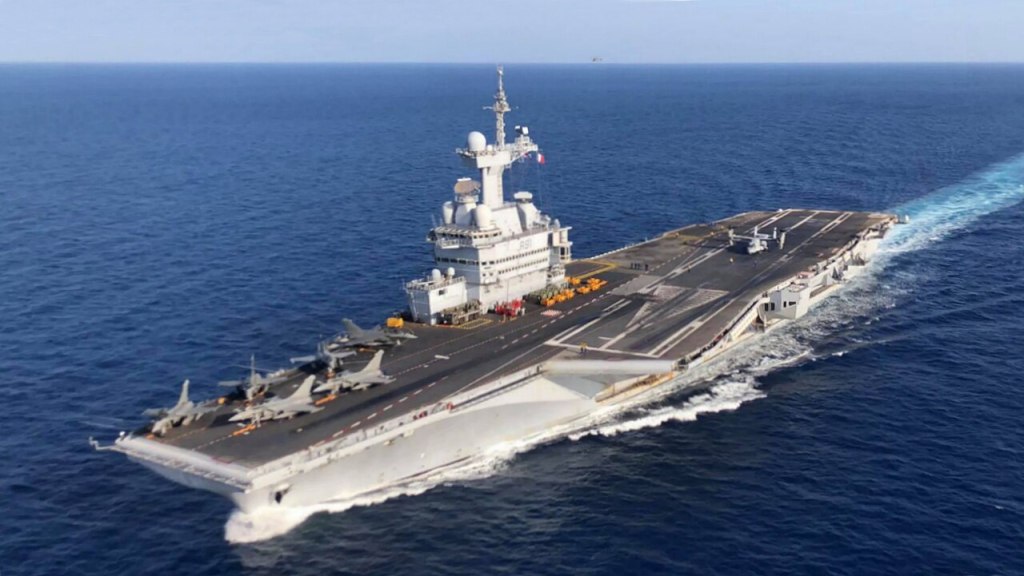
French President Emmanuel Macron has ordered the deployment of the aircraft carrier Charles de Gaulle and its strike group to the Eastern Mediterranean, marking one of France’s most significant recent naval operations. The deployment, which includes multiple escort vessels, is intended to protect maritime routes and support allies and partners, while reinforcing France’s autonomous military presence in a rapidly evolving regional security environment.
This enables maritime security support and regional power projection, while maintaining a clear separation from the US-led offensive actions. French military assessments have highlighted the sustainability limits of high-intensity operations, noting that the use of costly interceptor missiles against low-cost drones is rapidly depleting munitions stocks and imposing significant financial strain.
Germany has ruled out participation in military operations, stating that the conflict is not a NATO matter, while remaining open to contributing to maritime security efforts. Italy has taken a more critical position, with Prime Minister Giorgia Meloni openly questioning the rationale and risks of the war while emphasising de-escalation and limiting Italy’s engagement to defensive contributions. Spain has explicitly rejected the intervention, denied logistical support, and refused any form of participation. Taken together, these positions reflect not only restraint, but in several cases clear political disagreement with both the substance and the process of US decision-making. The United Kingdom has limited its role to defensive and contingency measures, avoiding any involvement in combat operations. On 20 March, the UK has allowed the US to use its military bases for strikes against Iranian targets linked to threats in the Strait of Hormuz. The same day, Iran expanded its targeting from regional US and allied bases in the Gulf to more distant strategic sites, including a missile attempt against the US–UK facility at Diego Garcia island in the Indian Ocean. This indicates a broader operational reach than previously assumed and raises questions about the geographic limits of Iran’s strike capabilities. While Europe has not been targeted, the demonstrated range suggests that European countries could now fall within reach under certain scenarios, adding a new dimension to the conflict’s strategic implications.
At the EU level, the response has centered on the fact that the United States did not consult its European allies prior to launching the strikes. Kaja Kallas, EU High Representative for Foreign Affairs and Security Policy, stated that Europeans “were not consulted” before the intervention and underlined that there is no shared understanding of its objectives. In this context, the EU response has emphasised de-escalation and diplomatic engagement, while avoiding endorsement of the military action
NATO allies’ reactions reveal a clear transatlantic divide. At the same time, NATO has made clear that it will not be drawn into the conflict, with no discussion of invoking Article 5 or collective military engagement. Several governments have emphasised that this is not a NATO war and have distanced themselves from US policy, ruling out participation. While positions vary in tone, they converge in substance. At the same time, NATO Secretary General Mark Rutte stated that US actions are “degrading” Iran’s military capabilities and described this as important, reflecting a degree of institutional backing without translating into collective military engagement. Trump called NATO allies “cowards” after they mostly ruled out sending naval forces to secure the Strait of Hormuz.
NATO has also adjusted its force posture, including the partial redeployment of personnel from Iraq toward Europe, reflecting evolving threat assessments and priorities. This shift highlights how the expansion of the conflict is influencing the allocation of military resources across theaters.
7. Conclusion: No Clear End State
The central feature of the conflict is the absence of a political outcome. There is no defined end state, no credible pathway to de-escalation, and no indication that airstrikes alone will produce regime change or stabilisation. The result is tactical and operational gains without strategic resolution, leaving the conflict structurally open-ended.
The war reflects a broader shift toward a more fragmented international system. It underscores the weakening of collective decision-making mechanisms, with no UN Security Council consensus and no NATO alignment, while exposing growing divergence within the West between US unilateral action and European caution. At the same time, it reinforces the central role of energy routes as instruments of geopolitical pressure.
A decisive outcome in the near term appears unlikely. Iran retains the capacity to escalate, the United States faces strategic ambiguity, and allies remain reluctant to engage beyond defensive measures. At the same time, rather than weakening the regime, the conflict may contribute to its consolidation, as external pressure reinforces internal cohesion and strengthens hardline elements within the state apparatus. The conflict is therefore likely to persist as a multi-theater confrontation, generating sustained instability, economic disruption, and wider geopolitical fragmentation, with effects extending beyond the Middle East.
For Armenia and the Armenia–Azerbaijan peace process, the conflict does not create immediate security risks but introduces additional complexity into an already fragile normalisation trajectory. While it may generate limited incentives for pragmatic cooperation, shifting regional dynamics and external alignments risk reinforcing asymmetries and complicating the sustainability of the process. In particular, uncertainty surrounding the implementation of TRIPP (e.g., Trans-Regional Infrastructure & Peace Project)—amid shifting US priorities and potential Iranian opposition—may affect both the pace of normalisation and the broader regional balance around connectivity.
References
[Cover Image] Smith, J. (2019, April 24). French aircraft carrier Charles de Gaulle (R91) underway on 24 April 2019 (190424-M-BP588-1005) [Photograph]. Wikimedia Commons. https://commons.wikimedia.org/wiki/File:French_aircraft_carrier_Charles_de_Gaulle_(R91)underway_on_24_April_2019(190424-M-BP588-1005).jpg


Leave a comment