by the Neo Institute Europa and EIPS
Introduction
Europe’s ambition to achieve defense technological self-reliance has shifted from a long-standing aspiration to an urgent strategic priority. Russia’s war against Ukraine, repeated disruptions in global supply chains and growing uncertainty surrounding the long-term reliability of the transatlantic security guarantee have exposed the structural vulnerabilities within Europe’s defense posture. In response, the European Union has accelerated efforts to strengthen indigenous defense innovation, reduce dependence on external suppliers and consolidate a European defense technological and industrial base capable of sustaining military capabilities under crisis conditions.
Initiatives such as the European Defense Fund (EDF), Permanent Structured Cooperation (PESCO), the Strategic Compass and the recent Readiness 2030 (previously ReArm Europe), signal a clear political intent to move beyond declaratory ambition (European Commission, 2025(b)). Whether these instruments can generate scale, coherence and operational impact, however, remains an open and increasingly consequential question for Europe’s security and global credibility.
What does defense technological self-reliance actually mean?
Debates on European defense technological self-reliance are often blurred by overlapping concepts that obscure more than they clarify. In EU policy language, strategic autonomy does not imply full self-sufficiency, but rather the capacity to act independently when necessary and with partners when possible. Self-sufficiency, the ability to design, produce and sustain all critical defense technologies domestically, remains neither economically viable nor strategically realistic for a union of fragmented defense markets (European Parliament, 2020). Instead, the EU increasingly gravitates toward a model of managed or interoperable dependence, in which reliance on external suppliers is accepted but deliberately shaped to preserve freedom of action under crisis conditions (ECCI, 2025).
This distinction is particularly relevant in the context of dual-use technologies, where the boundaries between civilian and military innovation are increasingly porous (European Commission, n/a). Artificial intelligence, cyber capabilities, space-based assets and advanced semiconductors are developed primarily within civilian markets but have become indispensable to modern military operations (European Parliament, 2025). The EU’s defense ambitions are therefore inseparable from its broader industrial, digital, and technological policies, including efforts to secure critical supply chains and foster innovation ecosystems (European Commission, 2024). Defense technological self-reliance, in this sense, is less about insulation from global markets than about securing access, control and resilience across them.
The EU’s institutional toolkit
Under the 2021 to 2027 multiannual financial framework (MFF), the European Defense Fund (EDF) received a budget of approximately €7.3 billion (later increased by €1.5 billion following the mid-term revision), marking the first time the European budget was systematically directed toward military R&D. By late 2025, the Commission had committed close to €6.5 billion across five work programmes targeting critical domains including AI, sensors, cyber defense and space (European Commission, 2025). On cross-border cooperation, the record is genuinely strong. EDF consortia typically bring together around seventeen entities from multiple member states, pulling defense SMEs, start-ups and research organisations into collaborative networks that did not previously exist at the European level. The EU Defense Innovation Scheme (EUDIS), a subset of the Fund, has reinforced this through hackathons, accelerators and matchmaking services aimed at lowering entry barriers for non-traditional defense actors (European Commission, 2025). The Fund’s interim evaluation, published in June 2025, confirmed it had driven cross-border defense R&D cooperation at a scale the EU had never seen before, with EDF funding in several smaller member states equalling or surpassing their entire national defense R&D spending (European Commission, 2025; European Parliament, 2025).
Its limits, though, are real. An annual allocation of roughly €1 billion remains modest against Europe’s capability gaps. National defense markets remain fragmented, with member states continuing to fund overlapping programmes that dilute the fund’s ability to concentrate resources. More fundamentally, the EDF was built to support research and early development, not procurement or industrial scale-up. No formal mechanism bridges EDF-funded prototypes and national procurement cycles, with administrative bottlenecks (including intra-EU transfer authorisations that have delayed projects by up to a year) further slowing the pipeline (European Court of Auditors, 2023; European Commission, 2025). The concern is straightforward; the Fund may succeed at generating innovation while lacking the means to turn it into deployable military capability.
On the cooperation front, the Permanent Structured Cooperation (PESCO), launched in December 2017 with twenty-six participating member states and twenty legally binding commitments, was billed as one of the most ambitious frameworks in EU defense history (European Council, 2017). Its first phase (2017 to 2025) generated eighty-three projects across seven operational domains. Some have delivered: The Cyber and Information Domain Coordination Centre (CIDCC) reached initial operational capability, Cyber Rapid Response Teams (CRRTs) are actively deploying and in the unmanned domain, the European MALE RPAS (Eurodrone) and Next Generation Small RPAS (NGSR) are advancing ISR capabilities. The European Patrol Corvette moved into procurement, with deliveries expected in the early 2030s. A sixth wave of eleven new projects, approved in May 2025, covered air and missile defense, electronic warfare, quantum technologies and medical facilities (PESCO Secretariat, 2025; European Defense Agency, 2025).
On the whole, though, the record is uneven. Fifteen projects have fallen behind schedule, only half are expected to reach full operational capability by their target dates, and the 2025 Progress Report acknowledged that some projects should be retired or transferred elsewhere (PESCO Secretariat, 2025). The binding political commitments that once defined PESCO have quietly lost their weight, with limited pressure from capitals to see projects through (ICDS, 2025). The underlying problem is one of design: PESCO was built to be inclusive, prioritising broad participation over concentrated capability outcomes. Member states can join projects without committing the resources needed to complete them. Participation, in other words, was prioritised over integration, and the gap between political commitment and deployable capability remains stubbornly wide.
Critical technology domains and persistent dependencies
Europe’s pursuit of defense technological self-reliance is most visible in a limited number of critical capability domains where EU-level coordination has begun to generate tangible results. EU-supported programmes have accelerated indigenous development in unmanned systems, cyber defense, space situational awareness and command-and-control (C2) architectures, particularly in areas where civilian innovation ecosystems can be leveraged for military use (European Council, 2020). The growing role of defense SMEs and cross-border industrial consortia, supported by the EDF, has contributed to incremental progress in software-driven capabilities, autonomous platforms and data-enabled military systems (European Commission, 2025(b)).
Yet these advances coexist with deep and persistent external dependencies. Europe remains structurally reliant on non-EU suppliers, primarily the United States, for advanced semiconductors, high-end software, cloud and data infrastructure, key intelligence, surveillance, reconnaissance (ISR) and space-based assets. Such dependencies extend beyond procurement and shape interoperability standards, system upgrades and operational decision-making (European Court of Auditors, 2023). Recent supply-chain disruptions, exacerbated by the COVID-19 pandemic, Russia’s war against Ukraine and the recent tensions with the Trump Administration, have highlighted the vulnerability of access to critical components under crisis conditions (EPRS, 2022).The central challenge, therefore, is not the absence of technological competence but the lack of control, resilience and scalability. Without secure access to foundational technologies, Europe’s progress in higher-level defense systems risks remaining contingent on external political and industrial decisions beyond EU control (EPC, 2025).
Structural constraints
For all the momentum surrounding EU defense cooperation, fragmentation remains the system’s default setting (European Commission, 2017). National protectionism continues to shape procurement choices, as member states privilege sovereignty and domestic industrial interests over efficiency (The Parliament Magazine, 2026). The result is a crowded landscape of overlapping platforms, duplicated capabilities and missed economies of scale, which undermines both interoperability and readiness at a time of acute strategic pressure (European External Action Service, 2025a).
This structural inertia is reinforced by a persistent gap between political ambition and industrial capacity. At EU level, initiatives such as the Strategic Compass (European External Action Service, 2022) and the Mario Draghi agenda on European competitiveness argue for bolder integration, joint procurement and a move beyond strict intergovernmentalism (European Commission, 2024). Defense therefore remains intergovernmental at its core, limiting the EU’s ability to translate strategic rhetoric into operational capability (Brussels School of Governance, 2025). Until authority, resources and incentives are better aligned, fragmentation is likely to continue outpacing integration.
Strategic partnerships
Over the past two years, the European Union has expanded its engagement in security and defense by concluding nine Security and Defense Partnerships with partners ranging from Moldova and Norway to India in January 2026, while discussions are ongoing with Switzerland and Australia (European External Action Service, 2025b). These non-binding agreements have become a key instrument of EU foreign policy, enabling flexible and durable cooperation in an increasingly transnational threat environment. By aligning strategies, resources and industrial capacities, the EU enhances its credibility as a security actor and increases its strategic autonomy, while also recognising that contemporary security challenges cannot be addressed unilaterally (European Council, 2022).
The EU’s security depends not only on internal capability development through initiatives such as SAFE and Readiness 2030, but also on the multiplication of capabilities through external partnerships. Cooperation with Japan (European External Action Service, 2024a) and South Korea (European External Action Service, 2024b) has strengthened high-tech and dual-use industries, linking political dialogue with concrete collaboration in areas such as AI, cybersecurity, maritime and space security. Similar dynamics are visible in partnerships with Canada (European External Action Service, 2025c) and Norway (European External Action Service, 2024c), which enhance interoperability and crisis-management capacities in key strategic regions, notably the Arctic and the transatlantic space. These agreements have also enabled non-EU partners, such as the UK, to participate in EU defense mobility and industrial programmes, illustrating their practical added value (European External Action Service, 2025d).
The effectiveness of these partnerships, however, remains closely tied to the EU–NATO relationship (European External Action Service, 2025e). NATO continues to act as the primary security anchor for Europe, providing deterrence, operational credibility and strategic coherence, particularly in response to Russia’s war against Ukraine (NATO, 2024). While concerns over duplication and alliance cohesion can constrain EU initiatives, complementarity with NATO remains essential (European Council, 2025). EU strategic autonomy can only be developed alongside the Alliance, by reinforcing European capabilities and interoperability in ways that strengthen collective defense rather than undermine it.
From aspiration to capability
Defense self-reliance demands that the EU stop treating defense as a policy silo. The technologies driving modern military advantage (AI, quantum computing, advanced semiconductors, space and cybersecurity) are developed overwhelmingly in civilian markets, governed by industrial and digital frameworks that have long operated at arm’s length from defense planning (European Commission, 2024). The White Paper for European Defense (Readiness 2030), presented in March 2025, took an important step by framing defense readiness as bound up with the EU’s broader industrial competitiveness agenda (European Commission, 2025(b)). In December 2025, the Council adopted a regulation amending five key programmes (the Digital Europe Programme, the EDF, the Connecting Europe Facility, STEP and Horizon Europe) to channel them more effectively toward defense activities (Council of the EU, 2025), and the Defense Industry Transformation Roadmap proposed opening EU research infrastructures, including JRC facilities, AI factories and semiconductor pilot lines, to defense innovators (European Commission, 2025d). These go beyond new funding lines; they signal a shift toward treating defense as a scale problem woven into the EU’s wider technological fabric.
Europe’s most pressing operational deficit is not a shortage of ideas but a failure to move successful R&D into fielded systems at scale. Closing that gap is the ambition of the European Defense Industry Programme (EDIP), adopted by the Council in December 2025 with a €1.5 billion budget for 2025 to 2027, covering the full supply chain from R&D through production and procurement to disposal (Council of the EU, 2025; European Parliament, 2025). Alongside it, the Security Action for Europe (SAFE) instrument, adopted in May 2025, provides up to €150 billion in long-maturity loans for urgent, large-scale procurement of priority defense products. SAFE requires that procurement involve at least two participating countries, forcing convergence and building interoperability into purchasing decisions from the outset (Council of the EU, 2025). By early 2026, nineteen member states had expressed interest, requesting support beyond the available budget (European Commission, 2025(e)). Whether these instruments can close the structural gap between cooperative R&D and industrial production will depend on execution, but the financial architecture is now in place.
A realistic pathway to defense self-reliance must accept that full independence is neither achievable nor desirable. The question is not whether Europe will depend on external partners, but whether those dependencies are managed deliberately. Three strategic choices define this approach: Co-development, to share the costs and risks of advanced programmes, co-production, to embed European firms in international supply chains on favourable terms and interoperability, to ensure jointly acquired systems function across allied forces without locking Europe into a single provider. EDIP’s requirement that at least sixty-five percent of component costs originate from within the EU or associated countries reflects this logic (Council of the EU, 2025). SAFE reinforces it by allowing countries with EU Security and Defense Partnerships, including Canada, Japan, South Korea, Norway and the United Kingdom, to participate in joint procurement (Council of the EU, 2025). The integration of Ukraine’s defense industry into both instruments, including a dedicated €300 million Ukraine Support Instrument under EDIP, takes this further; turning a wartime partnership into a structural element of European defense capacity (European Parliament, 2025). Put differently, autonomy does not require isolation. It requires the political capacity to choose who to depend on, under what conditions, and with what safeguards.
The EU is unlikely to achieve full defense technological self-reliance, and framing this as a realistic objective risks obscuring more attainable goals (European Commission, 2024). European security will continue to depend on alliances, global supply chains and external partners, most notably the United States for the foreseeable future (Bruegel, 2025). Yet this reality does not rule out credible strategic autonomy, since what it demands is a clearer understanding of power.
Strategic autonomy can emerge through selective dependence, where reliance is managed and diversified rather than denied, as well as through deeper integration that reduces fragmentation and duplication (European Council on Foreign Relations, 2023). Achieving this will require hard political trade offs, particularly on sovereignty, procurement and industrial consolidation (European Defense Agency, 2023). The real risk for the EU is not dependence itself, but the illusion that institutional processes, funding instruments and coordination frameworks automatically translate into power (E-International Relations, 2025). Without political choices that concentrate authority and resources, ambition will continue to outpace capability.
Edited by Adrian Diez Cuadrado & Maxime Pierre
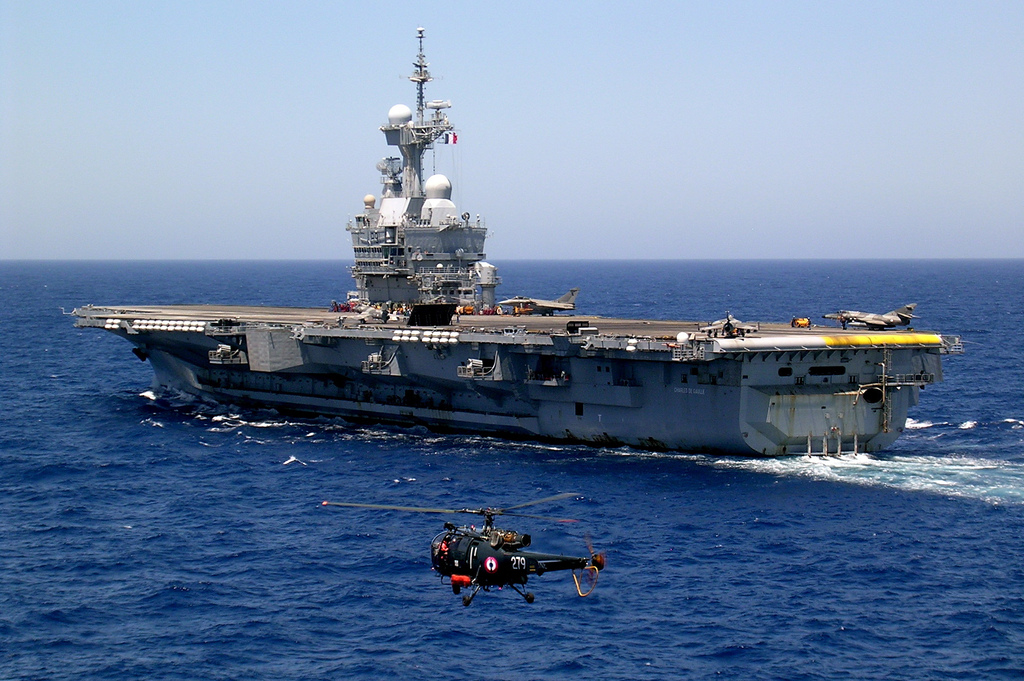
[Cover Image] Subtil, P. (2007, May 1). Charles De Gaulle [Photograph]. Wikimedia Commons. https://commons.wikimedia.org/wiki/File:Charles_De_Gaulle_PascalSubtil_1.jpg


Leave a comment