
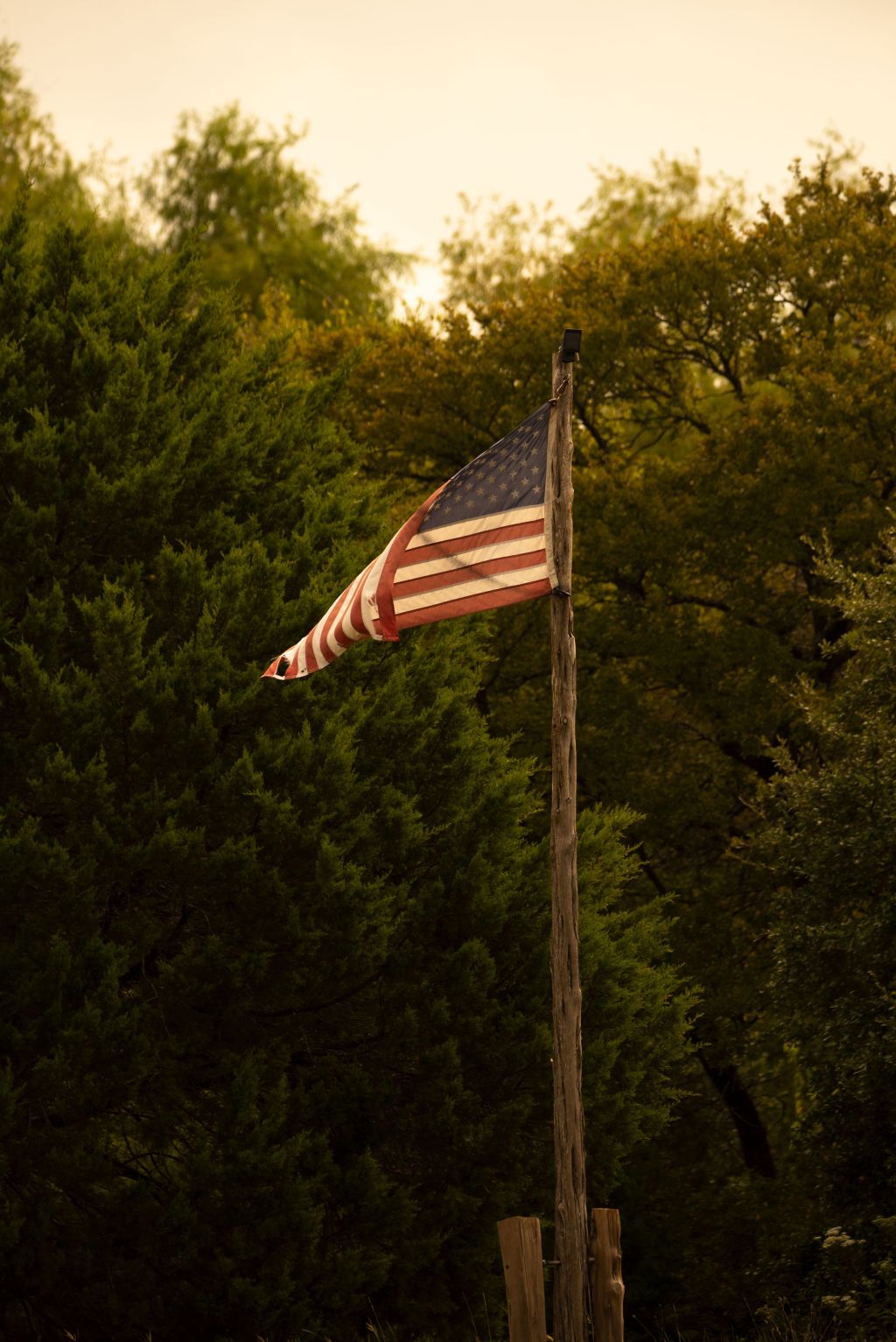
250 years ago, a piece of paper was signed. Not just any paper, but the Declaration of Independence, the charter on which the United States of America was built. The Founding Fathers had a dream, a dream of a new nation, a free nation, in which Happiness was a right, not a privilege.
“ […] that all men are created equal, that they are endowed by their Creator with certain unalienable Rights, that among these are Life, Liberty and the pursuit of Happiness. – That to secure these rights, Governments are instituted among Men, deriving their just powers from the consent of the governed, […] whenever any Form of Government becomes destructive of these ends, it is the Right of the People to alter or to abolish it, and to institute new Government, laying its foundation on such principles and organizing its powers in such form, as to them shall seem most likely to effect their Safety and Happiness.” [1]
The Declaration of Independence – July 4th 1776
The practical and pragmatic U.S. we know today was founded not on a law, not on a constitution, but on something rarer: a philosophical document built entirely on the idea that rights exist before governments do. The institutions are just means through which the People secure their rights, and most importantly, whenever these rights are betrayed, they outlive the government [1]. At several pivotal moments, the United States acted as though it believed its own founding ideals applied beyond its borders.
Spring of 1917, World War I had already been raging for three years, and 28th president Woodrow Wilson found himself standing before Congress, asking for the very thing he had been avoiding for all these years: the US entrance into the Great War. However, Wilson did not frame it as a revenge against the Germans, after they sank the Lusitania, or as a strategy to gain power, and territories: he framed it as something bigger: “[…] the world must be made safe for democracy.” [2]. Not American democracy specifically, but democracy as a right belonging to people everywhere, the same idea the Declaration had once called self-evident on behalf of thirteen colonies, now claimed on behalf of the world. “We have no selfish ends to serve,” Wilson told Congress. “We desire no conquest, no dominion.” [2]. America was putting at risk its resources and its People for something bigger: ideals.
Then, in the cold January of 1918, Wilson took a step further: the unveiling of the Fourteen Points; the beginning of the Great War’s end, the first step toward the peace the world so badly needed. Open diplomacy instead of secret treaties, freedom of the seas, reduced armaments, and, most consequentially, the principle that peoples under imperial rule had the right to determine their own governments. It was the Declaration’s core claim, formalized as U.S. foreign policy for the first time: not just that America had the right to govern itself, but that everyone did. To make this happen, a League of Nations (a worldwide intergovernmental organisation) had to be formed, to make sure that the Fourteen points would be respected. Wilson found resistance in the Senate, and then found himself unable to fight it [3]. In September 1919, midway through a nationwide tour to rally public support for the treaty, he collapsed, and shortly after suffered a stroke that left him partially paralyzed and largely shut off from his own administration [4]. The man who had written the vision was no longer able to defend it. Without him, the Senate rejected the Treaty of Versailles (twice), and with it, also the U.S. membership to the League of Nations.
The vision outlived the man who wrote it, the way the Declaration itself had promised it would, and it would take another World War for the country to pick it back up.
Two decades later, the world was on fire again. On December 29, 1940, almost a year before Pearl Harbor, President Franklin D. Roosevelt did not go to Congress first. He went on the radio, in one of his fireside chats, a format he used precisely because it felt like a voice in people’s own living rooms, not a speech delivered to politicians in a chamber. There, directly to the country, he said the United States needed to become “the great arsenal of democracy” by supplying the weapons, if not yet the soldiers, to the nations still standing against the new dictatorships [5].
Eight days later, in his State of the Union address, Roosevelt went further than any president before him. He didn’t just ask for material support for the war, but he named what the country was fighting for, in terms that reached beyond its own borders entirely. Four freedoms, he said, belonged to people “everywhere in the world”: freedom of speech, freedom of worship, freedom from want, and freedom from fear. Not American freedoms. Freedoms, full stop, universal by his own definition. It was Jefferson’s logic taken to its furthest possible conclusion: if rights exist before governments do, then they don’t stop existing at a border [6].
In the war that followed, the United States backed those four freedoms with more than words. Indeed, the U.S. did not occupy the nations it defeated the way empires historically had. In fact the Marshall Plan helped to rebuild Germany, Italy, and Japan as self-governing states, not colonies, on a bet that democracies do not go to war with the countries that made them democratic [7].
Two years later, the pattern repeated itself, and this time the country did not wait for a war to end before choosing sides. In March 1947, President Harry Truman stood before Congress with a different kind of danger to name, not nazism this time, but a new form of the same old problem: “a minority forcibly imposed upon the majority.” He asked for aid to Greece and Turkey, two nations at risk of falling to armed movements backed from outside their borders, and in doing so laid out what would guide American foreign policy for the next four decades: “It must be the policy of the United States to support free peoples who are resisting attempted subjugation by armed minorities or by outside pressures.” Self-determination, again, not just a domestic right, but something worth underwriting abroad, indefinitely, as a matter of policy rather than a one-time rescue [8].
That doctrine held, more or less, for the length of the Cold War. It is what NATO grew out of two years later, and what would carry, unbroken in spirit, all the way to a wall in Berlin.
Reagan took the same doctrine to the Wall itself. In June 1987, standing at the Brandenburg Tor with the Berlin Wall behind him, he made the demand direct: “Mr. Gorbachev, tear down this wall.” His own advisors had tried to cut the line: it seemed too provocative, too likely to embarrass a Soviet leader the U.S. was cautiously courting toward reform. Reagan kept it anyway. Two years later, the wall came down on its own, without American soldiers, without a war [9].
The principle was tested once more before the century ended, this time not against an empire but against a smaller aggression with the same old logic behind it. In August 1990, Iraq invaded Kuwait outright, and within days President George H.W. Bush drew the line as plainly as Wilson or Truman ever had: “This will not stand.” Twenty-seven nations joined the coalition that followed, not to claim Kuwait for themselves, but to give it back. When the war ended in February 1991, Bush put the principle in its simplest form yet: Kuwait, he said, was “once more in the hands of Kuwaitis, in control of their own destiny.” No territory changed hands. No colony was founded. A nation was returned to the people who already owned it [10].
None of this was ever pure. Oil sat behind the principle as often as principle sat in front of oil, and more than once the same doctrine that freed Kuwait was used, elsewhere, to remove governments Americans themselves hadn’t chosen to remove; Iran in 1953, Guatemala in 1954, done quietly, because it could not survive being said in daylight. The ideal was real. So was the interest. They rarely traveled alone [11]. However, even at its most self-serving, American power still felt it owed the world an explanation in the language of rights, sovereignty, and self-determination: a lie told to a principle it still, on some level, answered to.
For a while, it looked settled. The Cold War had ended, an aggressor had been reversed rather than rewarded, and for the first time in nearly a century, no rival power stood ready to impose rule on people who hadn’t chosen it. The American principle of self-determination, “consent of the governed” made it into foreign policy, and had, to some extent, held.
It doesn’t look settled anymore. Since 2025, the pattern has repeated often enough to have a name.
In January 2026, the U.S. military captured Venezuela’s Nicolás Maduro and flew him to New York to face trial, a leader most of the world already considered a dictator, so the action itself sits in a different category than what follows. What is telling is not that the U.S. acted. It is how it explained itself afterward: not that Venezuelans deserved self-government, the language every president from Wilson to Bush had reached for, but that the U.S. would “run” the country until further notice, with access to its oil named as one of the reasons.
Then, at Ankara’s July 2026 NATO summit, meant to project alliance strength, the same president told reporters: Greenland “should be controlled by the United States, not by Denmark“, which is a founding NATO ally. Denmark’s prime minister answered in the only language the moment called for: she hoped, she said, that allies would “respect the Greenland people’s right for self-determination.” [12] [13]
He has a name for the pattern now. Reporters call it the “Donroe Doctrine,” after the Monroe Doctrine his own advisors cite as precedent, and Trump has used the term himself: “American dominance in the Western Hemisphere,” he said after the Venezuela operation, “will never be questioned again.” [14].
“[…]unalienable Rights, that among these are Life, Liberty and the pursuit of Happiness. – That to secure these rights, Governments are instituted among Men, deriving their just powers from the consent of the governed […]”
The Declaration did not claim dominance for the people who signed it, but quite the opposite: it claimed a right, one it insisted belonged to anyone, anywhere, whenever a government stopped answering to those it ruled. For two hundred and fifty years, in its best moments, that was the sentence America exported: not we will not be questioned, but you have the right to question us, and everyone else. One of those sentences asks the world for nothing. The other asked for everything, for consent. It is worth noticing, on the anniversary of the second sentence, that the country now speaks so fluently in the first.
Edited by Adrian Kai Fraile Itagaki.
References
1–2.
National Archives. “Joint Address to Congress Leading to a Declaration of War Against Germany (1917).” National Archives, U.S. National Archives and Records Administration, www.archives.gov/milestone-documents/address-to-congress-declaration-of-war-against-germany. Accessed 10 July 2026.
3.
National Archives. “President Woodrow Wilson’s 14 Points (1918).” National Archives, U.S. National Archives and Records Administration, www.archives.gov/milestone-documents/president-woodrow-wilsons-14-points. Accessed 10 July 2026.
National WWI Museum and Memorial. “The Fourteen Points.” The National WWI Museum and Memorial, www.theworldwar.org/learn/peace/fourteen-points. Accessed 10 July 2026.
4.
“Woodrow Wilson: Life in Brief.” Miller Center, University of Virginia, millercenter.org/president/wilson/life-in-brief . Accessed 10 July 2026.
5.
“Lend-Lease Act.” Franklin D. Roosevelt Presidential Library and Museum, National Archives and Records Administration, www.fdrlibrary.org/lend-lease. Accessed 10 July 2026.
6.
“The Four Freedoms.” Franklin D. Roosevelt Presidential Library and Museum, National Archives and Records Administration, www.fdrlibrary.org/four-freedoms. Accessed 10 July 2026.
7.
Office of the Historian. “Marshall Plan, 1948.” U.S. Department of State, history.state.gov/milestones/1945-1952/marshall-plan. Accessed 10 July 2026.
8.
“The Truman Doctrine, 1947.” The American Yawp Reader, www.americanyawp.com/reader/25-the-cold-war/the-truman-doctrine-1947/. Accessed 10 July 2026.
9.
Reagan, Ronald. “Address at the Brandenburg Gate, June 12, 1987.” Miller Center, University of Virginia, millercenter.org/the-presidency/presidential-speeches/june-12-1987-address-brandenburg-gate-berlin-wall . Accessed 10 July 2026.
10.
“The Gulf War.” Miller Center, University of Virginia, millercenter.org/statecraftmovie/gulf-war Accessed 10 July 2026.
11.
Byrne, Malcolm, editor. “CIA Confirms Role in 1953 Iran Coup.” National Security Archive, George Washington University, nsarchive2.gwu.edu/NSAEBB/NSAEBB435/ Accessed 10 July 2026.
Doyle, Kate, editor. “CIA and Assassinations: The Guatemala 1954 Documents.” National Security Archive, George Washington University, nsarchive2.gwu.edu/NSAEBB/NSAEBB4/ Accessed 10 July 2026.
12–13.
“NATO Summit Supposed to Focus on Defense Spending, but Trump’s Strikes on Iran and Greenland Comments Overshadow.” ABC News, 7 July 2026, abcnews.com/International/wireStory/nato-summit-supposed-focus-defense-spending-trumps-strikes-134572678
“Trump Says Greenland ‘Should Be Controlled by the US,’ Not Denmark.” U.S. News & World Report, 7 July 2026, www.usnews.com/news/world/articles/2026-07-07/trump-says-greenland-should-be-controlled-by-the-us-not-denmark.
14.
“The Trump Corollary Is Officially in Effect.” Atlantic Council, www.atlanticcouncil.org/dispatches/the-trump-corollary-is-officially-in-effect/. Accessed 10 July 2026.
[Cover picture] : Cline, B. (2020, September 11). A US flag on a pole [Photograph]. Pexels. https://www.pexels.com/photo/a-us-flag-on-a-pole-5498106/


Leave a comment