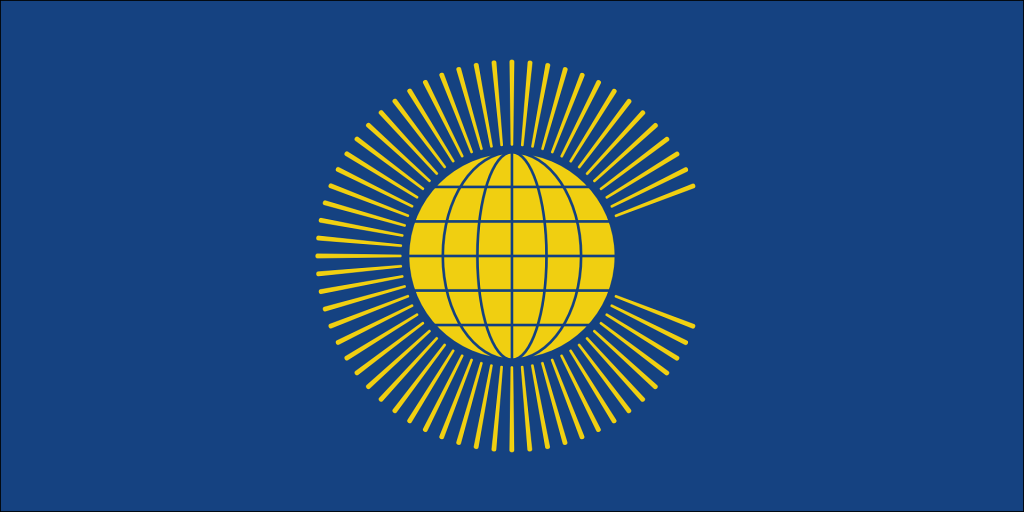
In November 2026, the heads of government of the 56 member nations of the Commonwealth will meet together in Antigua and Barbuda to discuss “Accelerating Partnerships and Investment for a Prosperous Commonwealth” [4]. This meeting highlights the ambition of the members to create an environment tied by strong commercial and diplomatic links, as the current global situation has brought out the relevance of international coalitions. However, this diplomatic force, historically associated with the United Kingdom and headed by King Charles III, faces real challenges when talking about its effectiveness. This article raises the question of whether the Commonwealth still provides the UK with real diplomatic influence, or whether its role is now merely symbolic.
The Commonwealth as a soft power network
Firstly, the Commonwealth of Nations is not a traditional international organisation with clear institutions but more an informal alliance functioning with shared values, interests, diplomatic networks, and language. Thus, the UK benefits from an already existing framework where soft power can easily be applied, allowing direct access to political elites. It is mainly useful because they can guide small and medium-sized states, particularly in the Caribbean, Africa, and the Pacific. In the same way, it demonstrates coordination among developed countries such as Canada or Australia. The member states altogether share values of democracy, anticorruption, and the rule of law as well as peace. [3] [5]
Active diplomacy, limited impact
Moreover, the Commonwealth is still in action and practices its influence continuously through different tools. First, the Commonwealth Heads of Government Meeting (CHOGM) brings together the heads of government to discuss important topics such as climate change or commercial ties [4]. Then, the organisation aims to protect and promote democracy through the Commonwealth Observer Group (COG), ensuring the respect of democratic election processes in the member countries. The Commonwealth Ministerial Action Group (CMAG) also upholds the organisation’s values in the countries, meeting twice a year to analyse human rights violations and non-democratic behaviours. During their last meeting, held in March 2026, the group discussed the situation in Pakistan and Uganda, asking for the intervention of the Commonwealth Secretary-General, Shirley Ayorkor Botchwey, through diplomatic pressure and dialogue [7]. These coordinated actions are important, but the United Kingdom does not play a central role within COG or CMAG and cannot impose its policy.
Post-colonial tensions
However, in 2024, post-colonial tensions sparked and raised concerns about the future of this international association. Certain nations that were, in the past, under the control of the British Empire, demanded in a communiqué acknowledgement and compensation for the period of slavery. Yet, before the last reunion in 2024, Prime Minister Keir Starmer insisted on his opposition to deliver reparations, and emphasised the importance of focusing on current challenges such as climate change [1][6]. This answer was not appreciated by the concerned countries, who underlined the fact that colonialism played a role in climate change, concluding that moving forward cannot happen without reparations. During the meeting Sir Keir Starmer was pressured into signing a joint communiqué acknowledging that “the time has come” for a conversation regarding reparatory justice but remains firm against paying financial compensation [10]. This is illustrated by the March 2026 UK-Caribbean Forum where the UK explored non-monetary reparatory actions like digitising historical records [11]. In this way, the role of the UK as a leader is challenged.
Structural limits
Moreover, the Commonwealth has no binding authority or enforcement mechanisms which significantly limit the diplomatic and economic leverage the UK once exercised through the European Union (EU), before Brexit. At the same time, the Commonwealth has no army of its own, nor an economic structure of integration and a common market. Thus, this organisation cannot be compared with NATO, the European Union or even BRICS. That is why the Commonwealth of Nations is now mostly seen as an emblematic alliance, with agreements as well as tensions, rather than a strong British diplomatic force. Nevertheless, the Commonwealth still offers the diplomatic visibility and symbolic leadership that few post-imperial states retain. It is a network for discussion rather than strategic decisions in economics and military, and a tool for visibility, not power.
Military ties without strategic power
Another question we can ask ourselves is: what if the Commonwealth is the last territorial strategy of the UK? Indeed, the Commonwealth is formed by countries coming from five continents and thus its diplomatic influence is worldwide. While the organisation does not constitute a military alliance and lacks any form of defence structure, it contributes to sustaining bilateral historical ties. [3] Their ability to use these close relationships with the military sphere illustrates this influence. This shows particularly with their tight relationship with Kenya, with which the UK operates the British Army Training Unit Kenya (BATUK), conducting coordinated large-scale training exercises, the cooperation as a result of historical ties between the countries [8]. However, this partnership remains outside the Commonwealth framework, which highlights that military cooperation is bilateral rather than a collective Commonwealth strategy. In a context where even formal alliances such as NATO face questions of commitment among member states, these historical bilateral ties may offer the UK a more predictable form of military cooperation [9].
Finally, the Commonwealth is ,evidently, not solely a tool serving British interests. Indeed, 33 of the world’s 42 small states are Commonwealth members and for these nations, the organisation provides a platform for international advocacy on issues such as climate resilience. It gives them a space to discuss and bond over shared interests and difficulties. These benefits reveal a more diverse organisation than its imperial origins might suggest [12].
The Commonwealth characterises the British loss of power since Brexit and it represents an active sphere of influence in which they don’t occupy a central position but rather a historical leadership role [2]. It is an organisation without hard power, undermined by postcolonial tensions and a lack of binding mechanisms. Nevertheless, the Commonwealth could improve by strengthening its commercial links and introducing binding obligations, giving the organisation real credibility and efficacy when facing shared challenges [13] [14].
Edited by Adrian Kai Fraile Itagaki
References
[1] Pickard, J. (2024). Commonwealth leaders agree to consider reparations for historic slavery. [online] @FinancialTimes. Available at: https://www.ft.com/content/d28445d0-0f03-4cf4-880e-03896e14d8de [Accessed 22 Jan. 2026].
[2] Faig Gahramanov (2025). Britain Between Two Worlds: Imperial Legacy and Post-Brexit Possibilities. [online] Modern Diplomacy. Available at: https://moderndiplomacy.eu/2025/06/25/britain-between-two-worlds-imperial-legacy-and-post-brexit-possibilities/.
[3] Institute of Commonwealth Studies. (2022). Soft Power in the Contemporary Commonwealth. [online] Available at: https://commonwealth.sas.ac.uk/news-events/news/soft-power-contemporary-commonwealth.
[4] Commonwealth. (n.d.). Commonwealth Heads of Government Meeting (CHOGM). [online] Available at: https://thecommonwealth.org/chogm.
[5] Roiron, Virginie. “Commonwealth et Soft Power: La Nouvelle Équation de La Politique Étrangère Britannique.” Diplomatie, no. 96, 2019, pp. 60–63. JSTOR, https://www.jstor.org/stable/26983303. Accessed 22 Jan. 2026.
[6] Courea, E. and Aamna Mohdin (2024). Starmer says he wants to ‘look forward’ and not talk about slavery reparations. [online] the Guardian. Available at: https://www.theguardian.com/world/2024/oct/23/keir-starmer-slavery-reparations-commonwealth-summit.
[7] Concluding Statement of the Seventy-Second Meeting of the Commonwealth Ministerial Action Group. (2026). Available at: https://comsec-web-static.s3.eu-west-1.amazonaws.com/s3fs-public/2026-03/CMAG72%20Concluding%20Statement%20-Final.pdf?VersionId=Rsu2AjPQ8g0Knt4Mguq_TN4Wz0Gwr3V4 [Accessed 18 Mar. 2026].
[8] Graham, D. (2021). Increasing training capabilities for the British Army Training Unit Kenya – Inside DIO. [online] Blog.gov.uk. Available at: https://insidedio.blog.gov.uk/2021/03/03/increasing-training-capabilities-for-the-british-army-training-unit-kenya/.
[9] Kapp, C. and Fix, L. (2024). As NATO Countries Reach Spending Milestone, Is 2 Percent Enough? [online] Cfr.org. Available at: https://www.cfr.org/articles/nato-countries-reach-spending-milestone-2-percent-enough.
[10] Mason, C. and Aikman, I. (2024). Time has come for reparations conversation, say Commonwealth leaders. BBC News. [online] 26 Oct. Available at: https://www.bbc.co.uk/news/articles/c207m3m0xpjo.
[11] Office, D. (2026). Communiqué: Twelfth UK-Caribbean Forum. [online] GOV.UK. Available at: https://www.gov.uk/government/publications/twelfth-uk-caribbean-ministerial-forum-communique-and-action-plan/communique-twelfth-uk-caribbean-forum.
[12] Commonwealth. (2021). Small States. [online] Available at: https://www.commonwealthconsultant.com/our-work/small-states.html [Accessed 22 Apr. 2026].
[13] Ransome, D. (2025). Resilient Together: Reflecting on Commonwealth Trade Priorities in a Fractured Global Trading Landscape. [online] The Round Table. Available at: https://www.commonwealthroundtable.co.uk/general/trade/resilient-together-reflecting-on-commonwealth-trade-priorities-in-a-fractured-global-trading-landscape/.
[14] CWEIC. (n.d.). Commonwealth Advantage. [online] Available at: https://www.cweic.org/commonwealth-advantage/.
Cover picture: Photo by mayns82.
https://pixabay.com/vectors/flag-country-commonwealth-1040565/ .Licensed under Pexels (https://pixabay.com/).


Leave a comment