Football has never just been 90 minutes — it embodies identities, rivalries, and traditions as it links billions beyond their national borders.
The recently concluded 2026 World Cup highlighted just how quickly the sport is changing by introducing new countries and fans to its biggest stage ever. However, increased globalisation of the sport has also led to an increased number of questions concerning commercialisation, growth, and control over the sport’s future [1].
As the sport tries to find a middle ground between its traditional values and global aspirations, that question has put the two most influential entities within football against each other: FIFA (Fédération Internationale de Football Association) and UEFA (Union of European Football Associations).
Why FIFA vs UEFA Happened
Conflict between FIFA and UEFA is not something new. For the World Cup 2026, the number of teams for the Club World Cup was increased to 32 by FIFA in 2025. Leagues in Europe and the player unions claimed that FIFA was increasing the number of games without proper consultation and compromising the well-being of players. While FIFA is the governing body for football all over the world, UEFA oversees its most profitable region – Europe. Both organisations have found a compromise for a long time. However, the aftermath of the 2026 World Cup revealed their differences [2] [3].
FIFA Forward Enterprise (FFE) was a short-lived proposal by FIFA President Gianni Infantino that took place end of July after the conclusion of the 2026 World Cup. The idea was the creation of a separate commercial company that would gather together the rights associated with the competitions. The organisation intended to attract some external investors and earn almost $4.2 billion, creating a value of $20 billion for FFE – and therefore FIFA – while stating that investors would only have a minority stake in the organisation [4] [5].
However, UEFA – as well as fans, teams and even players – saw much deeper problems in the proposed plan. The World Cup is not just a commercial property. It is the biggest football competition in the world, which is jointly organised by the members of FIFA. The inclusion of private capital in the commercial environment of the organisation posed questions about the right of ownership, transparency, and the influence of profit on the decisions regarding the sport itself [6] [7].
The conflict soon turned into a governance crisis. UEFA announced that it would not participate in FIFA competitions if the mentioned commercial plan went through. AFC (Asian Football Confederation) and CONCACAF (Confederation of North, Central American and Caribbean Association Football) also criticised the decision-making process in FIFA. Infantino finally abandoned the idea of attracting investments, but the problem itself still exists [1] [6].
There is a much bigger battle under the surface between FIFA and UEFA. While FIFA wants to develop football globally, UEFA wants to make sure the process will not damage the existing competitions and football structure [8] [9].
How are the fans taking this?
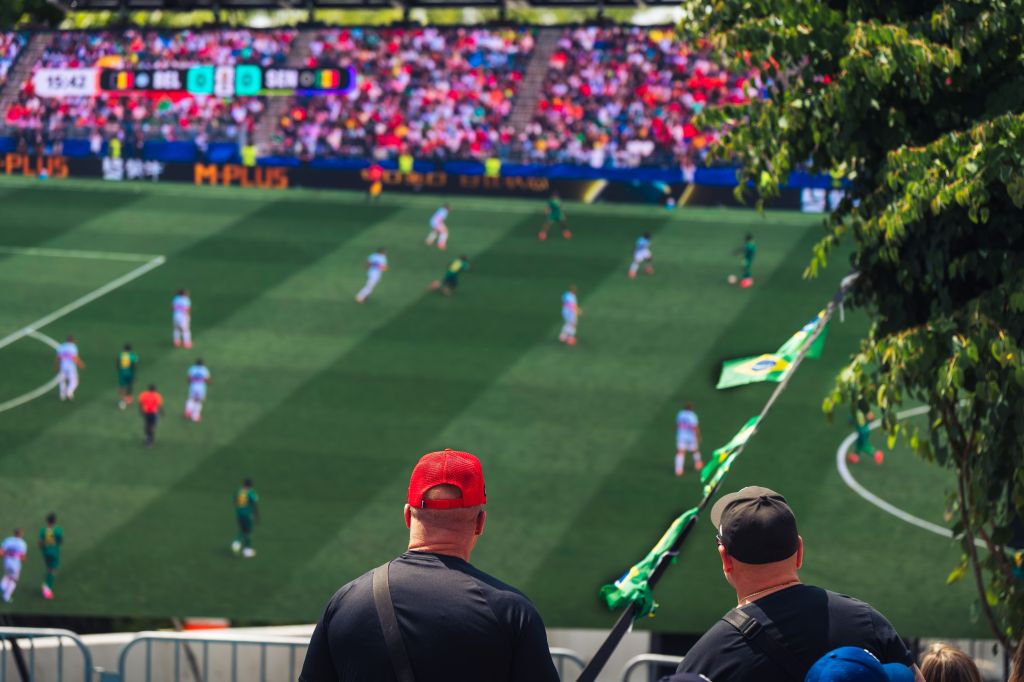
As we discuss the most popular sport in the world – 265 million people play regularly – we cannot ignore its main driving force – the Fans. However, we do not mean tens, or even hundreds of thousands, but millions around the world whose perception of football goes way beyond the ninety minutes spent on the field.
Many of the fans perceived the clash between FIFA and UEFA as a much bigger one – an attack on the cultural institution football has become [10] [11].
The suggestion of private investment in the World Cup has aroused an uproar among the football community. People were afraid not only of who may make the investment but what it may require in return. Additional games, increased ticket prices, new tournaments, and growing commercialisation are the things that have made some fans ask how far the game may go to expand the boundaries of an already very packed ecosystem with sponsors and quantity of games [11] [12].
Online forums also reflected the same sentiments, and the withdrawal of the investment proposal by FIFA was well received, but the criticism towards the organisation’s leadership remained. In brief, people were of the opinion that the most important tournaments must be preserved as sporting institutions before anything else [1] [10].
It should be noted, however, that the opinion of the fans is not against the globalisation of the game. An expanded World Cup (the 2026 World Cup saw for the first time ever 48 nations play, instead of the usual 32) allows football fans from many more countries a historical chance to watch their national players at the most prestigious global tournament. For millions of fans from Asia, Africa, and North America, the globalisation of the game means inclusion above commercialisation [13].
It creates an interesting conflict between traditional football fans who do not want to lose their football heritage and the developing footballing markets who wish to experience more of the football game [14] [15].
Can Football Really Go Global Without Losing Its Soul?
The clash between FIFA and UEFA highlights the paradox that exists in modern football – the sport has never been more global, yet there are more questions about the price that the growth may cost [14] [15].
The recently concluded 48-team 2026 World Cup was the first test for FIFA’s vision of expansion. Even more countries reached football’s ultimate stage, and new teams showed that an increased number of teams does not equal reduced competition. In this regard, the 2026 World Cup proved that the expansion of football makes it more representative – with President Gianni Infantino already suggesting a passage to even 64 nations participating [13].
At the same time, there is another side of the expansion. The number of matches at the World Cup increased from 64 in 2022 to 104 in 2026, providing wider audience coverage and more commercial opportunities. Added to rising costs for the fans and increased load on the football calendar, it poses a fundamental question: is football expanding to become more accessible or because more football can be commercialised? [13] [15]
The soul of football cannot be exclusiveness. The soul of football is rooted in belonging to the club, to the national team, to the rivalry, to the fans. The globalisation of football does not have to pose a threat to this idea. It is more likely that the danger lies in the commercialization of football in the name of globalisation [14].
The takeaway from the 2026 World Cup is that expansion is not a problem or the solution in itself. The challenge lies in increasing the global reach of football without separating it from the people who gave it global status. That means taking the game beyond its traditional power centres and creating bigger opportunities for new nations, players and supporters to participate at the highest level. The objective is to make football not merely a game watched globally, but one competed in and developed globally. [15].
What lies ahead?
While FIFA might be retreating from its business proposal, the real clash has just begun. It has become clear there are fundamental disagreements on what should happen with football and how it should be managed by the different parties involved [1].
There are no compelling reasons for FIFA to give up its plans for global expansion. After all, the 2026 World Cup proved that football can be much wider – with more countries, new fans, and more significant centers of football. And UEFA clearly showed its stance on the necessity of expansion through consultations and transparency in football [4] [6].
The sport finds itself at the crossroads here because cooperation between FIFA and UEFA is needed, while their visions for football’s future seem increasingly incompatible [9]. And maybe that is the reason why this confrontation is more important than it is, even though it is happening in the conference halls of Zurich and Nyon.
After all, what is at stake here is much bigger than just money.
It is the future of the beautiful game, the global game – and the 265 million dedicated fans playing regularly.
References
Pexels. (n.d.). Soccer fans watching live match from stadium [Photograph]. https://www.pexels.com/photo/soccer-fans-watching-live-match-from-stadium-38401511/
[1] Al Jazeera. (2026, August 1). Infantino’s FIFA crisis: What is reaction to World Cup investment U-turn?
https://www.aljazeera.com/sports/2026/8/1/infantinos-fifa-crisis-what-is-reaction-to-world-cup-investment-u-turn
[2] Mathrubhumi. (2026). What is the UEFA vs FIFA dispute about?
https://english.mathrubhumi.com/sports/football/what-is-the-uefa-vs-fifa-dispute-about-paav7b4f
[3] Yahoo Sports. (2026). UEFA-FIFA beef explained.
https://sports.yahoo.com/articles/uefa-fifa-beef-explained-why-182651612.html
[4] Al Jazeera. (2026, July 31). FIFA’s Infantino and UEFA divided on World Cup investment plan: What next?
https://www.aljazeera.com/sports/2026/7/31/fifas-infantino-and-uefa-divided-on-world-cup-investment-plan-what-next
[5] Hindustan Times. (2026). Why FIFA’s $20 billion World Cup stake sale plan collapsed amid global backlash.
https://www.hindustantimes.com/sports/us-sports/why-fifas-20-billion-world-cup-stake-sale-plan-collapsed-amid-global-backlash-101785540547612.html
[6] The Guardian. (2026, July 30). UEFA agrees to boycott FIFA competitions if World Cup sell-off plans proceed.
https://www.theguardian.com/football/2026/jul/30/uefa-agrees-to-boycott-fifa-competitions-if-world-cup-sell-off-plans-proceed
[7] LiveMint. (2026). UEFA threatens FIFA World Cup boycott as it rejects private investor plan: All you need to know.
https://www.livemint.com/sports/football-news/uefa-threatens-fifa-world-cup-boycott-as-it-rejects-private-investor-plan-all-you-need-to-know-11785429954275.html
[8] India.com. (2026). Explained: What is the tussle between FIFA and UEFA all about?
https://www.india.com/sports/explained-what-is-the-tussle-between-fifa-and-uefa-all-about-8491057/
[9] Yahoo Sports. (2026). Why the bitter FIFA vs UEFA dispute matters.
https://sports.yahoo.com/articles/why-bitter-fifa-vs-uefa-174500515.html
[10] The Daily Star. (2026). Reactions across Europe to UEFA’s FIFA World Cup boycott vote.
https://www.thedailystar.net/sports/football/news/reactions-across-europe-uefas-fifa-world-cup-boycott-vote-4236821
[11] Yahoo Sports. (2026). Soccer fans react to UEFA’s planned response.
https://sports.yahoo.com/articles/soccer-fans-react-uefas-planned-161104615.html
[12] The Star. (2026, July 31). Soccer fan group calls for FIFA reform amid widespread opposition to World Cup stake sale plan.
https://www.thestar.com.my/sport/football/2026/07/31/soccer-fan-group-calls-for-fifa-reform-amid-widespread-opposition-to-world-cup-stake-sale-plan
[13] Al Jazeera. (2026, April 22). Five major issues affecting the FIFA World Cup with 50 days to go.
https://www.aljazeera.com/sports/2026/4/22/five-major-issues-affecting-the-fifa-world-cup-with-50-days-to-go
[14] The Daily Star. (2026). Can football stay the people’s game?
https://www.thedailystar.net/sports/football/news/can-football-stay-the-peoples-game-4236806
[15] Yahoo Sports. (2026). Can football go global without losing its soul?
https://sports.yahoo.com/articles/football-global-without-losing-soul-050000251.html


Leave a comment