Europe’s Geopolitical Dilemma
For decades, the European Union has been referred to as an economic giant but a geopolitical dwarf. The European Union is one of the world’s largest economies [1], one of the world’s largest trading blocs [11], and one of the world’s largest providers of international development assistance [12]. Yet, when crises and conflicts erupt abroad, the EU as a political entity struggles to act as one. Instead, divisions between EU Member States often have a slowing effect on foreign policy decisions and actions [2].
The Franco-German initiative goes far beyond a simple administrative reform [2]. It reflects a growing belief that Europe must become capable of acting collectively in an increasingly unstable world [2]. While Trump’s return to the White House has undoubtedly added urgency to this debate, it is not the sole reason for it. Rather, it is a symptom of a far deeper and more complex set of changes, not least of all those brought about by Russia’s continued aggression, China’s growing influence, and a host of other factors, including rising technological competition, energy security, and the disruption of global supply chains [2].
Why Europe Believes It Can No Longer Wait
At the heart of the Franco-German initiative is the European External Action Service (EEAS) [3][4], the EU foreign service. France and Germany believe that EU foreign policy is currently fragmented across too many institutions [2] and needs to be coordinated faster [2].
Instead of a complete overhaul, Paris and Berlin are proposing a review of how European diplomacy is organized – on that could better define the roles of EU institutions [2], increase the authority of the High Representative for Foreign Affairs [3][4], and strengthen crisis management so the EU can respond faster to international events [2].
The proposal has received significant attention inside the EU’s institutions, and triggered a debate on how to reform EU foreign policymaking over the next decade [2]. Initially, the discussion focused on whether to embark on such a process of reform at all [2]. Today, the main question is how far that reform should go [2].
A Problem More Than Fifteen Years in the Making
To understand why the proposed foreign policy changes have gained so much momentum, we first have to look at how European foreign policy developed.
The Treaty of Lisbon entered into force on 1 December 2009 [3]. It strengthened the role of the High Representative for Foreign Affairs and Security Policy and provided the legal basis for the creation of the European External Action Service (EEAS), which began operating in 2011 [3][4]. However, the treaty left foreign policy largely in the hands of the member states [3], with most major decisions requiring unanimous agreement [3]. Because every state must sign off, reaching a common position can take considerable time, particularly during international crises [3].
Although in the end, the EU managed to agree on unprecedented sanctions as well as on military assistance to Ukraine [5], throughout the process of negotiations, which in some cases dragged on for days [5], major differences existed between the views of individual member states [5]. This was especially visible in the case of sanctions, such as when Hungary’s Prime Minister Viktor Orbán threatened to block sanctions packages [5], illustrating how the unanimity requirement can slow EU decision-making [5].
The greatest weakness of European foreign policy is not the lack of economic or diplomatic tools [2]. Rather, it is the inability to turn the foreign policies of twenty-seven individual member states into one single, coherent foreign policy strategy [2][3].
Beyond the “Trump Effect”
Over the last fifteen years or so, foreign policy has evolved across the European Union [2]. Under successive US administrations, American foreign policy has gradually shifted its focus to the Indo-Pacific and the challenge of China [2]. Meanwhile, in Europe, Russia’s aggression, along with technological competition, energy security, and disrupted global supply chains, has created a new strategic environment [2]. Seen this way, the Franco-German initiative is thus not a reaction to Trump, but an attempt by Europe to adapt to this new world [2].
Can Europe Actually Agree on Reform?
Unfortunately, turning words into action is much harder for Europe to achieve, particularly when twenty-seven governments must be convinced of the value of reforms that affect their own foreign policy [2].
The issue is that EU member states have varying visions of the EU’s autonomy from the United States [2].
France has always been at the forefront of European strategic autonomy, with the current French President Emmanuel Macron wanting to reduce Europe’s dependence on the US, while at the same time wanting to strengthen NATO as the foundation of European defence [2].
Germany had traditionally adopted a more cautious line, favouring close coordination with Washington above all [2]. However, following Russia’s invasion of Ukraine, a profound change in Germany’s strategic thinking has taken place [2]. Following a sharp increase in defence spending, today Berlin has become a strong supporter of European cooperation and institutional reform [2].
Poland and the Baltic states support strengthening EU foreign action, but remain wary of weakening the transatlantic relationship, since they rely heavily on the security guarantees provided by the United States and NATO [2].
At the same time, Hungary has often used its veto power to block foreign policy decisions at the EU level [5] and is unlikely to accept any foreign policy reforms that would reduce the influence of individual member states within the EU [2]. These differing priorities illustrate why reforming Europe’s foreign policy is ultimately as much a political challenge as an institutional one [2].
Beyond the Atlantic: Europe’s Next Strategic Partnerships
If Europe succeeds in reforming its diplomatic institutions, the next question will be where its diplomatic priorities should lie [2].
The transatlantic alliance will remainEurope’s most important partnership for now [2]. Strategic autonomy does not have to imply a distancing from the US, but rather a stronger, more independent partnership [2].
However, in order to reach its full potential, Europe needs to develop its relations with a number of regions and countries. This could include closer cooperation with India because of its rapidly growing economy,and increasing technological capabilities [6]. In addition, greater cooperation with Japan and South Korea could be developed in areas such as semiconductor production , cybersecurity, and advanced manufacturing [7][8].
The European Union is also trying to diversify its international partnerships by strengthening ties with countries across Africa and Latin America [2] [9]. The cooperation with African nations is fundamental to facilitate critical raw material trade [2] and the production of renewable energy [2]. The EU is also seeking to strengthen its partnership with the Mercosur countries through the EU–Mercosur Agreement, which aims to diversify trade relationships and increase the resilience of supply chains [9].
Europe is also experimenting with new diplomatic formats. The European Political Community (launched in 2022) , which brings together 48 countries – including the United Kingdom, Norway, and Ukraine – reflects a growing willingness to cooperate beyond the EU’s formal institutions [10].
Why This Debate Matters Beyond Brussels
At first glance, debates over diplomatic institutions may seem distant from the everyday concerns of European citizens; in reality this area of foreign policy is increasingly important for their daily lives [2]. Europe that can react quickly enough in a crisis is better equipped to protect its energy supplies, strengthen its supply chains, coordinate sanctions around the world, improve defense cooperation, and resist economic pressure [1][2]. In other words: this isn’t just a Brussels story. It has daily relevance for businesses, consumers, and citizens across the continent [1] [2].
A Defining Moment for European Foreign Policy
The Franco-German initiative, for stronger foreign policy-making institutions, can be much more than an update to Europe’s diplomatic structures [2].
Whether these proposals are going to succeed will depend on political will rather than solely institutional redesign.
Yet, it is exactly with this initiative that Europe could be embarking on a new chapter in its foreign policy [2]. For decades, European foreign policy has relied on the security guarantee of the United States, on cheap Russian energy, and on an increasingly integrated global economy [2]. Those assumptions no longer hold [2].
The true significance of the Franco-German initiative does not lie in the changes to the EU’s structure, but rather in the question that this initiative is putting to Europe: Can the European Union convert its economic power into real strategic power?
The answer to this question will shape Europe’s position in the world, as well as the security and prosperity of its citizens for decades to come.
Edited by Maria Antonietta Fiocchi.
References
[1] European Commission. (n.d.). Economy and the euro. https://commission.europa.eu/topics/economy-and-euro_en
[2] Financial Times. (n.d.). Paris and Berlin set year-end deadline for options to reform EU’s diplomatic arm. https://www.ft.com/content/7a1a9e9b-7919-4f3a-b84b-0cab584a04bb
[3] Council of the European Union. (n.d.). High Representative of the Union for Foreign Affairs and Security Policy. https://www.consilium.europa.eu/en/council-eu/high-representative-foreign-affairs-security-policy/
[4] European External Action Service. (n.d.). High Representative / Vice-President. https://www.eeas.europa.eu/eeas/high-representative-vice-president_en
[5] Associated Press. (n.d.). Hungary threatens to block fresh EU sanctions against Russia over oil deliveries. https://apnews.com/article/8d5ae738b814b6326ca3db52102d9b31
[6] European Commission. (n.d.). EU trade relations with India. https://policy.trade.ec.europa.eu/eu-trade-relationships-country-and-region/countries-and-regions/india_en
[7] European Commission. (n.d.). EU–Japan Economic Partnership Agreement. https://policy.trade.ec.europa.eu/eu-trade-relationships-country-and-region/countries-and-regions/japan/eu-japan-agreement_en
[8] European Commission. (n.d.). EU–Republic of Korea Free Trade Agreement. https://policy.trade.ec.europa.eu/eu-trade-relationships-country-and-region/countries-and-regions/south-korea_en
[9] European Commission. (n.d.). EU–Mercosur Agreement. https://policy.trade.ec.europa.eu/eu-trade-relationships-country-and-region/countries-and-regions/mercosur/eu-mercosur-agreement_en
[10] France Diplomatie. (n.d.). European Political Community. https://www.diplomatie.gouv.fr/en/the-ministry-in-action/promoting-a-sovereign-europe/european-political-community
[11] European Commission. (n.d.). Trade. https://commission.europa.eu/topics/trade_en
[12] European Commission. (n.d.). International development aid. https://economy-finance.ec.europa.eu/international-economic-relations/international-development-aid_en
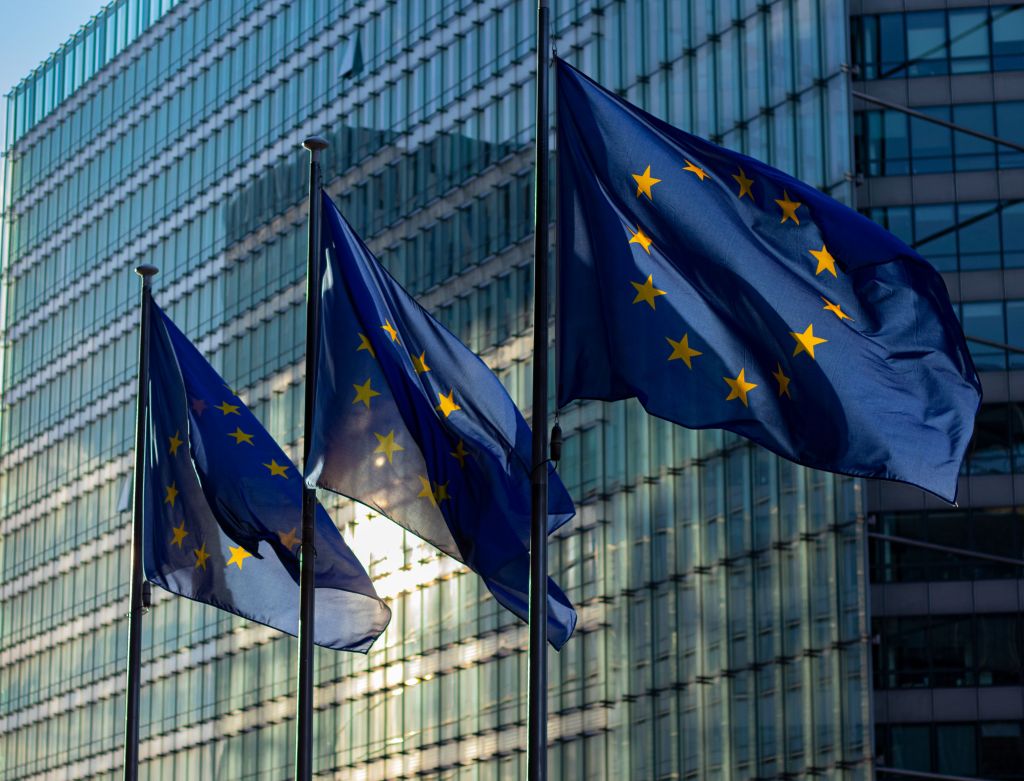
[Cover picture] Pexels. (2022). European Commission flags [Photograph]. https://www.pexels.com/fr-fr/photo/drapeaux-administration-mats-de-drapeau-commission-europeenne-13153479/


Leave a comment