Located at South America’s North Atlantic coast, and considered one of the three “forgotten countries” in the continent – Guyana is the country with the highest GDP growth in the world [1].
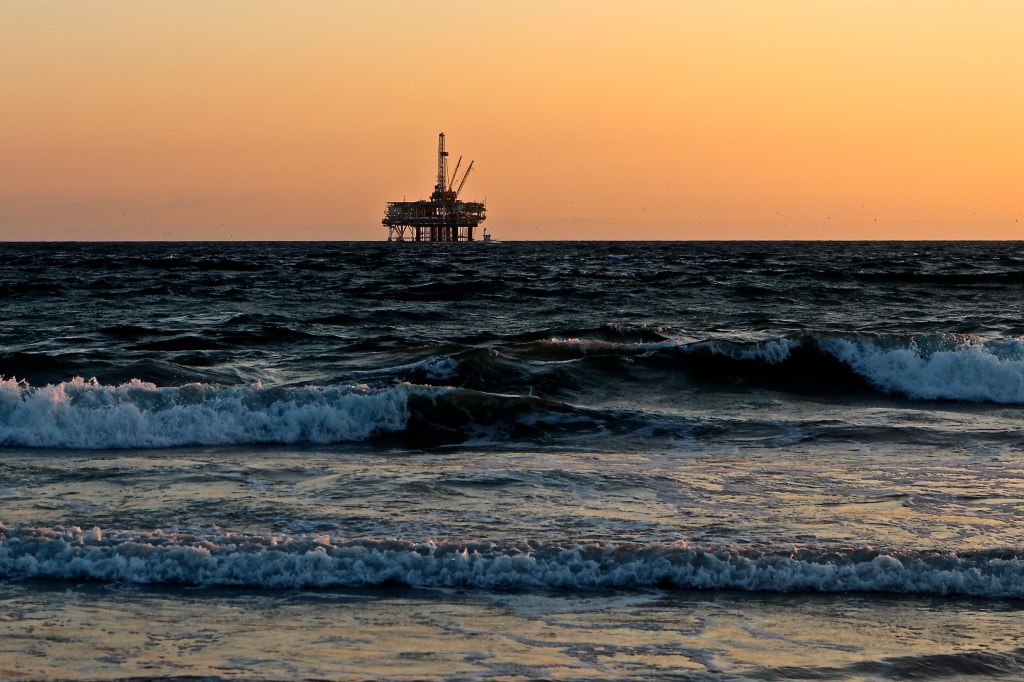
After becoming independent from Britain in 1966, it has evolved into a country with overflowing oil reserves. Only a decade ago, it was distinguished by its dense rainforest, cricket, British colonial architecture, and calypso music. Today, the coastline facing Georgetown, the capital city, displays American drilling platforms and large oil tankers [2].
The current Middle East conflict – missiles, drones, and fighter jets – feels far away. However, the Petro-State is massively benefiting from the Iran war [3]. Here, we look at how Guyana is drilling into petro-prosperity.
Becoming an Oil Superpower – and Building a Nation
“It’s insane that nobody is looking at it” – says, about Guyana, Christopher Eppinger, a German oil trader who became well-known after making a $250m profit trading Russian oil following the February 2022 attack on Ukraine. Between 2019 and 2024 Guyana has quintupled its GDP [4], and after being one of the poorest countries in the western hemisphere in the early 2000s, it is now pumping more oil per inhabitant than any other country [5].
Guyana is expected to produce 2 million barrels daily by 2035, that is as much as Colombia, Ecuador, Peru, Trinidad and Tobago, and Venezuela produced in 2022. Saudi Arabia, the world’s second largest producer, brings out 10 million barrels; Norway, ranked 12, has an output of 2 million daily barrels [24].
And Guyana’s high increase in production is translating into GDP growth: 63% in 2022, 33% in 2023, and 43% in 2024 [6].
“Everything is missing here for now but everything is being developed” – told Mr Eppinger to the Financial Times [4]. Indeed, the South American nation is spending on roads, schools and hospitals. 61km of highway have been built in the last 4 years, the government is paving 450km of the red-dirt track going up to Brazil [5], and a Chinese company is building a new $260m bridge on the Demerara river [4].
Guyana’s telecommunications sector is also keeping up with evolutions. Mobile subscribers have doubled from 2011, and networks have been upgraded, offering competitive service offerings [7].
The country is developing culturally as well. Unesco’s Director General visited Guyana early April 2026 – he explored opportunities for biosphere reserves and future World Heritage nominations, and mentioned Guyana’s cultural vitality, local markets and national museum [8].
In the Petro-State, the US is leading the oil production, and China is leading investment in infrastructure. Georgetown is trying to maintain ties with both countries – connecting with both superpowers may have important economic and political rewards [6].
One of the main challenges however, as elsewhere in the region, is the strong temptation of politicians to fill their wallets and retain power – corruption. The concern that sudden oil wealth might erode democracy proves to be important – the “resource curse” this is called [9].
The path seems clear: learn from the mistakes of others – do not follow countries like Venezuela, where economic growth slumped for – among many reasons – stealing money. But Guyana seems to be following, at least for now, a good direction. At Cop 30 in Belém, it promised to spend on climate change adaptation [3]. And it has sought advice from Norway on how to handle its wealth [5] – the Scandinavians are quite the experts in managing sovereign oil wealth.
Guyana’s recently re-elected president stated: “Here is where the rule of law applies, and here is where your investment is safe, sound and protected, and that is how it will always be” [4] – only time will tell if he is a man of his word.
In September 2025, the Atlantic country was confronted with elections. Irfaan Ali, from the centrist PPP/C (People’s Progressive Party/Civic), smoothly won his second term – to be, in the President’s words, “the most consequential” of the country’s history [5].
Now, the conflict in the Middle East has plunged global energy markets into deep uncertainty, disrupting oil and gas flows, and accelerating structural shifts. Southeast Asia is facing fuel shortages, and Europe confronting soaring energy costs [10]. The chaos in the Strait of Hormuz is benefiting Guyana – revenues before the war were at 370m$ a week, with the Iran war this has increased to 623m$ [3].
Prior to the war, figures already showed Guyana could surpass Iran’s production by 2027 [6]. The conflict increased oil barrel prices from 69$ (average in 2025) to 100$ and more. If prices stay near 100$, Guyana will be generating three quarters more than predicted before the war [3].
Finding Oil Offshore – May 2015 in Golden Letters
To understand the beginning of the Petro-state, one has to visit reports of the Guyanese government. In the 1750s, Dutch explorers sailing along the coast of Guyana noticed natural pieces of pitch and bitumen floating in the water. Pitch and bitumen come from petroleum so it was an early hint that there might be oil in the region [11].
Almost two centuries later, in 1917, actual tar-like material was found in Northern Guyana, and on-land oil-well drilling started. Offshore exploration started slowly in the 1950s, Conoco and Shell – both American petroleum companies – were granted offshore licenses [11].
Guyanese government, with the support of the World Bank, initiated promotional efforts to attract investors for exploration in Guyana’s offshore in 1980. But in 1994 oil exploration came to a halt due to lack of funding for drilling programs [11].
In 2001, the United States Geological Survey (USGS) estimated that the Guyana basin potentially had 11bn barrels of oil. Following this, dispute arose between Surinam and Guyana about the marine border, and in 2007, the UN’s International Tribunal of the Law of the Sea (ITLOS) determined the acreage, Guyana receiving the majority of the disputed territory [11].
2015 is a year highlighted in golden letters for the South American nation. May 2015 is the moment everything changed – in every article about Guyana’s oil one will find the date mentioned. Gold, bauxite, sugar, rice, and timber were Guyana’s primary exports until this year, when significant oil reserves were finally discovered 120 miles offshore Guyana, in the Stabroek block [12]. ExxonMobil Exploration Company’s president (at the time), announced: “I am encouraged by the results of the first well on the Stabroek Block”, “Over the coming months we will work to determine the commercial viability of the discovered resource, as well as evaluate other resource potential on the block” [13].
The first Exxon oil discovery was named Liza. With a depth of between 1,500 and 1,900 metres, it is currently producing 120,000 barrels per day through four drill centers, with 17 wells in total. The coming years after 2015 saw new discoveries: Payara in January 2017, Snoek in March 2017, and in April 2019 Yellowtail was the 13th oil discovery in the Stabroek block. This last one is the largest project to date, producing 250,000 barrels per day [14].
The wealth generated by fossil fuels in the region remains concentrated among a few. The 2015 discovery was led by ExxonMobil and its partners CNOOC (China National Offshore Oil Corporation), and Hess Corporation (now acquired by Chevron) [17]. And in July 2015, this joint venture (Exxon 45%, CNOOC 25%, and Chevron 30%) was granted permission to produce Guyana’s daily output of oil [16]. Later on, a production and revenue-sharing agreement signed in 2016 allowed oil companies to use 75% of revenue to cover their costs, and the remaining 25% would be split in half, with only 12.5% of the revenue going to Guyana [18]. The idea for the country was to attract energy multinationals, turning into one of the most profitable countries to drill oil in the world – a strategy that in the long term is pumping good results. Finally, Guyana would end up introducing in 2024 a 10% corporate tax for multinationals [18].
The Stabroek Block – Venezuela wants a Piece
The Stabroek block, which takes the name of a city in the coast of Guyana, is an off-shore region of 26,800 square metres [15]. Approximately 700 million oil barrels were estimated in the very beginning [15], now the figure is 11bn recoverable barrels – nearly half of Qatar’s reserves [16][25].
The Essequibo region is a vast land area forming most of Guyana’s territory – two thirds of Guyana, and two times the size of Portugal [20]. The Stabroek block is found offshore the coast of Essequibo. And if one claims Essequibo, it also claims the waters nearby, and hence the Stabroek block.
Once discoveries started to show the possibility of the region to be rich in fossil fuels – and therefore great wealth – conflict arose. The first disputes are more than a century old, and ultimately in 1899, an international arbitral tribunal awarded the territory to Britain (with Guyana still under colonial rule). This decision was supported in 2018 by the International Court of Justice (ICJ), maintaining the 1899 decision legal and binding [19]. .
Nicolás Maduro repeatedly complained in the years after Exxon’s 2015 discovery about how Venezuela was robbed of the Essequibo region through “legal colonialism” – contesting the 1899 decision and planning a referendum to claim sovereignty over Essequibo. If Venezuela claims Essequibo, it also challenges the waters nearby, including the Stabroek block [19].
Furthermore, Guyana possessed a military personnel of only 4,000, nothing compared to Venezuela’s 300,000 soldiers – and with such uncertain Venezuelan leader, Guyana had to be careful [21].
Somehow fortunate for Guyana, the January 3 US operation – which we may condemn as a breach of international law – captured Venezuela’s President Maduro and took him out of the country [19]. Concerns would thus disappear and Guyana resumed explorations in previously restricted areas of the Stabroek block – guaranteeing a bright oily future for the nation [3].
Pumping into Petro-Power – and into Global Markets
Exploration and production licenses are overseen by Guyana’s Ministry of Natural Resources. In 2015 for instance, they granted the Exxon-CNOOC-Chevron venture permission to operate in the Stabroek block. This venture led by Exxon remains today the main player in Guyana’s petroleum industry.
In 2023, the Guyanese Government launched a competitive bidding system, offering PSA’s (Product Sharing Agreement) and licenses allowing multinationals to take part in Guyana’s oil exploration. In September 2023, it licensed eight blocks to companies like Total Energies, Qatar Energy or Petronas – all started operating in offshore areas, or blocks, adjacent to Stabroek [17].
Today, operations are growing more than ever – Guyana becoming a real actor in the global oil distribution, specially after the Iran war. With oil barrel prices surpassing $120, and energy markets disrupted – the Atlantic nation is pumping oil into the world.
With demand and revenue increasing, Exxon is also enlarging operations in the Stabroek block. It has recently announced plans to bring a 5th FPSO [22]. FPSO’s (Floating Production, Storage, and Offloading) vessels are large ships producing, processing, storing, and offloading crude oil at sea. Unlike fixed oil platforms, FPSO’s can be relocated to different locations, making them a flexible cost-effective solution, particularly for deepwater fields. FPSO’s are deployed in offshore developments where pipelines connecting to shore are non-existent [23], although Exxon has now completed the first $1bn natural gas pipeline in the South American nation, yet to be operational [22]. Other than bringing a 5th FPSO from Singapore, Exxon Mobil is also looking to approve production capacity to expand on their prior projects, and bring in two other FPSO’s – their 6th and 7th in the region – in the next two years [3].
Since the 2015 large oil discovery, Guyana’s economy is greatly improving. The country’s GDP was $2.38bn in 2006, $4.28bn in 2015, and it boosted specially from 2020. Figures of the World Bank show a GDP of $8.04bn in 2021, then $14.72bn in 2022, and 2024’s numbers show a $24.66bn GDP for the Atlantic nation – that is a 200% increase in 3 years, and a 500% increase in less than 10 years [24]. No nation in the world has higher GDP growth in the world [1].
A Bright Oily Future – the World Watches Closely
Guyana’s story is one of sudden transformation — from an overlooked rainforest nation to become a consequential player of the 21st century. The same coastline, once defined by fishing boats, is now dotted with FPSOs and petrol tankers.
The numbers tell a striking story: record-breaking GDP growth, increasing oil output, and revenues amplified by geopolitical conflict thousands of miles away. The Iran war, the instability in the Strait of Hormuz, and rising global demand have all accelerated what was already an extraordinary trajectory. In a world with disruptions in energy flows, Guyana might be becoming an essential actor of the global energy supply chain.
But beneath the surface of this petro-prosperity, lie tensions. The presence of ExxonMobil, CNOOC, and other global giants highlight both opportunity and dependency. The American influence in oil and Chinese investment in infrastructure places Georgetown at a delicate geopolitical crossroad. And locally, the risks are equally clear: corruption, inequality, and the “resource curse” that has derailed so many resource-rich nations before.
There are, however, signs of cautious optimism. Investments in infrastructure, education, and connectivity, suggest a government attempting to convert oil wealth into long-term development. Engagement with institutions like Norway’s sovereign wealth expertise and commitments made at COP30 indicate an awareness — at least in principle.
So the question is no longer whether Guyana’s economy will continue to grow rapidly, but rather how this new oil wealth will translate into long-term development for the country and its population. Will Guyana manage to use these revenues to strengthen its institutions, infrastructure, and living standards? Or will it face some of the challenges often associated with resource-dependent economies?
For now, drilling continues, revenues rise, and the world is increasingly turning its attention towards one of South America’s “forgotten countries”.
Edited by Dimitri Gellé.
References
[1] International Monetary Fund. (n.d.). Real GDP growth. https://www.imf.org/external/datamapper/NGDP_RPCH@WEO/OEMDC/ADVEC/WEOWORLD
[2] Wikipedia contributors. (n.d.). Guyana. Wikipedia. https://en.wikipedia.org/wiki/Guyana
[3] The Economist. (2026, April 5). The South American petro-state profiting from the Iran war. https://www.economist.com/the-americas/2026/04/05/the-south-american-petro-state-profiting-from-the-iran-war
[4] Financial Times. (2026, April, 14). [Young trader who made $250mn on Russian crude sets sights on Guyana]. https://www.ft.com/content/c58370ba-0d31-4320-ad33-7c2236bd23c8
[5] The Economist. (2025, September 17). From a forgotten country to an 11bn-barrel petrostate. https://www.economist.com/the-americas/2025/09/17/from-a-forgotten-country-to-an-11bn-barrel-petrostate
[6] CNN. (2025, September 1). Guyana elections, oil, Venezuela, China. https://edition.cnn.com/2025/09/01/americas/guyana-elections-oil-venezuela-china-intl-latam
[7] Caribbean National Weekly. (2025). Guyana surpasses one million mobile phone subscriptions in 2025. https://www.caribbeannationalweekly.com/news/guyana-surpasses-one-million-mobile-phone-subscriptions-in-2025/
[8] UNESCO. (2026, April, 9). Director-General strengthens ties with Guyana and Jamaica. https://www.unesco.org/en/articles/director-general-strengthens-ties-guyana-and-jamaica
[9] The Economist. (2026, April). [Video: The Iran War is making a surprising country richer]. https://www.economist.com/video/CVan3v3n7ga/ec7wTsr8?f=%2F
[10] Atlantic Council. (2026, April, 3). How the Iran war could shift energy policies around the world. https://www.atlanticcouncil.org/blogs/energysource/how-the-iran-war-could-shift-energy-policies-around-the-world/
[11] Government of Guyana. (n.d.). Summary history of petroleum exploration in Guyana. https://petroleum.gov.gy/history/summary-history-petroleum-exploration-guyana/
[12] The Guardian. (2025, September 17). Guyana oil reserves, poverty, Venezuela, Chevron, Exxon. https://www.theguardian.com/global-development/2025/sep/17/guyana-oil-reserves-poverty-venezuela-chevron-exxon
[13] ExxonMobil. (2015, May, 20). ExxonMobil announces significant oil discovery offshore Guyana. https://corporate.exxonmobil.com/locations/guyana/news-releases/exxonmobil-announces-significant-oil-discovery-offshore-guyana
[14] ExxonMobil. (n.d.). Guyana project overview. https://corporate.exxonmobil.com/locations/guyana/operations/guyana-project-overview#LizaPhase1ProjectDescription
[15] Wikipedia contributors. (n.d.). Petroleum industry in Guyana. Wikipedia. https://en.wikipedia.org/wiki/Petroleum_industry_in_Guyana
[16] CNOOC International. (n.d.). Guyana operations. https://cnoocinternational.com/operations/guyana/
[17] Mason, A. (January 2026). Guyana FPSO Starbroek [LinkedIn post]. https://www.linkedin.com/posts/adrian-mason_guyana-fpso-starbroek-activity-7413851759837753345-fnYm/
[18] The Guardian. (2025, September 17). Guyana oil reserves, poverty, Venezuela, Chevron, Exxon. https://www.theguardian.com/global-development/2025/sep/17/guyana-oil-reserves-poverty-venezuela-chevron-exxon
[19] CNBC. (2026, January 12). Oil, Trump, Venezuela, Guyana Essequibo territorial dispute. https://www.cnbc.com/2026/01/12/oil-trump-venezuela-guyana-essequibo-territorial-dispute.html
[20] Connaissance des Énergies. (2025, March, 3). Essequibo: Le pétrole au centre des tensions entre Venezuela et Guyana. https://www.connaissancedesenergies.org/essequibo-le-petrole-au-centre-des-tensions-entre-venezuela-et-guyana
[21] The Guardian. (2025, September 17). Guyana oil reserves, poverty, Venezuela, Chevron, Exxon. https://www.theguardian.com/global-development/2025/sep/17/guyana-oil-reserves-poverty-venezuela-chevron-exxon
[22] Reuters. (2026, March 19). Exxon accelerates oil and gas projects in Guyana amid high prices. https://www.reuters.com/business/energy/exxon-accelerates-oil-gas-projects-guyana-amid-high-prices-2026-03-19/
[23] OilNOW. (2026, March, 19). How FPSOs in Guyana’s waters work and why they matter. https://oilnow.gy/news/how-fpsos-in-guyanas-waters-work-and-why-they-matter/
[24] Worldometers. (n.d.). Oil production by country. Retrieved May 23, 2026, from https://www.worldometers.info/oil/oil-production-by-country/
[25] Worldometers. (n.d.). Oil reserves by country. Retrieved May 23, 2026, from https://www.worldometers.info/oil/oil-reserves-by-country/
[Cover picture] Pixabay. (n.d.). Oil rig in the sea. Pixabay. https://pixabay.com/photos/oil-rig-sea-oil-gas-drill-2191711/


Leave a comment