The 45th President of the United States of America, Donald J. Trump suggested in 2019 the acquisition of Greenland. The frozen island inhabited by less than 60,000 people and part of the Kingdom of Denmark, left many observers thinking it was an absurd proposal. Yet, this suggestion revealed a new found interest and growing awareness in Washington of Greenland’s strategic importance – and not a remote territory on the edge of the world anymore [1].
The explanation for this interest is Greenland’s vast natural resources. Indeed, the island possesses large deposits of rare resources – essentials to modern technologies including defence systems. While these resources matter, they are not the primary reason why Greenland has the attention of the US, China, and Russia.
Its importance stems from its geography, as it stands at the center of the global strategic competition [2].
Geography has always played a role in international politics. Situated between Europe and North America, the island serves as a getaway to the arctic and a strategic point of the North Atlantic. During the Cold War, the United States recognized its importance by establishing a military base – “Pituffik Space Base,” still used to this day reminding that Greenland’s importance has existed for decades [3].
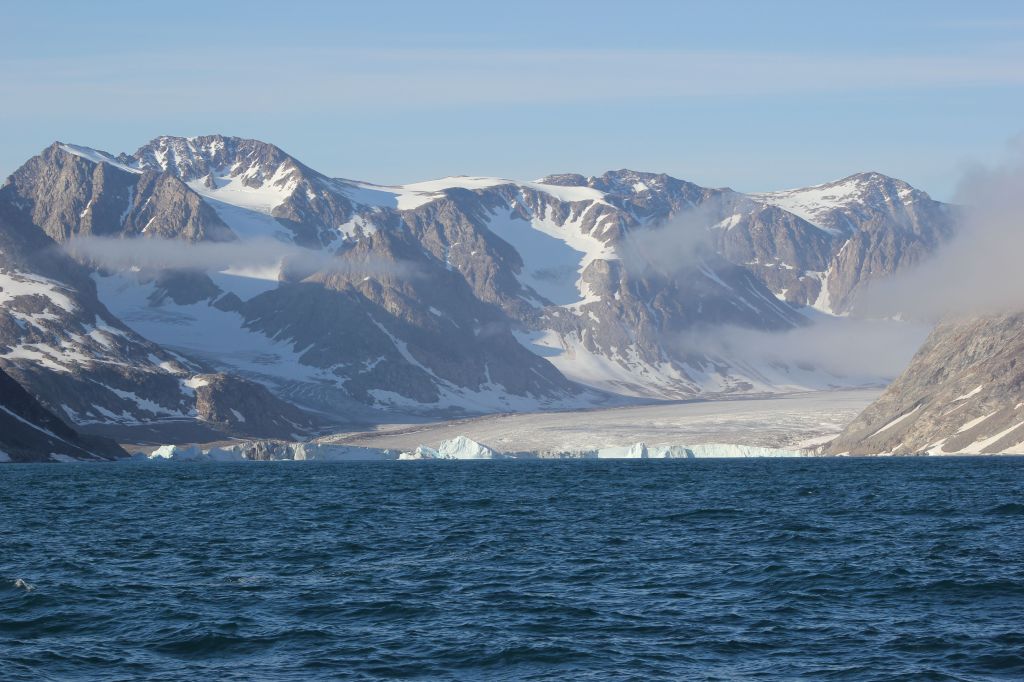
What has changed is the Arctic itself. As temperatures continue to rise, sea ice is retreating faster than scientists expected. Routes that were once blocked for most of the year are increasingly becoming navigable, creating shorter maritime connections between Europe and Asia. At the same time, the melting ice is making access to natural resources easier. Greenland’s critical minerals, once difficult to exploit, have become increasingly attractive to governments and investors alike. Climate change has therefore done more than change the environment; it has changed the geopolitical map. A region once considered remote is now becoming a crossroad of global commerce, energy, and security [4].
As Greenland’s strategic value grows, so does the competition surrounding it. For the United States, the island is a security asset. Maintaining a strong presence in Greenland would allow Washington to monitor activity across the Arctic and North Atlantic while reinforcing NATO’s northern defenses [5].
China, on the other hand, has approached Greenland largely through investment and diplomacy. Through its “Polar Silk Road” strategy, Beijing has shown growing interest in Arctic shipping routes and mining projects, particularly those involving rare minerals – essential for emerging technologies. Although China is not an Arctic state, it clearly intends to become an influential player in the region [6] [7].
Russia completes this geopolitical triangle. Over the past decade, Moscow has expanded its military infrastructure across the Arctic, modernized its Northern Fleet, and invested heavily in developing the Northern Sea Route. From the Kremlin’s perspective, the Arctic is not only an economic opportunity but a vital component of Russia’s national security. This results in a region where military, economic, and political interests overlap.
However, solely focusing on the Great Powers risks overlooking Greenland’s perspective. Often during discussion, the island is treated as a tradable object contested by nations instead of an inhabited community capable of choosing and shaping its future. Greenland is an autonomous territory within the Kingdom of Denmark to which its independence debates remain active. The island’s challenges are not simply how to respond to foreign interest but how to balance economic opportunities with political autonomy and environmental sustainability [8].
This is perhaps the greatest paradox of Greenland’s rising importance. The more strategically valuable the island becomes, the more external actors seek to shape its future. Foreign investment can generate jobs, infrastructure, and economic growth, yet it may also create new forms of dependence. Mining projects promise prosperity while simultaneously raising concerns about environmental protection and local governance. Greenland therefore finds itself balancing opportunities against risks, attempting to strengthen its economy without compromising its political autonomy or its fragile Arctic environment.
Ultimately, Greenland’s growing importance cannot be explained by rare earth elements alone. Minerals matter, but they are only one piece of a much larger picture that includes the Arctic competition. The world’s largest island’s real significance lies in the way it shows a broader transformation taking place across the Arctic. Climate change is opening new sea routes, reshaping global trade, and encouraging renewed competition between the world’s major powers. Greenland has become the point where these trends intersect.
As the Arctic becomes increasingly accessible and desirable, the world’s major powers will continue to compete for influence in the region. Greenland stands at the center of this evolving landscape, not because it seeks global prominence, but because global politics has come to its doorstep. The real prize is not Greenland – it is the future of the Arctic.
Edited by Adrian Kai Fraile Itagaki.
References
[1] Kirka, D. (2026). Security, minerals and trade: Why Trump says the US “needs” Greenland https://apnews.com/article/greenland-denmark-security-trump-arctic-north-6066195d0c6b9e1bbe6da27d55b26ece
[2] Schwartz, M., & Baskaran, G. (2026). Greenland, Rare Earths, and Arctic Security. https://www.csis.org/analysis/greenland-rare-earths-and-arctic-security
[3] On the Ground in Greenland: Arctic Security and Great Power Competition | Council on Foreign Relations. (2025). https://www.cfr.org/articles/ground-greenland-arctic-security-and-great-power-competition
[4] Schwartz, M., & Baskaran, G. (2026). Greenland, Rare Earths, and Arctic Security. https://www.csis.org/analysis/greenland-rare-earths-and-arctic-security
[5] On the Ground in Greenland: Arctic Security and Great Power Competition | Council on Foreign Relations. (2025). https://www.cfr.org/articles/ground-greenland-arctic-security-and-great-power-competition
[6] Nan, H. (2025). Polar Silk Road: China’s plan B for global trade. In ThinkChina – Big Reads, Opinions & Columns on China.
https://www.thinkchina.sg/economy/polar-silk-road-chinas-plan-b-global-trade
[7] Greenland: Caught in the Arctic geopolitical contest | Think Tank | European Parliament. (2025)
https://www.europarl.europa.eu/thinktank/en/document/EPRS_BRI(2025)769527
[8] Perspectives from Iceland and Greenland on Shifting Arctic Geopolitics. (2025). In The Belfer Center for Science and International Affairs. https://www.belfercenter.org/research-analysis/perspectives-iceland-and-greenland-shifting-arctic-geopolitics


Leave a comment