
“Ladies and gentlemen, as we prepare for departure, please ensure that all mobile devices are switched to Airplane Mode or turned off completely for the duration of the flight.” This is the common warning we hear when we embark on a flight a few minutes before departure.
What is peculiar about this moment reveals itself if you watch carefully. Look around the cabin and you will notice it: the man in 14C muttering under his breath because he cannot get a signal, “Come on, what is gonna happen?” The woman across the aisle already absorbed in a series she downloaded the night before, earphones in before the seatbelt sign even switched on. The passenger in the back row pulling out a book he has been meaning to read for months, finally cracking the spine not out of desire, but out of necessity. Others reach for crosswords, newspapers, anything. Some strike up conversations with strangers they will never see again. The options are endless, but the instinct is the same: we cannot bear to be left alone with ourselves.
In the first instance, one could assume that this is a symptom developed with the rise of technology, social media, and our fast-paced contemporary life. However, Blaise Pascal, a French mathematician and philosopher, teaches us otherwise. Indeed, in 1660 he observed this human behaviour in his composition “Pensées“. Pascal states “all of humanity’s problems stem from man’s inability to sit quietly in a room alone.”[1]. Returning to our plane example, we have seen people behaving differently as soon as their phone had to be put on flight mode. However, we must not focus on what they are using to distract themselves, but why they do it, why they seek a distraction.
A Room We Cannot Sit In
Pascal in his writings explains what is actually happening. Our problem is that we cannot be left alone with our thoughts, with our mind, which is like a crystal cage that we cannot escape. The absence of entertainment puts us in an uncomfortable place, forces us to hear our thoughts, to feel our existence. Pascal tried to discover the root behind our unconscious urge for “divertissements” as he names these distractions, and he concluded that the very reason tied to this “need” is the natural wretchedness of our human condition [1]. The problem appears when we are forced to think about it close-up, what we feel is helplessness: there is nothing that can comfort us from the vacuity of our existence. Distractions are not only intended as hobbies, but also jobs: whatever keeps us occupied. Our problem is that we look for rest in the continuous “fights” in our everyday life, however, after completing these tasks or activities, the well-deserved peace becomes hell in which we are bound to inevitably think about our sorrows.
The Weight of Being Yourself
Yet Pascal only opens the wound. He tells us we flee, and why, but he does not fully name what we are fleeing from. The Danish philosopher Søren Kierkegaard elaborated the answer, by going deeper into this concept. Writing two centuries later, Kierkegaard identified what waits for us in the silence: not simply the awareness of mortality or helplessness, but something more intimate, subjective, and more devastating: the burden of being yourself. In his work The Concept of Anxiety, he describes a condition he names despair [2]. This is not the dramatic despair of someone who has lost everything, but the silent, invisible despair of someone who simply cannot face who they are. The most disturbing aspect about this condition is not that it afflicts the troubled, or solely a small group of people. There is no exception. It afflicts everyone indiscriminately. Kierkegaard believed it was the default state of most human beings. We are, he argued, constantly on the verge of ourselves, and constantly retreating. The person on the plane reaching for their book, as soon as the incumbent silence drops, is not lazy or shallow. They are, in Kierkegaard’s terms, refusing the encounter with their own self; and that refusal, however understandable, is its own kind of suffering because what we avoid does not disappear. It waits. It is there in every moment of stillness we are not brave enough to sit with.
The Gravity of the Crowd
We have seen how Pascal diagnoses the flight and Kierkegaard names what we are fleeing from, however it is only the German philosopher Martin Heidegger who reveals something even more unsettling: we do not even choose to flee. In his 1927 masterwork Being and Time, Heidegger describes what he names as das Man: the “Anyone-self.” In everyday life, he argues, we do not act as ourselves but as anyone would. Consequently, we absorb the norms, habits, and opinions of the social world around us so completely that genuine selfhood quietly disappears beneath them. We do not decide to be distracted. We simply fall into it, the way water finds the path of least resistance. Heidegger calls this Verfallenheit: fallenness. More importantly, he is careful to say it is not a moral failure or a personal weakness, in fact it is a structural feature of human existence, a constant gravitational pull away from authenticity and toward the comfort of the crowd. Our condition as Anyone-selves, he writes, is one of “dispersal, distraction, and forgetfulness.”[3]. Look again at the passengers on the plane. They are not making a conscious decision to avoid themselves. They are simply doing what one does. What anyone does. The noise is not something imposed on them from outside: it is the shape their existence has quietly taken without them ever noticing.
Real freedom or ephemeral escape
If Heidegger shows us that falling into distraction is a structural feature of human existence, the contemporary Korean-German philosopher Byung-Chul Han shows us what happens when an entire civilization decides to engineer that fall. Han argues that modern achievement society has not only inherited humanity’s ancient fear of silence, but it has industrialized it. We live, he writes, in an age of hyperattention: a restless mode of awareness that flickers between stimuli without ever settling on any one of them [4]. This is not focus as we normally mistake it. It is closer to the vigilance of a wild animal, perpetually scanning for threats, incapable of stillness. The problem, however, is that it has destroyed our capacity for the deep, contemplative attention that makes genuine thought, creativity, and wonder possible. The passenger reaching for their phone to watch an offline movie the moment silence threatens does not simply mean that he is avoiding himself in Pascal’s sense, or refusing selfhood in Kierkegaard’s sense, or drifting into das Man in Heidegger’s sense. He is the product of a society that has made distraction not just tempting, but structural; not just habitual, but compulsory. Dressed up seductively as freedom.
And yet, here you are again.
The flight attendant finishes her announcement and leaves the cabin. On the panel over your head, the seatbelt sign switches on. The plane gradually starts to move, gaining enough acceleration to leave the ground. Your phone is left untouched in your bag. Somewhere over the clouds, thousands of feet above the ordinary noise of life, the signal disappears, and silence slowly settles down like the morning fog.
We have been running from this moment for centuries. Pascal noticed it in the courts of seventeenth-century France. Kierkegaard felt it in the quiet of Copenhagen. Heidegger named it in the hum of everyday existence. Han watched it accelerate into something resembling a civilizational emergency. Four thinkers, four centuries, one diagnosis: we are afraid of ourselves, and we will fill every available second to avoid the encounter.
They just acknowledged it, they recognized the existence of this behaviour, but here is what none of them could resolve, and what no philosopher can resolve for you: knowing this changes nothing automatically. You can read every word Pascal wrote about divertissement and still reach for your phone the moment boredom threatens. You can perfectly understand Kierkegaard’s despair, and still spend an evening scrolling rather than sitting with the uncomfortable question of who you are becoming. Knowledge of the trap does not spring it open.
“Ladies and gentlemen, we have just reached our destination. Please remain seated with your seatbelt fastened until the Captain turns off the ‘Fasten Seat Belt’ sign.”
The plane gradually lands on the ground again. All the passengers’ devices start to ring again. New notifications, relatives checking-in asking how the flight was, if they landed or not, people booking a taxi, chatting again with friends. The connection is restored. The silence disappears one more time, fades away like the fog does when wind passes by and the sun shines, like the sea retreats when there is a low tide. But it does not disappear: its shadow will sneak in again as soon as boredom settles in. It is inescapable.
You do not grab your phone. You look at the passengers for a split second: most of them were frantically standing up, elbowing others, trying to grab their bags to get out the plane as soon as they could. Your phone does not ring. Nobody is looking for you, nobody checks on you, nobody is waiting for you at the arrivals. The only notification you received, came from the mail box. You do not check what it is about. The book sits unopened on your lap. You look outside the window, thinking about nothing and suddenly you become aware of yourself, of your existence, of your flesh and blood, of how much space you take on the seat, of the air filling your lungs, and the clothes rubbing against your skin. The cabin becomes uncomfortable, the air feels thick, and suddenly the person next to you, who is talking loudly on the phone, starts to become unbearable. So unbearable that you grip harshly the armrest, trying to restrain yourself from acting impulsively. You sit still, clenching the book in your hands as a drop of sweat runs down your temple and reaches your shirt’s collar.
“Sir, you may exit the plane” You do not turn around, the eyes fixed on the window. “Sir? Hello?” You hear the voice finally. You suddenly snap back to reality. How long have you been sitting there? The flight attendant was smiling, kindly waiting for you to leave the completely empty plane. You smile back absently, standing up while grabbing your backpack. You walk quickly towards the exit, not looking back once, like you are used to, to be sure you did not leave anything on the seat. The cold air hits you harshly as soon as you reach the stairs. You feel weirdly better.
Maybe you escaped it for now. But it is still waiting for you. It always will be.
Edited by Adrian Kai Fraile Itagaki
References
[1] Pascal, Blaise. Pensées. 1660. Translated by Jonathan Bennett, Early Modern Texts, 2017, www.earlymoderntexts.com/assets/pdfs/pascal1660.pdf.
[2] Hughes, Emily. “Revisiting Kierkegaard On Anxiety And Despair.” https://www.academia.edu/103671079/Revisiting_Kierkegaard_On_Anxiety_And_Despair?source=swp_share Routledge Handbook of Contemporary Existentialism, 2024.
[3] Wrathall, Mark. “Heidegger’s Being and Time.” Stanford Encyclopedia of Philosophy, edited by Edward N. Zalta, Stanford University, plato.stanford.edu/entries/heidegger/#BeinAnyo
[4] Han, Byung-Chul. The Burnout Society. Translated by Erik Butler, Stanford Briefs, Stanford University Press, 2015. Internet Archive, dn721903.ca.archive.org/0/items/byung-chul-han-the-burnout-society-2015-stanford-briefs-libgen.lc/Byung-Chul%20Han%20-%20The%20Burnout%20Society%20%282015%2C%20Stanford%20Briefs%29%20-%20libgen.lc.pdf
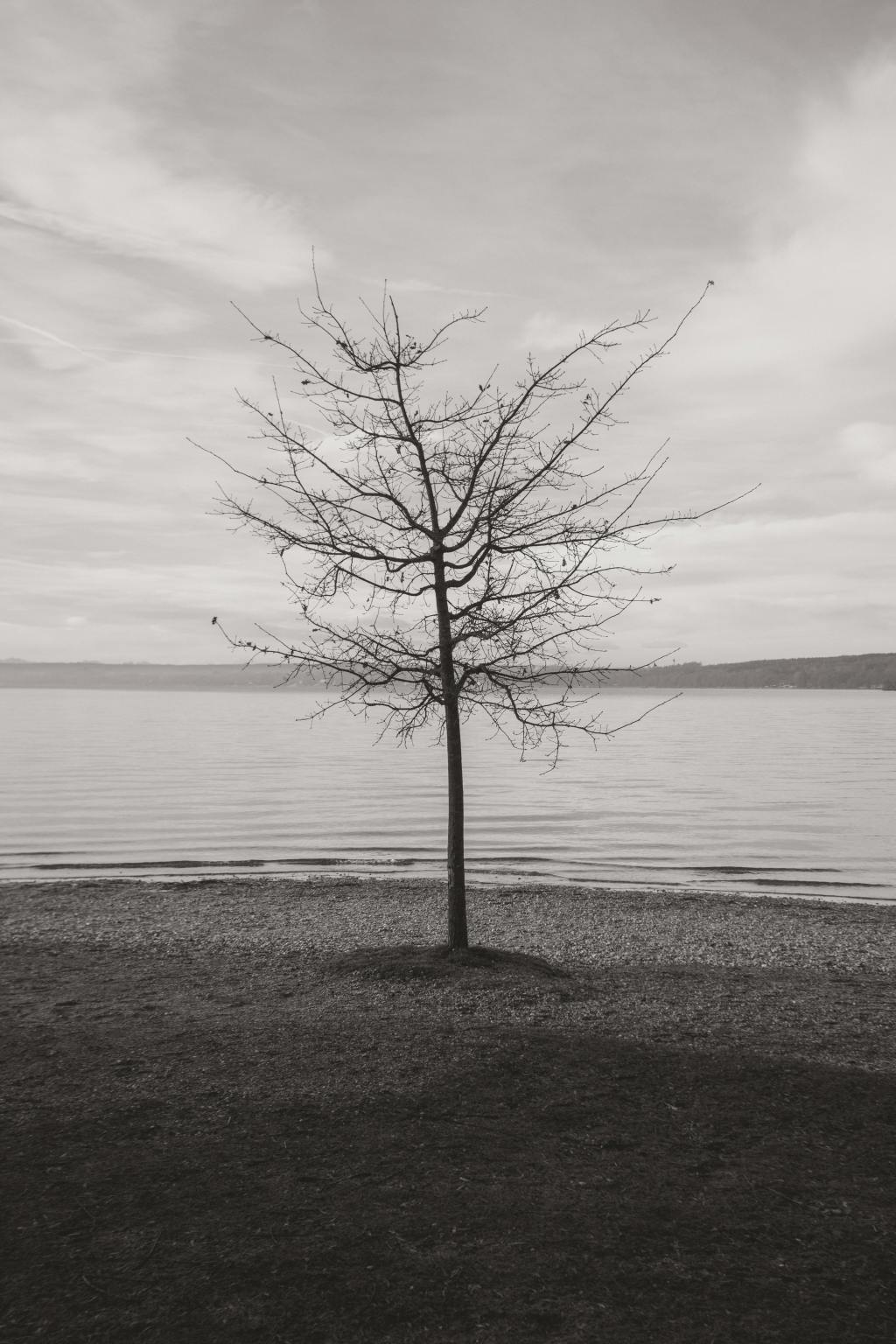
[Cover picture] Riccardi, B. (n.d.). Solitary tree by a Bavarian lake in winter [Photograph]. Pexels. https://www.pexels.com/photo/solitary-tree-by-a-bavarian-lake-in-winter-30108576/


Leave a comment